Crocus kotschyanus
Koch.
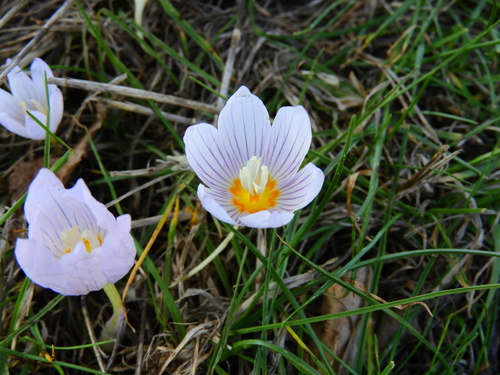
(c) Humam Ghanim, some rights reserved (CC BY-NC)

(c) naturekinder, some rights reserved (CC BY-NC)

(c) naturekinder, some rights reserved (CC BY-NC)
What to Eat
Edible parts: Root, Corm
The corm is edible and should be eaten cooked.
Where to Find It
It is a cool temperate plant. It is frost hardy. It suits hardiness zones 6-7.
Australia, Europe, Lebanon, Mediterranean, Middle East, Russia, Slovenia, Syria, Tasmania, Turkey, Türkiye,
How to Identify
A bulb plant. It grows 8-8 cm high and 2.5-5 cm wide. The corms are large and curiously irregular. The flowers are produced before the leaves appear. The flower has a pale mauve tube with mauve segments and dark purple veining. It has bright orange spots around a yellow throat.
How to Grow
Prefers a sandy loam. Plants are easily grown in a bulb frame or in a sunny position outdoors, succeeding in a well-drained moisture-retentive soil. A very ornamental plant. Plants tend to move considerably from their original planting place because of their means of vegetative reproduction, it is therefore wise not to grow different species in close proximity. Any planting out is best done in late spring and early summer. Protect the corms from mice. The flowers are only open during the day time, closing at night.
Propagation: Sow seed as soon as it is ripe in light sandy soil in pots in a cold frame, or alternatively in a cold frame in early spring. Seed usually germinates freely, so sow thinly; germination occurs within 1–6 months at 18°c. Avoid transplanting seedlings in their first year unless overcrowded, but apply regular liquid feeds to prevent nutrient deficiency. Once the plants die down, divide the small bulbs and plant 2–3 per 8cm pot. Grow on for a further two years in a greenhouse or frame, then plant out into permanent positions when dormant in late summer. Expect 3–4 years from seed to flowering. Clumps can also be divided after the leaves die down in spring, with bulbs replanted directly into permanent positions if desired.
Medicinal Uses
None known
Other Uses
None known
Wikipedia
Source ↗Crocus kotschyanus, Kotschy's crocus, is a species of flowering plant in the genus Crocus of the family Iridaceae, found from Turkey to Caucasus and Lebanon. Growing to 10 cm (3.9 in) tall, it produces pale lilac-blue flowers in autumn, followed by sword-like leaves. It has gained the Royal Horticultural Society's Award of Garden Merit.
Notes
There are about 80 Crocus species.
Names & Synonyms
Gezgin cigdemi
References (7)
- Cundall, P., (ed.), 2004, Gardening Australia: flora: the gardener's bible. ABC Books. p 436
- Ertug, F, Yenen Bitkiler. Resimli Türkiye Florası -I- Flora of Turkey - Ethnobotany supplement
- Hibbert, M., 2002, The Aussie Plant Finder 2002, Florilegium. p 76
- Jacobsen, A. L., February 2013: edible Crocus www.arthurleej.com/plant of the month.html
- Joyce, D., 1998, The Garden Plant Selector. Ryland, Peters and Small. p 286
- Marinelli, J. (Ed), 2004, Plant. DK. p 230
- Plants for a Future database, The Field, Penpol, Lostwithiel, Cornwall, PL22 0NG, UK. http://www.scs.leeds.ac.uk/pfaf/


