Cenchrus polystachios
(L.) Morone
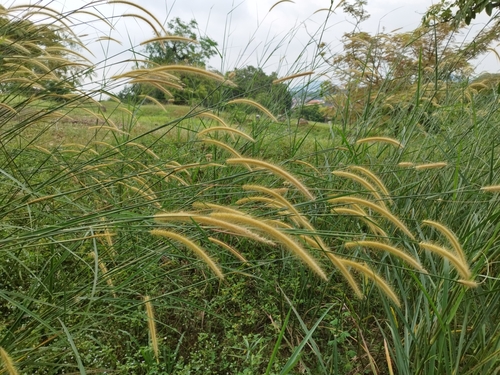
(c) johnberlin, some rights reserved (CC BY-NC)
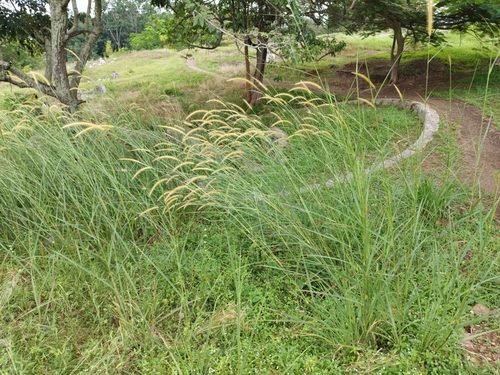
(c) johnberlin, some rights reserved (CC BY-NC)
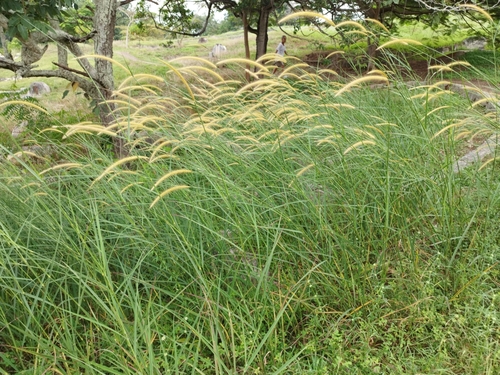
(c) johnberlin, some rights reserved (CC BY-NC)
How to Identify
A grass.
How to Grow
A plant of the moist tropical zone, preferring lowland areas but also found at elevations up to 2,400 metres - it is rarely found growing outside the tropical region. It grows best in areas where annual daytime temperatures are within the range 32 - 35°c, but can tolerate 12 - 40°c. It prefers a mean annual rainfall in the range 1,000 - 2,000mm, but tolerates 750 - 3,000mm. Grows best in a sunny position or in light shade, though it has persisted when growing under 80% shade. It succeeds in a wide range of soils, preferring sandy soils and tolerating low fertility. It succeeds in highly phosphate-deficient nigrescent soils in Fiji. Prefers a pH in the range 5 - 6.5, tolerating 4.4 - 8.5. Established plants are tolerant of short-term seasonal inundation, and also of drought. Originally native from Africa to India, the plant has spread through human activity and has become naturalized in many other areas of the tropics. It is declared a noxious weed in some areas. The spreads are light and fluffy, they are spread readily by wind, attachment to animals, clothing etc. They also survive the annual burning that occurs in some areas - they then germinates rapidly and can smother other seedling plants. As a fire disclimax, it becomes the dominant species in a good deal of the mountainous land in Thailand and Fiji. It causes major problems in the Northern Territory of Australia, where it has greatly increased the amount of flammable material in the wooded savannah ecosystem, leading to greater devastation from bushfires. Dry matter yields may be between 5 - 10 tonnes per hectare.
Propagation: Seed - surface sow in situ and then roll the soil to firm the seed. Seed can also be sown in a nursery seedbed and then transplanted. The seed has no dormancy and can germinate whilst still on the plant in very wet weather.
Other Uses
The fully mature culms make good paper pulp. This species is useful for controlling soil erosion, especially on sloping land. It quickly covers the ashes of a fire and forms a dense tussock grassland preventing erosion. As a fire disclimax, Cenchrus polystachios grassland invades a good deal of the mountainous land in Thailand and Fiji.
References (1)
- World Checklist of Useful Plant Species 2020. Royal Botanic Gardens, Kew


