Maesa nuda
Hutch. & Dalziel
PrimulaceaeFruit

gbif · cc-by
Royal Botanic Gardens, Kew
Royal Botanic Gardens, Kew

gbif · cc-by
Meise Botanic Garden
Meise Botanic Garden

gbif · cc-by
Meise Botanic Garden
Meise Botanic Garden
What to Eat
Edible parts: Fruit ?
The fruit is potentially edible.
Where to Find It
It is a tropical plant.
Africa, Cameroon, Côte d'Ivoire, Guinea, Guinée, Ivory Coast, Liberia, Senegal, West Africa,
Countries: Angola, Burkina Faso, Burundi, Benin, Botswana, Congo (DRC), Central African Republic, Congo (Republic), Cote d'Ivoire, Cameroon, Cape Verde, Djibouti, Algeria, Egypt, Eritrea, Ethiopia, Gabon, Ghana, Gambia, Guinea, Equatorial Guinea, Guinea-Bissau, Kenya, Comoros, Liberia, Lesotho, Libya, Morocco, Madagascar, Mali, Mauritania, Mauritius, Malawi, Mozambique, Namibia, Niger, Nigeria, Rwanda, Seychelles, Sudan, Sierra Leone, Senegal, Somalia, South Sudan, Sao Tome & Principe, Eswatini, Chad, Togo, Tunisia, Tanzania, Uganda, South Africa, Zambia, Zimbabwe
How to Identify
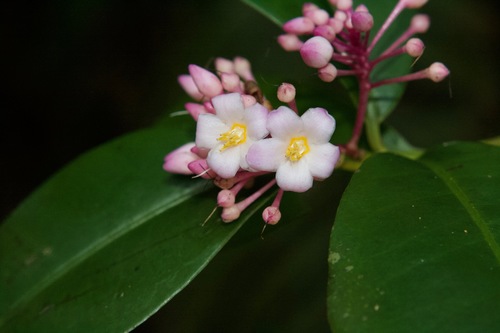
A woody climber or shrub. It can grow 5 m long. The leaves are alternate. The leaves are oval and taper to each end. There are small teeth along the edge. The flowers are small and white. The fruit is 0.5 cm long and fleshy. See Maesa lanceolata.
Names & Synonyms
Sarnana
References (2)
- Burkill, H.M. 1985. The useful plants of west tropical Africa, Vol. 4
- World Checklist of Useful Plant Species 2020. Royal Botanic Gardens, Kew