Nymania capensis
(Thunb.) Lindb.
MeliaceaeRoots

iNaturalist · cc-by-nc
(c) Gawie Malan, some rights reserved (CC BY-NC), uploaded by Gawie Malan
(c) Gawie Malan, some rights reserved (CC BY-NC), uploaded by Gawie Malan

iNaturalist · cc-by
(c) Rafael Medina, some rights reserved (CC BY)
(c) Rafael Medina, some rights reserved (CC BY)

iNaturalist · cc-by-nc
(c) Gawie Malan, some rights reserved (CC BY-NC), uploaded by Gawie Malan
(c) Gawie Malan, some rights reserved (CC BY-NC), uploaded by Gawie Malan
What to Eat
Edible parts: Roots - curdle milk
The roots are used to curdle milk.
Where to Find It
It is a subtropical plant.
Africa, Namibia, South Africa, Southern Africa,
Countries: Angola, Burkina Faso, Burundi, Benin, Botswana, Congo (DRC), Central African Republic, Congo (Republic), Cote d'Ivoire, Cameroon, Cape Verde, Djibouti, Algeria, Egypt, Eritrea, Ethiopia, Gabon, Ghana, Gambia, Guinea, Equatorial Guinea, Guinea-Bissau, Kenya, Comoros, Liberia, Lesotho, Libya, Morocco, Madagascar, Mali, Mauritania, Mauritius, Malawi, Mozambique, Namibia, Niger, Nigeria, Rwanda, Seychelles, Sudan, Sierra Leone, Senegal, Somalia, South Sudan, Sao Tome & Principe, Eswatini, Chad, Togo, Tunisia, Tanzania, Uganda, South Africa, Zambia, Zimbabwe
How to Identify
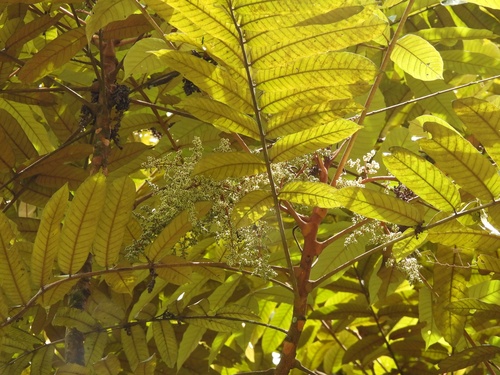
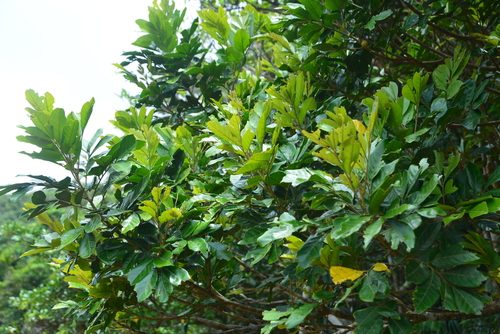
A shrub. It grows 5 m tall. The leaves are leathery and in tufts on short shoots. They are broadly sword shaped. The flowers occur singly in the axils of leaves. They are dull red. The fruit is an inflated papery capsule.
Names & Synonyms
Aitonia capensis Thunb.Carruthia capensis (Thunb.) Kuntze
References (3)
- Ruiters-Welcome, A. K., 2019, Food plants of southern Africa. Ph.D. thesis. Univ. of Johannesburg p 78
- Welcome, A. K. & Van Wyk, B.-E., 2019, An inventory and analysis of the food plants of southern Africa. South African Journal of Botany 122 (2019) 136–179
- World Checklist of Useful Plant Species 2020. Royal Botanic Gardens, Kew