Protium copal
(Schltdl. & Cham.) Engl.
Copal
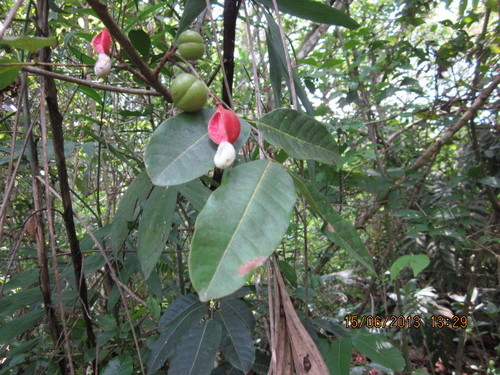
(c) Roberto, some rights reserved (CC BY-NC), uploaded by Roberto
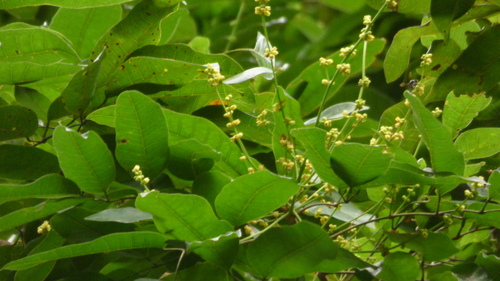
(c) sarievanbelle, some rights reserved (CC BY-NC), uploaded by sarievanbelle
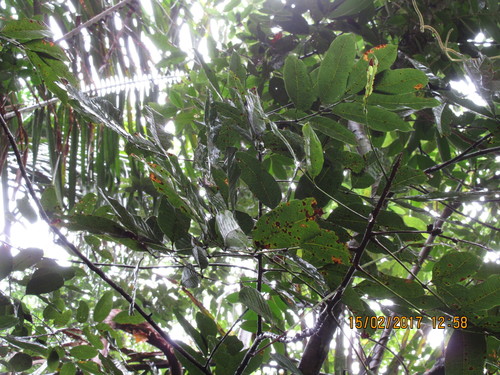
(c) Gualberto Perez, some rights reserved (CC BY-NC), uploaded by Gualberto Perez
What to Eat
Edible parts: Fruit
Fruit - seldom eaten and not highly appreciated.
How to Identify
A subtropical tree in the Burseraceae family with edible fruit.
How to Grow
A plant mainly of lowland areas in the tropics, being found usually at elevations below 600 metres, but exceptionally to 2,000 metres. Most, if not all, species in this genus are dioecious, both male and female forms need to be grown if fruit and seed are required.
Medicinal Uses
The resin obtained from the tree is used to make medicinal ointments.
Other Uses
A resin is obtained from the stems. It is used as an incense, varnish and medicine. It gives off a fragrant aroma as it burns. This tree is believed to be the principal source of the copal or pom that is used in such large amounts in Guatemala in religious rites, especially by the Indians of the highlands. It probably has figured in the religious ceremonies of the Mayan people for many centuries. The wood is used for multiple purposes, including the construction of rural houses, and for making poles, furniture and small boats. The wood is used for fuel. We have no more information on the wood of this species, but a general description of the wood for tropical American members of this genus is as follows:- The heartwood is brown or reddish-brown, sometimes with irregularly spaced darker brown lines; it is not always sharply demarcated from the pale buff to pinkish sapwood. The texture varies from rather fine to fairly coarse; grain straight to very irregular and interlocked; lustre is rather high; dry specimens are without any distinctive odour or taste. Silica is reported for some species. The wood is generally reported to have a low resistance to attack by decay fungi and is vulnerable to dry-wood termites; it has no appreciable resistance to marine borers. Reports on seasoning vary from fairly easy to air dry to moderately difficult. Logs should be debarked prior to sawing to avoid resin accumulation on cutters and equipment. The dry wood works easily and rates fair to good in all operations; it cuts easily into veneers but tends to buckle on drying; some species are abrasive because of the silica content. The wood is used for purposes such as furniture, millwork, veneer and plywood, general construction, particleboard; it is a possible substitute for birch.
Wikipedia
Source ↗Protium copal, commonly known as the copal tree, is a species of tree endemic to Mexico and Central America. It is found in wet tropical forests, preferring heavy shade. It grows to 30 metres (98 ft) in height and has long leathery leaves. The fruits are (2–3 cm) and smooth, with a single pit. The dried sap of the tree is known as copal. It is commonly used as an incense, similar to frankincense.
Names & Synonyms
Copalillo, Shewin'shan
References (2)
- Piedra-Malagón, E. M. et al, 2022, Edible native plants of the Gulf of Mexico Province. Biodiversity Data Journal 10: e80565 p 15
- Segura, S. et al, 2018, The edible fruit species in Mexico. Genet Resour Crop Evol (2018) 65:1767–1793


