Beilschmiedia pendula
(Sw.) Hemsl.
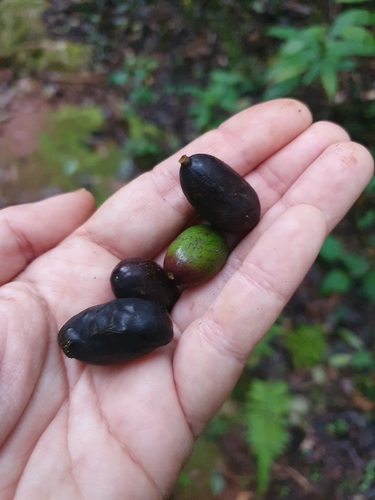
(c) Yolanda M. Leon, some rights reserved (CC BY-NC), uploaded by Yolanda M. Leon
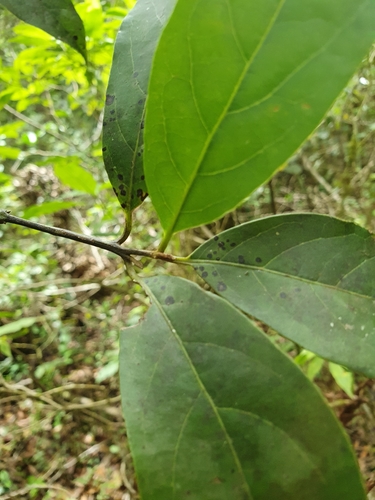
(c) Yolanda M. Leon, some rights reserved (CC BY-NC), uploaded by Yolanda M. Leon
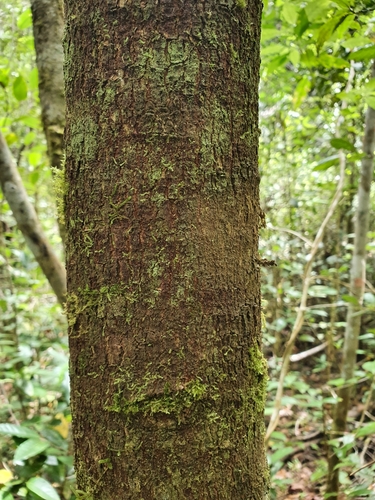
(c) Yolanda M. Leon, some rights reserved (CC BY-NC), uploaded by Yolanda M. Leon
What to Eat
Edible parts: Fruit
The fruit is edible.
Where to Find It
It is a tropical plant.
Central America, Colombia, Costa Rica, Ecuador, Mexico, Nicaragua, South America*,
How to Identify
A tree. It grows 25 m tall. The leaves are alternate and 9.5-10 cm long by 3-3.5 cm wide. The fruit are 3.5 cm long.
Other Uses
The heartwood is a pinkish brown; it is demarcated from the pale brown sapwood. The wood is moderately hard, strong, and heavy. It is very susceptible to damage by dry-wood termites. Rate of air-seasoning is slow, and mount of degrade is minor. Machining characteristics are as follows: planing, shaping, sanding, and resistance to screw splitting are good ; turning and mortising are fair; and boring is poor. The wood is used for shipbuilding, general construction, flooring, furniture, cabinetmaking, and carpentry.
Wikipedia
Source ↗Beilschmiedia pendula is a species of tree in the laurel family (Lauraceae). It is native to Central America (Honduras to Panama), northwestern South America (Ecuador, Colombia, and Venezuela), and the West Indies (Cuba, Jamaica, Hispaniola, Puerto Rico, Leeward Islands, and Windward Islands).
Names & Synonyms
Aceitunillo, Jora, Urku carpeta
References (3)
- Roa, J. A. G. & Boada, D. S. G., 2018, Fundación para el Fortalecimiento de la Fruticultura y Plantas Alimenticias no Convencionales en Colombia.
- Segura, S., et al, 2018, The edible fruit species in Mexico. Genet Resour Crop Evol (2018) 65:1767–1793
- Torre, de la, L., et al, 2008, Enciclopedia de las Plantas Útiles del Ecuador. Herbario QCA. Pontificia Universidad Católica del Ecuador. p 393


