Iris hookeriana
Foster
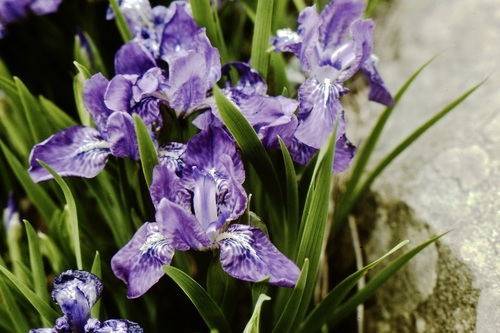
iNaturalist · cc-by-nc
(c) coqwallon, some rights reserved (CC BY-NC), uploaded by coqwallon
(c) coqwallon, some rights reserved (CC BY-NC), uploaded by coqwallon

iNaturalist · cc-by-nc
(c) Mahi Puri, some rights reserved (CC BY-NC)
(c) Mahi Puri, some rights reserved (CC BY-NC)

iNaturalist · cc-by-nc
(c) Mahi Puri, some rights reserved (CC BY-NC)
(c) Mahi Puri, some rights reserved (CC BY-NC)
What to Eat
Edible parts: Bulbs, Leaves
The bulbs and leaves are eaten raw or cooked.
Where to Find It
It is a temperate plant.
Asia, Pakistan,
Countries: United Arab Emirates, Afghanistan, Armenia, Azerbaijan, Bangladesh, Bahrain, Brunei, Bhutan, China, Georgia, Indonesia, Israel, India, Iraq, Iran, Jordan, Japan, Kyrgyzstan, Cambodia, North Korea, South Korea, Kuwait, Kazakhstan, Laos, Lebanon, Sri Lanka, Myanmar, Mongolia, Maldives, Malaysia, Nepal, Oman, Philippines, Pakistan, Qatar, Saudi Arabia, Singapore, Syria, Thailand, Tajikistan, Timor-Leste, Turkmenistan, Turkey, Taiwan, Uzbekistan, Vietnam, Yemen
How to Identify
A bulb plant. The rhizome is slender and knobbly. The leaves are 40 cm long. The flowers are blue to purple.
Wikipedia
Source ↗Iris hookeriana is a plant species in the genus Iris, it is also in the subgenus Iris and in the section Pseudoregelia. It is a rhizomatous perennial, from the Himalayan mountains of India and Pakistan. It has long pale green or yellow green leaves, long slender stem and fragrant blue, purple or lilac flowers, that are mottled with a darker colour. It is cultivated as an ornamental plant in temperate regions.
Names & Synonyms
Sheeziay
Iris gilgitensis Baker ex Hook.f.Iris kernaonensis var. caulescens Baker
References (2)
- Farooq, S., et al, 2012, Ethnobotanical Studies of the Flora of Tehsil Birmal in South Waziristan Agency, Pakistan. Pak. J. Weed Sci. Res. 18(3): 277-291
- Khalid, N., et al, 2023, Wild food plants gathered by four cultural groups in North Waziristan, Pakistan. Genet Resour Crop Evol. 70:1243–1276


