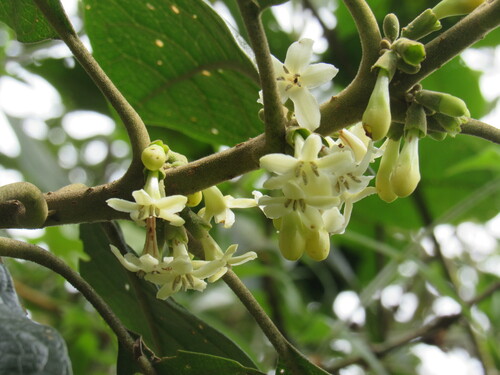
Premna angolensis
Gurke

GBIF

Royal Botanic Gardens, Kew

Royal Botanic Gardens, Kew
What to Eat
Edible parts: Medicine
Where to Find It
It is a tropical plant.
Africa, Benin, Kenya, Rwanda, Senegal, Uganda, West Africa,
How to Identify
A small tree or climbing shrub. It can be 21 m tall. The flowers are white. The fruit are green and turn purple.
Medicinal Uses
Used medicinally in traditional practice.
Other Uses
The plant is cosidered taboo for some people in Gabon, where its use in the kitchen is not allowed. The bad smell of leaves and twigs thrown on a fire is believed to keep away bad spirits. This suggests a possible use as an insect repellant. The heartwood is pale yellow-brown; it is not clearly demarcated from the sapwood, which is only slightly paler in colour. The grain is usually straight, but sometimes interlocked; texture medium and even; the smell has been described by some as sweet, by others as unpleasant. The wood is durable, due to the presence of oil, although logs are usually hollow or have rotten cores. The sapwood is not susceptible to Lyctus borer attack. The wood works and planes well; it is recorded to be suitable for peeling and slicing; holds nails well; glues satisfactorily; and paints, polishes and varnishes well. The steam-bending properties are moderate to poor. The wood seasons well, with little distortion, but some checking may occur. The wood is suitable for construction, flooring, mine props, ship and boat building, furniture and cabinet work, interior trim, toys and novelties, agricultural implements, boxes and crates, carvings, turnery, draining boards, food containers, veneer and plywood. In Kenya it is used for carving and beehives, and it has been used in construction work in mines. In Tanzania it is used for animal traps, tool handles. The wood is used for fuel.
Names & Synonyms
References (2)
- Salako, V. K. et al, 2013, Home gardens: an assessment of their biodiversity and potential contribution to conservation of threatened species and crop wild relatives in Benin. Genet Resour Crop Evol
- World Checklist of Useful Plant Species 2020. Royal Botanic Gardens, Kew