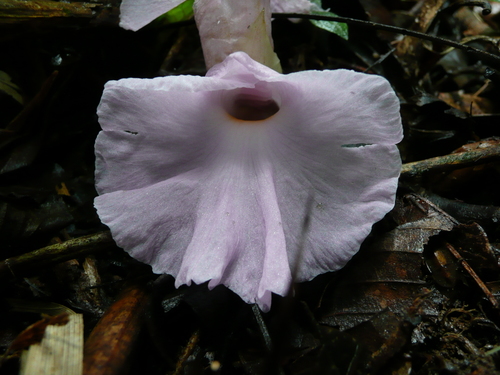
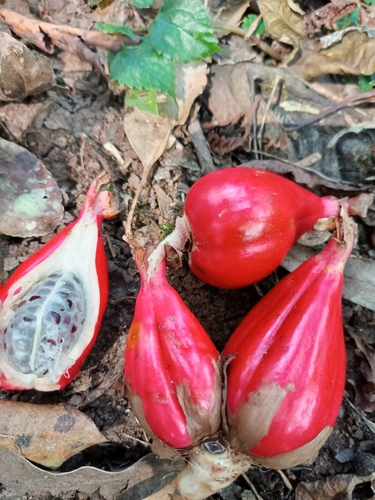
Curcuma aurantiaca
van Zijp.
Rainbow curcuma

(c) 刘光裕 Liu Guangyu, some rights reserved (CC BY-NC), uploaded by 刘光裕 Liu Guangyu
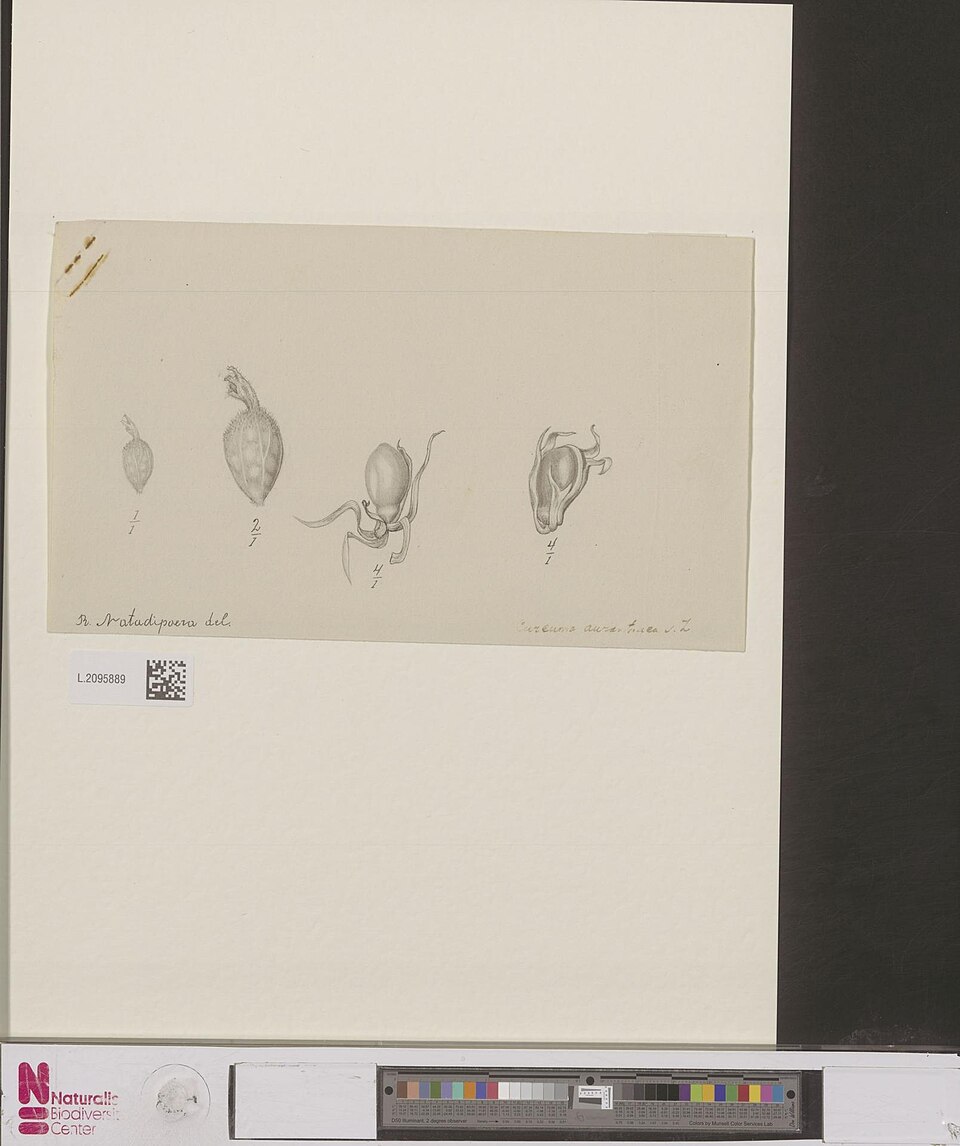
Wikimedia Commons - van Zijp

President and Fellows of Harvard College
What to Eat
Edible parts: Leaves
The leaves are eaten.
Where to Find It
A tropical plant. It grows in teak forests and grassy fields up to 700 m above sea level.
Asia, Cambodia, India, Indonesia, Malaysia, SE Asia, Sri Lanka, Thailand,
How to Identify
A ginger family herb. It grows 1.5 m tall. It has small rhizomes and no false stems. The rhizomes are white inside and have an aroma. There are 2-5 leaves and they are oblong to sword shaped. The flowers are in dense heads on a stalk from the base. The flowers are tube shaped and yellow. The fruit is an oval capsule. The seeds are shiny and light brown.
How to Grow
Plants can be grown from division of the rhizome.
Propagation: Seed - best sown as soon as it is ripe. Germinates best at temperatures around 20°c. Division of the rhizome when the plant is dormant.
Medicinal Uses
The rhizomes have a camphor scent. They are used medicinally for their astringent properties.
Notes
There are about 50 Curcuma species. They are mostly in SE Asia.
Names & Synonyms
Temu blobo
References (6)
- Burkill, I.H., 1966, A Dictionary of the Economic Products of the Malay Peninsula. Ministry of Agriculture and Cooperatives, Kuala Lumpur, Malaysia. Vol 1 (A-H) p 715
- Heyne, K., 1927 ed, Nutt. Plant. Ned. Ind. p 496
- Martin, F.W. & Ruberte, R.M., 1979, Edible Leaves of the Tropics. Antillian College Press, Mayaguez, Puerto Rico. p 225
- Sukarya, D. G., (Ed.) 2013, 3,500 Plant Species of the Botanic Gardens of Indonesia. LIPI p 1097
- Terra, G.J.A., 1973, Tropical Vegetables. Communication 54e Royal Tropical Institute, Amsterdam, p 42
- World Checklist of Useful Plant Species 2020. Royal Botanic Gardens, Kew