Psychotria capensis
(Eckl.) Vatke
Bird berry

(c) Brendan Cole, some rights reserved (CC BY-NC-ND), uploaded by Brendan Cole
(c) Ricky Taylor, some rights reserved (CC BY-NC)
(c) Ricky Taylor, some rights reserved (CC BY-NC)
What to Eat
Edible parts: Fruit
The red fruits are eaten.
Where to Find It
It is a subtropical plant.
Africa, South Africa, Southern Africa, Zimbabwe,
How to Identify
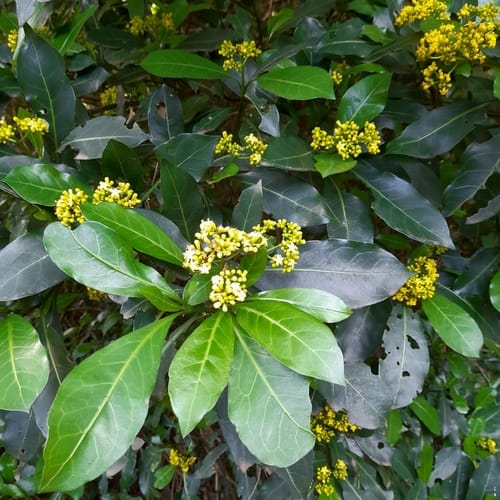
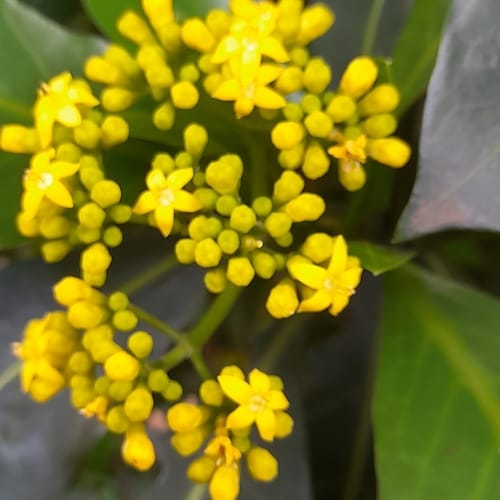
A shrub or small tree. It grows 1-5 m tall or taller. The stems are finely ridged. The leaves are 3-14 cm long by 1-6 cm wide. The flowers are in much branched groups 2-15 cm long. They are yellow. The fruit are red and 5-6.5 mm across.
Wikipedia
Source ↗Psychotria capensis, the bird-berry, is a southern African evergreen shrub or small tree. It belongs to a genus which is used medicinally in many regions, 'Psychotria' being from the Greek for 'rejuvenating', in reference to the healing properties of certain species. Kew lists some 2,000 species of Psychotria growing throughout the warmer regions of both hemispheres, but only two of them occur in southern Africa, namely P. capensis and P. zombamontana.
Names & Synonyms
References (1)
- World Checklist of Useful Plant Species 2020. Royal Botanic Gardens, Kew


