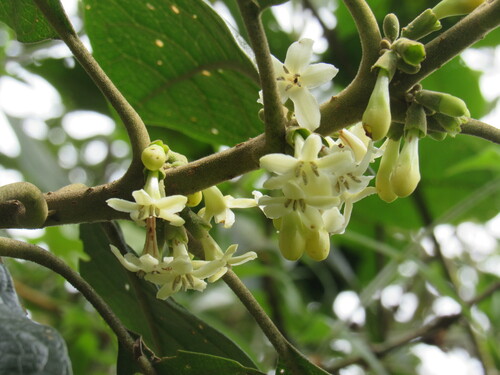
Condea emoryi
(Torr.) Harley & J. F. B. Pastore
Desert lavender
LamiaceaeSeeds/Nuts
iNaturalist · cc0
no rights reserved, uploaded by Irene
no rights reserved, uploaded by Irene

iNaturalist · cc-by-nc
(c) Maureen McHale, some rights reserved (CC BY-NC), uploaded by Maureen McHale
(c) Maureen McHale, some rights reserved (CC BY-NC), uploaded by Maureen McHale
iNaturalist · cc-by-nc
(c) Jacob Skaggs, some rights reserved (CC BY-NC), uploaded by Jacob Skaggs
(c) Jacob Skaggs, some rights reserved (CC BY-NC), uploaded by Jacob Skaggs
What to Eat
Edible parts: Seeds
Seeds are eaten.
Where to Find It
It is a subtropical plant. It grows up to 900 m above sea level.
Mexico, North America, USA,
Countries: Antigua & Barbuda, Barbados, Bahamas, Belize, Canada, Costa Rica, Cuba, Dominica, Dominican Republic, Grenada, Guatemala, Honduras, Haiti, Jamaica, St Kitts & Nevis, St Lucia, Mexico, Nicaragua, Panama, Puerto Rico, El Salvador, Trinidad & Tobago, United States, St Vincent
How to Identify
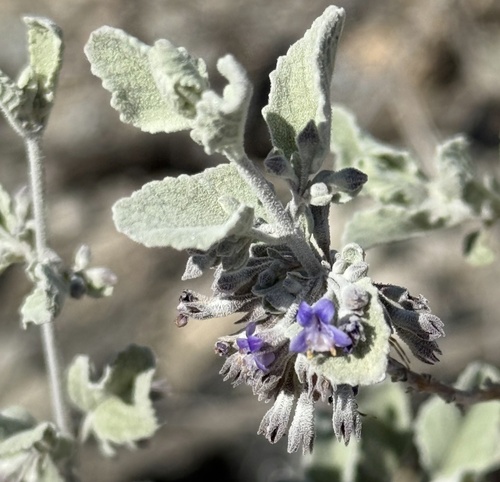
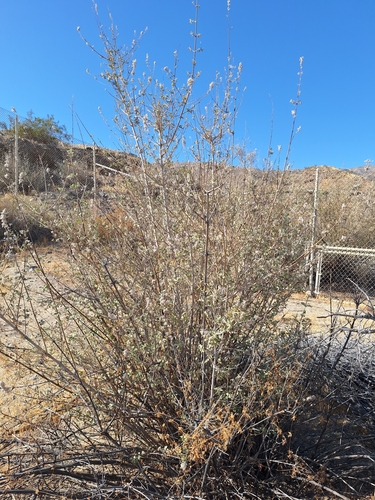
A shrub. It has several stems. It can grow 5-6 m tall. The leaves are oval and grey-green. They have teeth along the edge and are hairy. The flowers are violet or blue and in the axils of the leaves. They are 2.5 cm across.
Wikipedia
Source ↗Condea emoryi (synonym Hyptis emoryi), the desert lavender, is a large, multi-stemmed shrub species of flowering plant in Lamiaceae, the mint family. It is one of the favored plants of honeybees in early spring in the southwest deserts of North America.
References (1)
- World Checklist of Useful Plant Species 2020. Royal Botanic Gardens, Kew