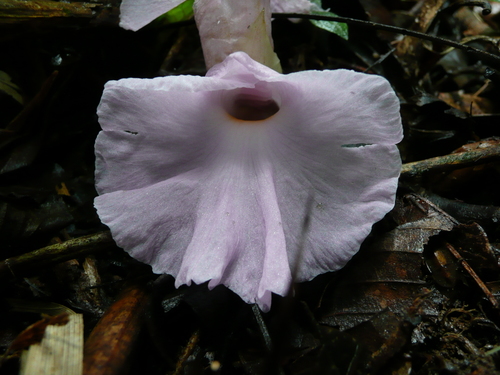
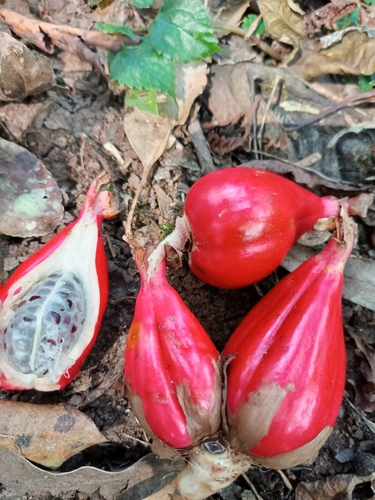
Curcuma zedoaria
(Christmann) Rosc.
Zedoary, Zeodary
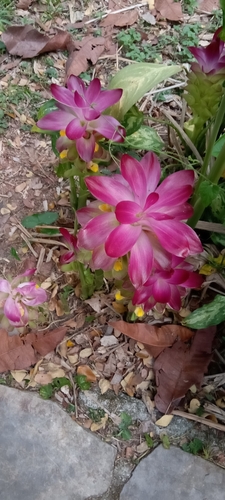
(c) Cesia, some rights reserved (CC BY-NC)
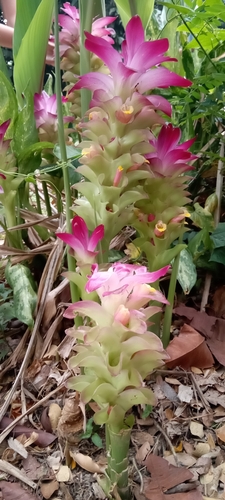
(c) Cesia, some rights reserved (CC BY-NC)

(c) rachel lin, some rights reserved (CC BY-NC)
What to Eat
Edible parts: Leaves, Rhizome, Root, Flowers, Spice, Vegetable
The rhizomes are used as a condiment when peeled and finely shredded, and the starch is extracted for consumption. Young tender buds are eaten in salads, and the leaves are cooked with fish. The starch is easily digested.
Where to Find It
It is a tropical plant. It grows in hot humid climates. It suits areas with a rainfall of 90-125 cm per year. It grows up to 900 m altitude. It grows in shady places often under betel nut groves. It needs a loamy well cultivated soil. It needs a temperature above 13°C. It suits hardiness zones 8-12. In Yunnan.
Africa, Asia, Australia, Bangladesh, Cambodia, China, East Africa, Hawaii, Himalayas, India, Indochina, Indonesia, Madagascar, Malaysia, Myanmar, Northeastern India, Pacific, Philippines, SE Asia, Sierra Leone, Sri Lanka, Taiwan, Thailand, USA, Vietnam, West Africa,
How to Identify
A herb 1-2 m tall. It forms tillers. It keeps growing from year to year. It has long leaves which form a sheath at the bottom. The leaves are 30-60 cm long by 7-8 cm wide. They have red spots along the middle vein. The flowers are yellow in bright red leaf sections. It has a rhizome under the ground which is fleshy and creeping. It branches and produces tubers on it. The starchy finger rhizomes are greyish on the outside and yellow inside. They are 15 cm long and 2.5 cm across.
Nutrition Score: 32/100
| Part | Moisture | kJ | kcal | Protein | Vit A | Vit C | Iron | Zinc |
|---|---|---|---|---|---|---|---|---|
| Roots | 90 | 151 | 36 | 1 | 210 | 15 | 0.8 | 0.1 |
How to Grow
Plants are grown using parts of the rhizome. Using the main or mother rhizome is best. Germination of the rhizomes is often started in a nursery. They are then planted out at the beginning of the rainy season. They are mostly planted on flat beds which are later mounded. A spacing of 25-45 cm is suitable.
Propagation: Seed - best sown as soon as it is ripe. Germinates best at temperatures around 20°c. Division of the rhizome when the plant is dormant.
Medicinal Uses
The plant is used traditionally to treat inflammation, pain, and a variety of skin ailments including wounds, as well as menstrual irregularities and ulcers.
Other Uses
An essential oil obtained from the rgizome is used in perfumery and for a range of medicinal preparations.
Wikipedia
Source ↗Curcuma zedoaria (zedoary , white turmeric, or temu putih) is a perennial herb and member of the genus Curcuma, family Zingiberaceae. The plant is native to South Asia and Southeast Asia but is now naturalized in other places including the US state of Florida. Zedoary was one of the ancient food plants of the Austronesian peoples. They were spread during prehistoric times to the Pacific Islands and Madagascar during the Austronesian expansion (c. 3000 BCE). Its use as a spice in the West today is extremely rare, having been replaced by ginger, and to a lesser extent, yellow turmeric.
Production
It takes 1,100 kg of rhizomes to plant one hectare. It takes 10 months to produce a crop. Yields of 7.5-12 tonnes per hectare occur.
Other Information
It is a commercially cultivated vegetable. The starch is easily digested.
Notes
There are about 50 Curcuma species. They are mostly in SE Asia.
Names & Synonyms
Biring, Kachoor, Kachora, Kachura, Khamin khao, Kochura, Kunchur, Nghe den, Palagunda, Palua, Rose turmeric, Sa-nwin, Shoti, Sying khlo, Tempu puteh, Temu Kuning, Temu pepet, Temu putih, Vundu, Zadwar
References (45)
- Ambasta, S.P. (Ed.), 2000, The Useful Plants of India. CSIR India. p 152
- Anderson, E. F., 1993, Plants and people of the Golden Triangle. Dioscorides Press. p 208
- Arora, R. K., 2014, Diversity in Underutilized Plant Species - An Asia-Pacific Perspective. Bioversity International. p 102
- Bremness, L., 1994, Herbs. Collins Eyewitness Handbooks. Harper Collins. p 163
- Brown, D., 2002, The Royal Horticultural Society encyclopedia of Herbs and their uses. DK Books. p 187
- Burkill, H. M., 1985, The useful plants of west tropical Africa, Vol. 5. Kew.
- Burkill, I.H., 1966, A Dictionary of the Economic Products of the Malay Peninsula. Ministry of Agriculture and Cooperatives, Kuala Lumpur, Malaysia. Vol 1 (A-H) p 724
- Chen, I., et al, 2008, Antioxidant and Antimicrobial Activities of Zingiberaceae Plants in Taiwan. Plant Foods for Human Nutritition, 63:15-20
- Deb, D., et al, 2013, Wild Edible Plants and Their Utilization in Traditional Recipes of Tripura, Northeast India. Advances in Biological Research 7(5):203-211
- Facciola, S., 1998, Cornucopia 2: a Source Book of Edible Plants. Kampong Publications, p 248
- Hani Medicine of Xishuangbanna, 1999, p 51
- Hedrick, U.P., 1919, (Ed.), Sturtevant's edible plants of the world. p 254
- Hemphill, I, 2002, Spice Notes. Macmillan. p 418
- Heywood, V.H., Brummitt, R.K., Culham, A., and Seberg, O., 2007, Flowering Plant Families of the World. Royal Botanical Gardens, Kew. p 409
- Hibbert, M., 2002, The Aussie Plant Finder 2002, Florilegium. p 78
- http://www.ntbg.org/plants/plant details.php
- Hu, Shiu-ying, 2005, Food Plants of China. The Chinese University Press. p 328
- Jiwajinda, S., et al, 2002, Suppressive Effects of Edible Thai Plants on Superoxide and Nitric Oxide Generation. Asian Pacific Journal of Cancer Prevention, Vol 3, 2002
- Kay, D.E., 1973, Root Crops, Digest 2, Tropical Products Institute, London, p 135
- Kays, S. J., and Dias, J. C. S., 1995, Common Names of Commercially Cultivated Vegetables of the World in 15 languages. Economic Botany, Vol. 49, No. 2, pp. 115-152
- Lembaga Biologi Nasional, 1977, Ubi-Ubian, Balai Pustaka, Jakarta. p 88
- Lim, T. K., 2015, Edible Medicinal and Non Medicinal Plants. Volume 9, Modified Stems, Roots, Bulbs. Springer p 30
- Llamas, K.A., 2003, Tropical Flowering Plants. Timber Press. p 367
- Martin, F.W. & Ruberte, R.M., 1979, Edible Leaves of the Tropics. Antillian College Press, Mayaguez, Puerto Rico. p 225
- Misra, R. C., et al, 2013, Genetic resources of wild tuberous food plants traditionally used in Similipal Biosphere Reserve, Odisha, India. Genetic Resources and Crop Evolution. Vol. 60 No. 2. Springer
- Ochse, J. J. et al, 1931, Vegetables of the Dutch East Indies. Asher reprint. p 745
- Patiri, B. & Borah, A., 2007, Wild Edible Plants of Assam. Geethaki Publishers. p 142
- Phawa, G. M., Dkhar, E. K. & Marbaniang, D., 2019, Indigenous Wild Edible Plants of Bataw Village, East Jaintia Hills District, Meghalaya. International Journal of Arts, Science and Humanities. 7(2)
- Phon, P., 2000, Plants used in Cambodia. © Pauline Dy Phon, Phnom Penh, Cambodia. p 185
- PROSEA handbook Volume 13 Spices. p 276
- Purseglove, J.W., 1972, Tropical Crops. Monocotyledons. Longmans p 522
- Recher, P, 2001, Fruit Spirit Botanical Gardens Plant Index. www.nrg.com.au/~recher/ seedlist.html p 4
- Seidemann J., 2005, World Spice Plants. Economic Usage, Botany, Taxonomy. Springer. p 127
- Singh, H.B., Arora R.K.,1978, Wild edible Plants of India. Indian Council of Agricultural Research, New Delhi. p12
- Sirirugsa, P., 1999, Thai Zingiberaceae: Species Diversity and their Uses. http://www.iupac.org/symposia/proceedings/phuket 97
- Solomon, C., 2001, Encyclopedia of Asian Food. New Holland. p 418
- Staples, G.W. and Herbst, D.R., 2005, A tropical Garden Flora. Bishop Museum Press, Honolulu, Hawaii. p 763
- Sukarya, D. G., (Ed.) 2013, 3,500 Plant Species of the Botanic Gardens of Indonesia. LIPI p 1098
- Terra, G.J.A., 1973, Tropical Vegetables. Communication 54e Royal Tropical Institute, Amsterdam, p 43
- Trans. Linn. Soc. London 8:354. 1807
- Tutul, E et al, 2009, Angiospermic Flora of Runctia Sal Forest, Bangladesh. Bangladesh J. Plant Taxon. 16(1): 83-90. p 86
- Van Sam, H. et al, 2008, Uses and Conservation of Plant Species in a National Park. A case study of Ben En, Vietnam. Economic Botany 62:574-593
- van Wyk, B., 2005, Food Plants of the World. An illustrated guide. Timber press. p 165
- World Checklist of Useful Plant Species 2020. Royal Botanic Gardens, Kew
- Zeven, A. C. & de West, J. M. J., 1982, Dictionary of cultivated plants and their regions of diversity. Wageningen. p 80