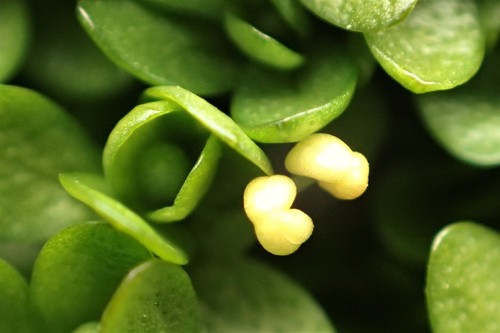
Plantago palmata
Hook.f.

(c) David Torres, some rights reserved (CC BY-NC), uploaded by David Torres

(c) Liliana Ramírez-Freire, some rights reserved (CC BY)
Known Hazards
Where to Find It
It is a tropical plant. It grows in mountain grassland.
Africa, Cameroon, Central Africa, Congo DR, East Africa, Ethiopia, Fernando po, Kenya, Malawi, Tanzania, West Africa,
How to Identify
A herb. It is short and has underground roots or rhizomes. The leaves are in rings. The leaves have lobes like fingers on a hand. The leaves are 5-12 cm long by 3-13 cm wide. The flowers are in spikes 1-11 cm long.
Medicinal Uses
The leaves are used in the treatment of a wide range of complaints including oedema, threatening miscarriage, nausea during pregnancy, intestinal problems such as diarrhoea, to expel intestinal worms. The sap of the leaves, mixed in water. is taken as a treatment for diarrhoea and vaginal prolapse. An infusion of the leaves in milk is taken to treat intestinal problems. The pounded leaves, mixed with honey, are used as a treatment against heart problems. The leaves are macerated in banana beer, which is taken to treat hepatic diseases. The sap of the leaves, mixed with water, is applied externally to treat conjunctivitis and haemorrhoids. Pounded leaves and inflorescences are applied to burns and skin diseases. A grilled leaf is applied to aching joints. The macerated leaves are applied externally to treat breast infection. The roots are pounded in milk and taken to treat intestinal problems. The aerial parts of Plantago palmata contain the caffeic acid derivatives plantamajoside and acteoside, as well as the iridoid glycosides aucubin, geniposidic acid, epiloganic acid, arborescoside and gardoside. Plantamajoside has an inhibitory effect on arachidonic acid-induced mouse ear oedema (anti-inflammatory activity), and inhibitory effect on 5-lipoxygenase, 15-lipoxygenase, and cAMP phosphodiesterase. It also has some antibacterial activity. Both plantamajoside and acteoside have antioxidant activity and are DPPH radical scavengers. Aucubin shows anti-inflammatory, spasmolytic, antidote and hepatoprotective activities as well as antiviral activity against hepatitis B. The leaves, fruits and roots of Plantago palmata have been tested for antibacterial, antifungal and antiviral properties. There was no antibacterial activity, but all parts, especially the roots, expressed antifungal activity against Microsporum canum and Trichophyton mentagrophytes, while the leaves had moderate activity against the Coxsackie virus.
Other Uses
The petioles are used for plaiting contrasting colours into baskets.
References (1)
- World Checklist of Useful Plant Species 2020. Royal Botanic Gardens, Kew