Anthogonium gracile
Wall. ex Lindl
OrchidaceaeRoots

iNaturalist · cc-by-nc
(c) naresh_swami80, some rights reserved (CC BY-NC)
(c) naresh_swami80, some rights reserved (CC BY-NC)

iNaturalist · cc-by-nc
(c) naresh_swami80, some rights reserved (CC BY-NC)
(c) naresh_swami80, some rights reserved (CC BY-NC)

iNaturalist · cc-by-nc
(c) naresh_swami80, some rights reserved (CC BY-NC)
(c) naresh_swami80, some rights reserved (CC BY-NC)
What to Eat
Edible parts: Rhizome, Bulb
The rhizome is used to make a tonic soup.
Where to Find It
It is a subtropical plant.
Asia, China,
Countries: United Arab Emirates, Afghanistan, Armenia, Azerbaijan, Bangladesh, Bahrain, Brunei, Bhutan, China, Georgia, Indonesia, Israel, India, Iraq, Iran, Jordan, Japan, Kyrgyzstan, Cambodia, North Korea, South Korea, Kuwait, Kazakhstan, Laos, Lebanon, Sri Lanka, Myanmar, Mongolia, Maldives, Malaysia, Nepal, Oman, Philippines, Pakistan, Qatar, Saudi Arabia, Singapore, Syria, Thailand, Tajikistan, Timor-Leste, Turkmenistan, Turkey, Taiwan, Uzbekistan, Vietnam, Yemen
How to Identify
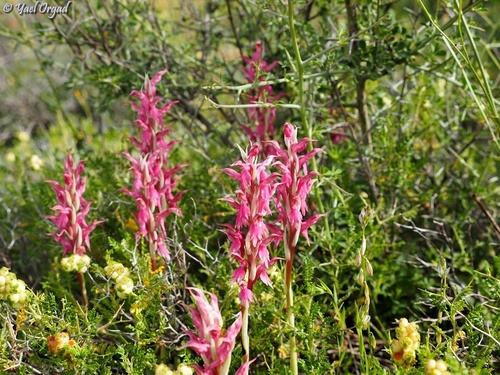
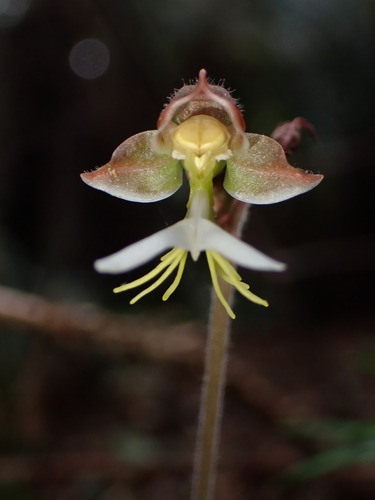
A plant that grows 55 cm tall. The false bulbs are 1-2 cm across and partly buried in the soil. The leaves are narrow and 7-45 cm long by 1-2 cm wide. They sheath the stem. The flowering shoots are erect.
Medicinal Uses
The rhizome is used for a tonic soup.
Other Information
It is sold in local markets.
Names & Synonyms
Anthogonium corydaloides Schltr.Anthogonium griffithii Rchb.f.
References (1)
- Cao, Y., et al, 2020, Ethnobotanical study on wild edible plants used by three trans-boundary ethnic groups in Jiangcheng County, Pu’er, Southwest China. Journal of Ethnobiology and Ethnomedicine (2020) 16:66