Dendrobium devonianum
Paxton
OrchidaceaeShoots
iNaturalist · cc-by-sa
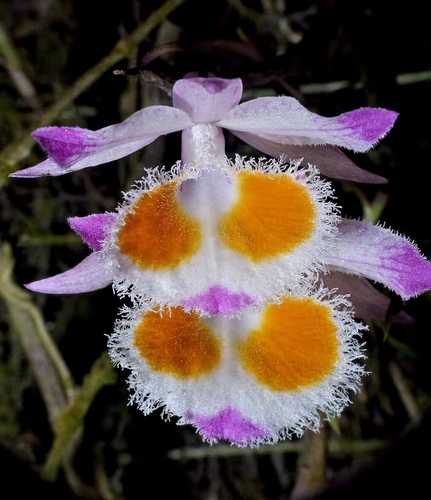
(c) L. Shyamal, some rights reserved (CC BY-SA)
(c) L. Shyamal, some rights reserved (CC BY-SA)
iNaturalist · cc-by-nc
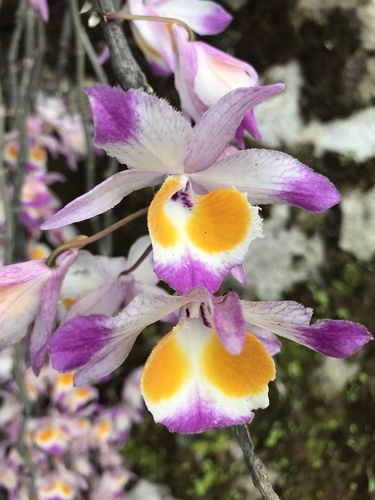
(c) cupag_kelley, some rights reserved (CC BY-NC), uploaded by cupag_kelley
(c) cupag_kelley, some rights reserved (CC BY-NC), uploaded by cupag_kelley
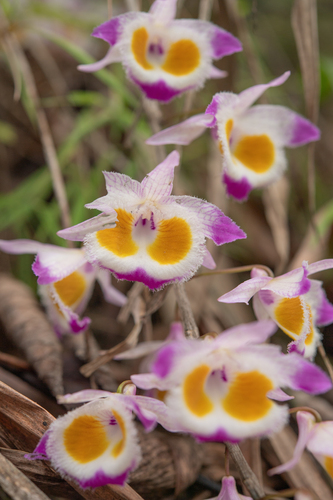
iNaturalist · cc-by-nc
(c) Morten Ross, some rights reserved (CC BY-NC), uploaded by Morten Ross
(c) Morten Ross, some rights reserved (CC BY-NC), uploaded by Morten Ross
What to Eat
Edible parts: Stem
The stem is used as a tea substitute and for liquor brewing.
Where to Find It
It is a subtropical plant.
Asia, China,
Countries: United Arab Emirates, Afghanistan, Armenia, Azerbaijan, Bangladesh, Bahrain, Brunei, Bhutan, China, Georgia, Indonesia, Israel, India, Iraq, Iran, Jordan, Japan, Kyrgyzstan, Cambodia, North Korea, South Korea, Kuwait, Kazakhstan, Laos, Lebanon, Sri Lanka, Myanmar, Mongolia, Maldives, Malaysia, Nepal, Oman, Philippines, Pakistan, Qatar, Saudi Arabia, Singapore, Syria, Thailand, Tajikistan, Timor-Leste, Turkmenistan, Turkey, Taiwan, Uzbekistan, Vietnam, Yemen
How to Identify
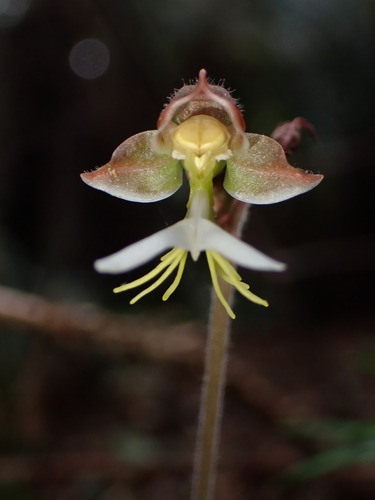
A subtropical orchid (Orchidaceae) with edible stems, sold in local markets.
Wikipedia
Source ↗Dendrobium devonianum (Devon's dendrobium) is a species of orchid. It is native to southern China (Guangxi, Guizhou, Tibet, Yunnan), the eastern Himalayas (Bhutan, Assam), and northern Indochina (Myanmar, Thailand, Laos, Vietnam). It is an epiphyte that grows on tree trunks in mountain forests.
Other Information
It is sold in local markets.
Names & Synonyms
Huang cao, Luan nan gai, Me dao lu
References (1)
- Cao, Y., et al, 2020, Ethnobotanical study on wild edible plants used by three trans-boundary ethnic groups in Jiangcheng County, Pu’er, Southwest China. Journal of Ethnobiology and Ethnomedicine (2020) 16:66