Argyrella canescens
(Graham) Harv.
MelastomataceaeLeaves
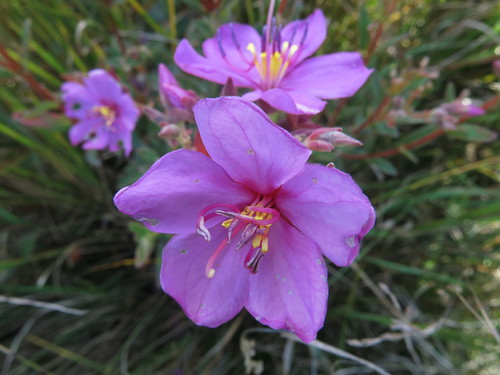
iNaturalist · cc0
no rights reserved, uploaded by Peter Warren
no rights reserved, uploaded by Peter Warren

iNaturalist · cc-by-nc
(c) Troos van der Merwe, some rights reserved (CC BY-NC), uploaded by Troos van der Merwe
(c) Troos van der Merwe, some rights reserved (CC BY-NC), uploaded by Troos van der Merwe

iNaturalist · cc-by-sa
(c) Brian du Preez, some rights reserved (CC BY-SA), uploaded by Brian du Preez
(c) Brian du Preez, some rights reserved (CC BY-SA), uploaded by Brian du Preez
What to Eat
Edible parts: Leaves
Where to Find It
It is a tropical plant.
Africa, Angola, Benin, Cameroon, Central African Republic, CAR, Chad, Congo DR, Congo R., Eswatini, Ethiopia, Kenya, Malawi, Mozambique, Nigeria, South Africa, Swaziland, Tanzania, Uganda, Zambia, Zimbabwe,
Countries: Angola, Burkina Faso, Burundi, Benin, Botswana, Congo (DRC), Central African Republic, Congo (Republic), Cote d'Ivoire, Cameroon, Cape Verde, Djibouti, Algeria, Egypt, Eritrea, Ethiopia, Gabon, Ghana, Gambia, Guinea, Equatorial Guinea, Guinea-Bissau, Kenya, Comoros, Liberia, Lesotho, Libya, Morocco, Madagascar, Mali, Mauritania, Mauritius, Malawi, Mozambique, Namibia, Niger, Nigeria, Rwanda, Seychelles, Sudan, Sierra Leone, Senegal, Somalia, South Sudan, Sao Tome & Principe, Eswatini, Chad, Togo, Tunisia, Tanzania, Uganda, South Africa, Zambia, Zimbabwe
How to Identify
A woody herb. It grows 50-120 cm tall. The leaves are narrowly oval and 1.7-8.5 cm long by 0.3-2.2 cm wide. The flowering shoots are long leafy groups. The flowers have 5 parts. They are red to purple.
How to Grow
It can be grown from seed, cuttings or rooted runners
Other Information
It is a famine food.
Names & Synonyms
Dissotis canescens (Graham) Hook.f.Dissotis incana TrianaHeterotis canescens (Graham) Jacq.-Fel.Osbeckia canescens Grahamand others
References (1)
- World Checklist of Useful Plant Species 2020. Royal Botanic Gardens, Kew


