Pentatropis nivalis
)J. F. Gmel.) D. V. Field & J. R. I. Wood
AsclepiadaceaeFruit
iNaturalist · cc-by-nc
(c) Milind Girdhari, some rights reserved (CC BY-NC)
(c) Milind Girdhari, some rights reserved (CC BY-NC)
iNaturalist · cc-by-nc
(c) Milind Girdhari, some rights reserved (CC BY-NC)
(c) Milind Girdhari, some rights reserved (CC BY-NC)
iNaturalist · cc-by-nc
(c) Milind Girdhari, some rights reserved (CC BY-NC)
(c) Milind Girdhari, some rights reserved (CC BY-NC)
What to Eat
Edible parts: Fruit, Pods
The young pods are eaten.
Where to Find It
It is a Mediterranean climate plant. It can grow in dry and arid areas.
Asia, India, Middle East, Oman,
Countries: United Arab Emirates, Afghanistan, Armenia, Azerbaijan, Bangladesh, Bahrain, Brunei, Bhutan, China, Georgia, Indonesia, Israel, India, Iraq, Iran, Jordan, Japan, Kyrgyzstan, Cambodia, North Korea, South Korea, Kuwait, Kazakhstan, Laos, Lebanon, Sri Lanka, Myanmar, Mongolia, Maldives, Malaysia, Nepal, Oman, Philippines, Pakistan, Qatar, Saudi Arabia, Singapore, Syria, Thailand, Tajikistan, Timor-Leste, Turkmenistan, Turkey, Taiwan, Uzbekistan, Vietnam, Yemen
How to Identify
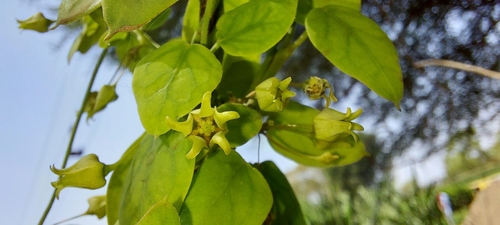
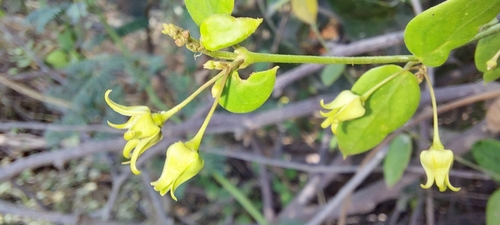
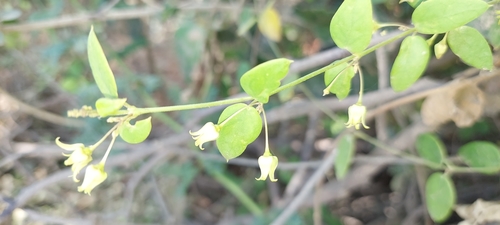
A twining herb. It grows 4 m tall. The older stems have rough corky bark. The leaves are opposite and have short leaf stalks. They are fleshy and narrowly oblong. They are 1-5 cm long by 04.-3 cm wide. The flowers are in 5 flowered clusters in the axils of leaves. They are pale greenish yellow. The pods are 5-7 cm long by 1 cm wide. They are narrowed to a long tip. The seeds are oval and flattened. They are 4.5 mm long with a tuft of hairs at the tip.
Names & Synonyms
Asclepias forsskalii Schult.Asclepias nivalis J. F. Gmel.Asclepias nivea Forssk.Pentarrhinum fasciculatum K. Schum.
References (1)
- Miller, A. G., Morris, M. & Stuart-Smith, S., 1988, Plants of Dhofar. The Southern Region of Oman, Traditional, Economic and Medicinal Uses. Sultanate of Oman. p 46


