Commiphora kua
(R. Br. ex Royle) Vollesen
Myrrh

(c) Morten Ross, some rights reserved (CC BY-NC), uploaded by Morten Ross
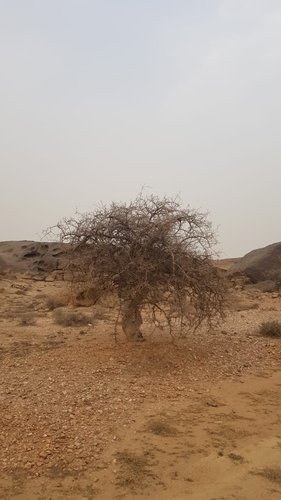
(c) Ateah Alfakih, some rights reserved (CC BY-NC-SA)
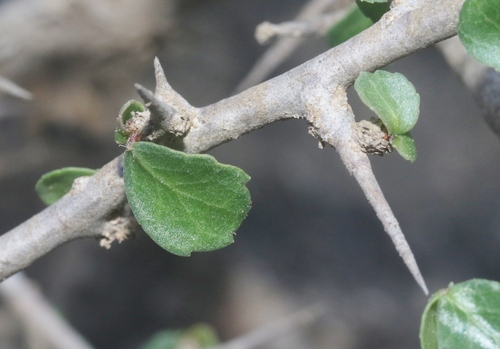
(c) James Bailey, some rights reserved (CC BY-NC)
What to Eat
Edible parts: Medicine, Caution, Stems, Roots - moisture
The roots are chewed when thirsty to obtain moisture.
Known Hazards
Where to Find It
It is a tropical plant. It grows between 40-1,300 m above sea level.
Africa, Burundi, Congo DR, Djibouti, East Africa, Eritrea, Ethiopia, Kenya, Malawi, Middle East, Mozambique, Oman, Saudi Arabia, Socotra, Somalia, Tanzania, Uganda, Yemen, Zambia,
How to Identify
A spiny shrub or small tree. It grows 3-4 m tall. The outer bark peels off in strips. There is a gum resin. The long shoots have spine-tips that taper and are stout. The leaves are simple and on short shoots. They can have 3 different leaflets. These are 10-35 mm long by 5-25 mm wide. They have 5-9 sharp teeth on each side. The flowers are in clusters of 4-6 for male flowers and 1 or 2 for female flowers. The flowers are greenish-yellow. The fruit are 6 mm long by 4.5 mm wide.
How to Grow
Plants can be grown by seed or cuttings.
Medicinal Uses
The stems and roots are used medicinally.
Other Uses
A gum-resin is obtained from wounds in the stems. It contains a green essential oil that is used in perfumes of the Oriental type, blending well with vetiver, geranium and sandal.
Wikipedia
Source ↗Commiphora kua, sometimes known as Abyssinian myrrh or the Yemen myrrh, is a plant native to northeast Africa and the Arabian Peninsula, including Djibouti, Eritrea, Ethiopia, Zambia, Malawi, Oman and Yemen. It was first described as Balsamodendrum kua in 1847, and has many botanical synonyms. It can be recognised by its simple, serrate leaves and by the pseudo aril, covering the seed, which has four almost linear arm-like lobes.
Names & Synonyms
References (2)
- Mutie, F. M., et al, 2023, Important Medicinal and Food Taxa (Orders and Families) in Kenya, Based on Three Quantitative Approaches. Plants 2023, 12, 1145
- World Checklist of Useful Plant Species 2020. Royal Botanic Gardens, Kew


