Chisocheton macrophyllus
King
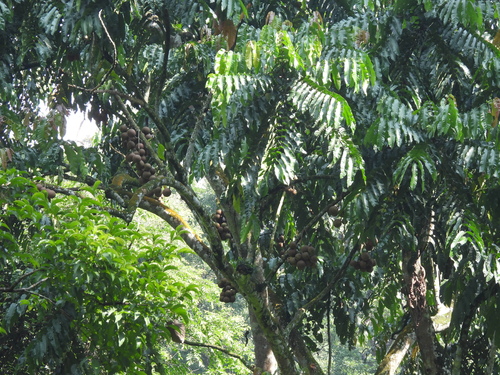
(c) Adam Kamal, some rights reserved (CC BY), uploaded by Adam Kamal

(c) Arief Hamidi, some rights reserved (CC BY-NC)

(c) Arief Hamidi, some rights reserved (CC BY-NC)
What to Eat
Edible parts: Medicine
Where to Find It
It is a tropical plant.
Asia, Indonesia, Malaysia, Nicobar, SE Asia, Singapore, Thailand,
How to Identify
A tropical tree in the Meliaceae family.
Wikipedia
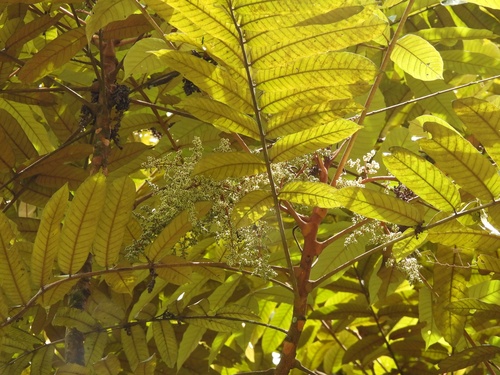
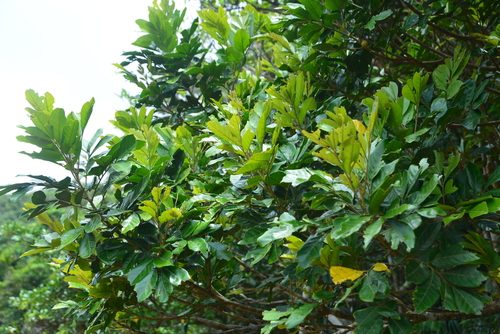
Source ↗Chisocheton macrophyllus is a pachycaul rainforest tree of the East Indies, Malay Peninsula, Thailand and Nicobar Islands with very few upright limbs ultimately reaching a height of 35 m (115 ft) and a trunk diameter (above buttresses) of 70 cm (28 in); it has buttress roots up to 3 m (9.8 ft) high and 2 m (6 ft 7 in) long. Each reiteration is topped by a tight rosette of once-pinnate leaves up to 3 m (9.8 ft) long with up to 28 pairs of leaflets at any given time, each up to 39 cm (15 in) long by 11 cm (4.3 in) wide. Like all Chisocheton species, these leaves are indeterminate, forming a new pair of leaflets every few weeks or months. while the oldest pair may die. The flowers are creamy white, with four or five petals 15 mm (0.59 in) long, arranged in a thyrse up to 80 cm (31 in) long, followed by pyriform capsules up to 15 cm (5.9 in) in diameter with four seeds each 4.5 cm (1.8 in) long and shaped like a brazilnut.
Names & Synonyms
References (1)
- World Checklist of Useful Plant Species 2020. Royal Botanic Gardens, Kew