Lovoa trichilioides
Harms

(c) ronnex, some rights reserved (CC BY-NC)
(c) Carel Jongkind, some rights reserved (CC BY-NC), uploaded by Carel Jongkind

(c) dickcannings, some rights reserved (CC BY-NC), uploaded by dickcannings
What to Eat
Edible parts: ?
Known Hazards
Where to Find It
It is a tropical plant.
Africa, Angola, Benin, Central Africa, Congo DR, Côte d'Ivoire, East Africa, Ivory Coast, Sierra Leone, Uganda, West Africa,
How to Identify
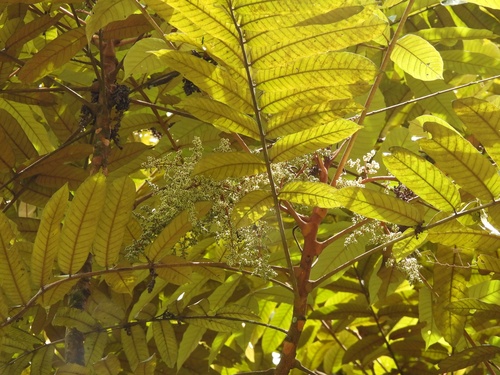
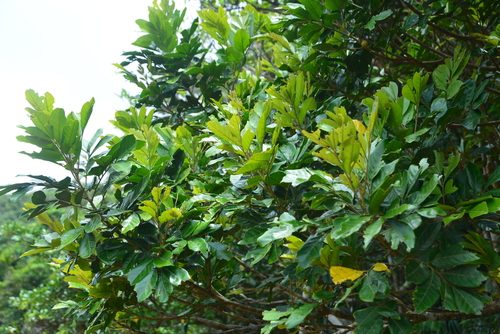
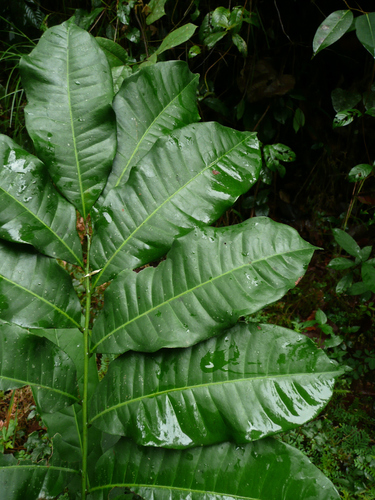
A large tree. It grows 50 m tall. The trunk is cylinder shape and there are short blunt buttresses. The bark is smooth with irregular flaky pieces. The leaves are 24 cm long. There are 10-14 leaflets 16 cm long by 4 cm wide. The flowering shoots are 30 cm long and towards the ends of the branches. The flowers are greenish white. The fruit hang down and are purple to black. The seeds are 5 cm long by 1 cm wide.
How to Grow
Ripe seed should be sown fresh.
Propagation: Seed - best sown as soon as it is ripe since it has a short viability. Seeds start germinating after 8 - 16 days, with up to 90% germination rate for fresh seed, but only about 30% for 2 month old seed. A successful method of propagation by stem cuttings has been developed in Cameroon. Long, thin cuttings with large leaf areas (50 - 200 cm²) made from apical nodes of multi-stemmed stock-plants rooted best, with a rooting rate of up to 60% Stem cuttings root best in coarse gravel.
Medicinal Uses
The pulped bark is rubbed on the chest to treat pulmonary troubles. The bark is also used against dental caries.
Other Uses
The heartwood is yellowish brown to greyish brown, often with golden and blackish markings; it is distinctly demarcated from the 3 - 7cm wide band of pale brown to pale grey sapwood. The grain is usually interlocked; the texture moderately fine to fine. The wood is lustrous and has an attractive appearance, with a ribbon-like aspect on quarter-sawn surfaces and a cedar-like scent. It is light in weight; soft; somewhat durable, being resistant to dry wood borers, somewhat resistant to fungi and susceptible to termites. It seasons fairly quickly with only a slight risk of checking and distortion; once dry it is stable in service. The wood is easy to saw and work with ordinary tools; there is some tendency of picking up of grain when the wood is quarter-sawn, and planing may be difficult because of the presence of interlocked grain, resulting in tearing; it finishes well, but for a fine polish the use of a filler is recommended; nailing and screwing properties are good, although there may be some tendency to splitting; gluing, painting and varnishing properties are satisfactory; the steam bending properties are moderate. The wood is highly valued for high class furniture, cabinet work, flooring, carpentry, joinery, interior trim, stairways, panelling and decorative veneer and plywood. It is locally used for house construction, vehicle bodies, implements and handles, and to make canoes. It is suitable for ship building, sporting goods, toys, novelties, railway sleepers, carving, boxes, crates, turnery and pulpwood. The wood is also used as firewood and for charcoal production. It is promoted in Uganda for tree planting programmes; it is locally planted as a shade tree in agroforestry programmes, for crops such as coffee and banana.
Wikipedia
Source ↗Lovoa trichilioides, also called African walnut, Congowood, dibetou or tigerwood, is a species of tree in the family Meliaceae found in Central Africa. The timber provides high chatoyance, with an average value above 20 PZC. It is threatened by habitat loss, but is listed as IUCN3.1, a species of least concern.
Names & Synonyms
References (1)
- World Checklist of Useful Plant Species 2020. Royal Botanic Gardens, Kew