Codonopsis inflata
Hook.f. & Thomson
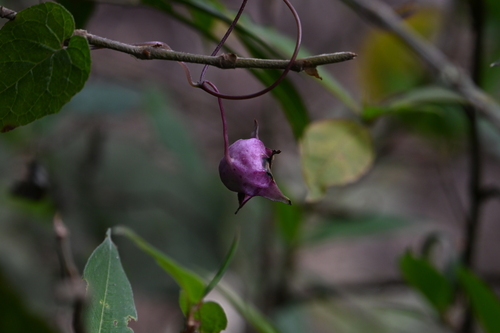
iNaturalist · cc-by-nc
(c) 桃子, some rights reserved (CC BY-NC), uploaded by 桃子
(c) 桃子, some rights reserved (CC BY-NC), uploaded by 桃子

iNaturalist · cc-by-nc
(c) 桃子, some rights reserved (CC BY-NC), uploaded by 桃子
(c) 桃子, some rights reserved (CC BY-NC), uploaded by 桃子

wikimedia · cc0
Wikimedia Commons - Cathcart, John Fergusson; Fitch, W. H.; Hooker, Joseph Dalton
Wikimedia Commons - Cathcart, John Fergusson; Fitch, W. H.; Hooker, Joseph Dalton
What to Eat
Edible parts: Fruit - spice
Codonopsis lanceolata (Korean: deodeok) is used as a food in Korean cuisine.
Where to Find It
It is a subtropical plant. It has been recorded at 1,524-2,134 m above sea level.
Asia, China, Himalayas, India, Nepal, Sikkim, Tibet,
Countries: United Arab Emirates, Afghanistan, Armenia, Azerbaijan, Bangladesh, Bahrain, Brunei, Bhutan, China, Georgia, Indonesia, Israel, India, Iraq, Iran, Jordan, Japan, Kyrgyzstan, Cambodia, North Korea, South Korea, Kuwait, Kazakhstan, Laos, Lebanon, Sri Lanka, Myanmar, Mongolia, Maldives, Malaysia, Nepal, Oman, Philippines, Pakistan, Qatar, Saudi Arabia, Singapore, Syria, Thailand, Tajikistan, Timor-Leste, Turkmenistan, Turkey, Taiwan, Uzbekistan, Vietnam, Yemen
How to Identify
A subtropical herb in the Campanulaceae family, recorded at elevations between 1,524-2,134 m.
Medicinal Uses
Codonopsis pilosula (Chinese: 党参; pinyin: dǎngshēn) is an important medicinal herb in traditional Chinese medicine.
Names & Synonyms
Gyang-hu-ser
Campanumoea inflata (Hook.f.) C. B. Clarke
References (1)
- Li, S., et al, 2020, Monpa, memory, and change: an ethnobotanical study of plant use in Mêdog County, South-east Tibet, China. Journal of Ethnobiology and Ethnomedicine. (2020) 16:5 p 16


