Terminalia oblongata
F. Muell.
Yellow wood

AutoGyro at English Wikipedia (via Wikimedia Commons)

Mark Marathon (via Wikimedia Commons)

bhare3

(c) Aaron Bean, some rights reserved (CC BY-NC), uploaded by Aaron Bean

(c) Aaron Bean, some rights reserved (CC BY-NC), uploaded by Aaron Bean
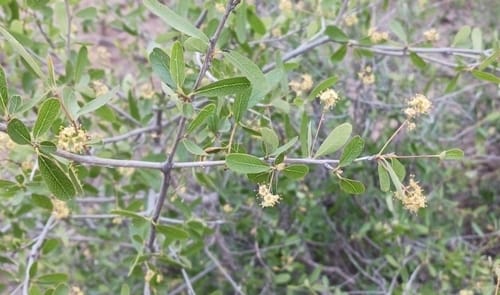
(c) Mark C, some rights reserved (CC BY-NC)
What to Eat
Edible parts: Fruit
The fruit are eaten.
Known Hazards
Where to Find It
It is a tropical plant. It can grow in semi-arid regions and up to 300 m above sea level.
Australia,
How to Identify
A tropical tree in the Combretaceae family that grows in semi-arid regions and up to 300 m elevation, with edible fruit.
How to Grow
A plant of the semiarid to moist tropics, where it can be found at elevations up to 300 metres. It grows best in areas where the mean maximum and minimum annual temperatures are within the range 22 - 38°c, though it can tolerate 12 - 44°c. It prefers a mean annual rainfall in the range 600 - 850mm, though can tolerate from 400 - 950mm. Prefers a sunny position. The tree grows wild in sandy soils, brown-red skeletal soils, cracking clay, grey sand over sandstone, basalt. It succeeds in most soils, even those of low fertility. Prefers a pH in the range 5 - 6, tolerating 4.5 - 6.5.
Other Uses
Although small, the light-coloured wood is nicely marked and suitable for cabinet making. The wood can be used as fuel.
Wikipedia
Source ↗Terminalia oblongata, commonly known as yellow-wood or rosewood, is a species of plant in the Combretaceae family. It is native to Australia. The mean maximum and minimum annual temperatures suitable for its growth are within the range 22 - 38°c, though it can tolerate 12 - 44°c as well.
References (2)
- Ferns, Useful Tropical Plants.
- Maiden,


