Aegilops speltoides
Tausch
Goatgrass
(c) Ron Frumkin, some rights reserved (CC BY-NC), uploaded by Ron Frumkin
(c) Ron Frumkin, some rights reserved (CC BY-NC), uploaded by Ron Frumkin
What to Eat
Edible parts: Seeds, Cereal
The seeds can be cooked and used as a cereal substitute for making bread and similar foods, though they are small and very fiddly to harvest and clean. Best considered an emergency food source.
Where to Find It
It grows naturally in grasslands and low hills between 100 - 1200 metres in Turkey. It grows best in sun but an tolerate light shade.
Africa, Asia, Europe, Turkey, Türkiye,
How to Identify
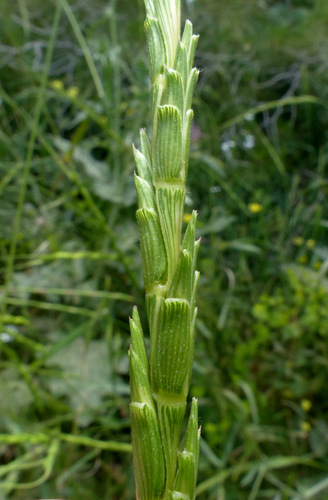
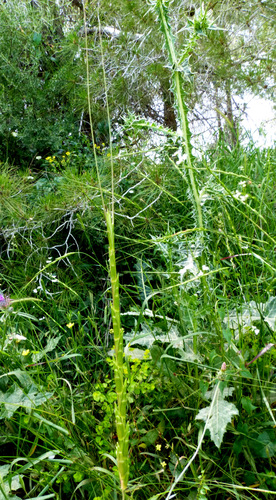
Aegilops speltoides is an annual grass reaching 0.6 m (2 ft) tall. Not frost tender. Flowers July to August with seeds ripening August to September. Wind-pollinated hermaphrodite. Adapts to light sandy, medium loamy, and heavy clay soils with good drainage. Grows in semi-shade to full sun and tolerates both dry and moist soil across mildly acidic to mildly alkaline pH ranges.
How to Grow
No records of cultivation details have been seen, the plant grows well at Kew on an acid gravelly soil and also in Cornwall on a slightly acid loam. It is probably best grown in a sunny position but tolerates light shade. This species is believed to have hybridized with primitive forms of Triticum spp (Wheat) to produce some of the more modern Triticum spp. It could therefore be of value in breeding programmes.
Propagation: Sow seed in situ in March or April, covering it only just barely. Keep the soil consistently moist until germination. Alternatively, sow in a greenhouse in early March and transplant outdoors in May.
Medicinal Uses
None known
Other Uses
None known
Wikipedia
Source ↗Aegilops speltoides (syn. Sitopsis speltoides (Tausch) Á.Löve) is an edible goatgrass in the family Poaceae native to Southeastern Europe and Western Asia, which is often used for animal feed, and it has grown in cultivated beds. This plant is an important natural source of disease resistance in wheat, and it is known or likely to be susceptible to barley mild mosaic bymovirus.
Notes
There are about 20-25 Aegilops species.
References (2)
- Flora 20:108. 1837
- Plants for a Future database, The Field, Penpol, Lostwithiel, Cornwall, PL22 0NG, UK. http://www.scs.leeds.ac.uk/pfaf/


