Cyperus articulatus
Linn.
Guinea rush, Jointed flatsedge

(c) Linda Loffler, some rights reserved (CC BY-NC), uploaded by Linda Loffler
(c) La Mancha en Movimiento, some rights reserved (CC BY-NC), uploaded by La Mancha en Movimiento

(c) Linda Jo Conn, some rights reserved (CC BY-NC), uploaded by Linda Jo Conn
What to Eat
Edible parts: Tubers, Root, Rhizomes
Rhizomes - peeled and eaten raw. Essential oils obtained from the roots are used as a flavouring in the food industry. We have no specific information for this species, but it is said that the inner base of the young stems of all species in this genus can be eaten raw, and make an excellent survival food in times of need.
Known Hazards
Where to Find It
A tropical plant. It grows in shallow water. It grows in damp soils along river banks. It is damaged by frost or drought. It can grow in slightly salty soils. It grows between 2-1,700 m above sea level. It grows in wet grass savannah. It can grow in arid places.
Africa, Asia, Australia, Belize, Botswana, Brazil, Burkina Faso, Central Africa, Central America, Chad, Congo DR, Côte d'Ivoire, East Africa, Ecuador, Eswatini, Gabon, Gambia, Ghana, Guatemala, Guiana, Guianas, Guinea, Guinée, Guinea-Bissau, Haiti, Honduras, India, Ivory Coast, Kenya, Liberia, Madagascar, Malawi, Mali, Mauritania, Mexico, Mozambique, Namibia, Nigeria, North America, Pakistan, Panama, Peru, Sao Tome and Principe, Senegal, Sierra Leone, South Africa, Southern Africa, South America, St. Kitts and Nevis, Suriname, Swaziland, Tanzania, Togo, Uganda, Venezuela, West Africa, West Indies, Zambia, Zimbabwe,
How to Identify
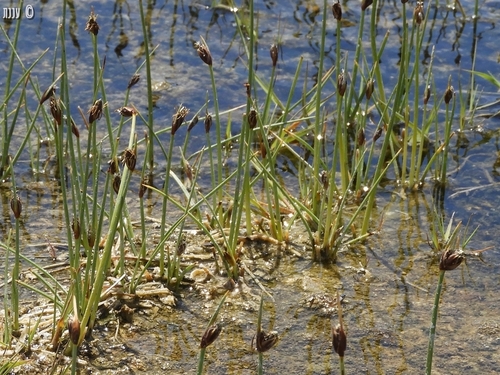
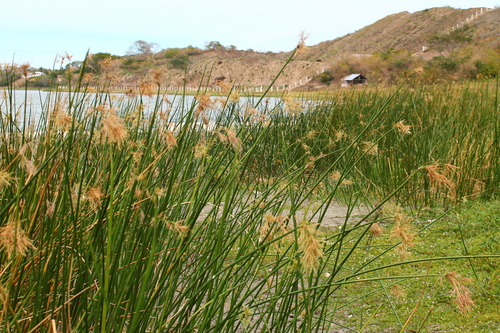
A herb. It is an almost leafless sedge. It keeps growing from year to year and is erect. The stems are 1.2 m tall and pithy. The stems are about 1 cm thick. They are cylinder shaped and pale yellow. The flowering stalk has fine drooping branches. It has black tubers. They have a lavender smell.
How to Grow
Grows naturally from the warm temperate zone through to the tropics. Probably requires a moist to wet soil. A tropical plant. It grows in shallow water. It grows in damp soils along river banks. It is damaged by frost or drought. Freshwater but it can grow in slightly salty soils. It grows between 2-1,700 m above sea level. It grows in wet grass savannah. It can grow in arid places.
Propagation: Seed or division.
Medicinal Uses
Piripiri has a long history in South American herbal medicine, particularly valued for its effects on the digestive system, commonly treating nausea, vomiting, stomach aches, and intestinal gas. The plant is anthelmintic, antibacterial, antiemetic, antifungal, carminative, contraceptive, digestive, febrifuge, and sedative. Research interest has grown around its potential for treating epilepsy and convulsions; studies from Africa suggest the plant can mediate brain chemical reactions involved in epilepsy and that the rhizome has anti-epileptic and anti-convulsant actions, as well as sedative properties. Fresh rhizomes are ground to extract the juice, which is used as a nerve tonic for stress and nervous and mental disorders including epilepsy. It is also used to treat and prevent digestive and gastrointestinal disorders, fevers and flu, to facilitate childbirth or induce abortion, as a contraceptive, and for throat cancer. Externally it is applied to heal wounds and treat snakebite, and placed on the head as a hair tonic and to treat or prevent baldness. A leaf infusion treats headaches, colds and flu, mouth sores and ulcers, and hypertension. A decoction of the whole plant is used to relieve nausea and vomiting caused by malaria.
Other Uses
The tall green stems are fibrous, round, hollow, and up to 18mm wide at the base; they have been used like reeds in basket-making and woven into mats. The fragrant, sweet-scented tuberous roots are used for perfuming clothing. The plant helps prevent erosion when growing along stream banks. Cattle will pasture on the plant when other forage is unavailable.
Wikipedia
Source ↗Cyperus articulatus is an aromatic species of sedge known by the common names jointed flatsedge and priprioca. It has also been known as Guinea rush or adrue. It grows as a perennial herb. It grows in water or near it in rivers, streams, lakes, and swamps with a hyperhydrate (emergent aquatic) or possibly tenagophyte (submerged juvenile and terrestrial adult) growth pattern. It is widespread across tropical and subtropical regions in Africa, southern Asia, northern Australia, the southeastern United States, the West Indies, and Latin America. While it is closely related to highly invasive sedges such as purple nut sedge (Cyperus rotundus), priprioca is less prolific and competitive than its relative.
Notes
There are 550 Cyperus species. It has many uses in perfume and medicine.
Names & Synonyms
Aldrue, Bitono, Bum-ane, Culeme, Entede, Kauju, Kolime, M'pofa, Mampufam Contumo, Mdulu, Mlulu, Modjote, Mussumarre, N'Buam, N'popa, N'ted, N'ten-tede, N'tende, Ndrauru, Nkulu, Tindzau, Tsimitamita, Umbuan, Umpopa, Untende, Ussoe
References (16)
- Ambasta, S.P. (Ed.), 2000, The Useful Plants of India. CSIR India. p 157
- Bodkin, F., 1991, Encyclopedia Botanica. Cornstalk publishing, p 315
- Brazil: Biodiversity for Food and Nutrition. http://www.b4fn.org/countries/brazil/
- Brown, D., 2002, The Royal Horticultural Society encyclopedia of Herbs and their uses. DK Books. p 189
- Flora of Pakistan. www.eFloras.org
- Fowler, D. G., 2007, Zambian Plants: Their Vernacular Names and Uses. Kew. p 66
- Grivetti, L. E., 1980, Agricultural development: present and potential role of edible wild plants. Part 2: Sub-Saharan Africa, Report to the Department of State Agency for International Development. p 30
- Latham, P., 2004, Useful Plants of Bas-Congo province. Salvation Army & DFID p 106
- Royal Botanic Gardens, Kew (1999). Survey of Economic Plants for Arid and Semi-Arid Lands (SEPASAL) database. Published on the Internet; http://www.rbgkew.org.uk/ceb/sepasal/internet [Accessed 16th April 2011]
- Simpson, D. A. & Inglis, C. A., 2001, Cyperaceae of Economic, Ethnobotanical and Horticultural Importance: A checklist. Kew Bulletin Vol. 56, No. 2 (2001), pp. 257-360
- Sp. pl. 1:44. 1753
- Swaziland's Flora Database http://www.sntc.org.sz/flora
- Terra, G.J.A., 1973, Tropical Vegetables. Communication 54e Royal Tropical Institute, Amsterdam, p 44
- Terashima, H., et al, 1992, Ethnobotany of the Lega in the Tropical Rainforest of Eastern Zaire (Congo): Part Two, Zone de Walikale, African Study Monographs, Suppl. 19:1-60
- Williamson, J., 2005, Useful Plants of Malawi. 3rd. Edition. Mdadzi Book Trust. p 93
- World Checklist of Useful Plant Species 2020. Royal Botanic Gardens, Kew
More from Cyperaceae