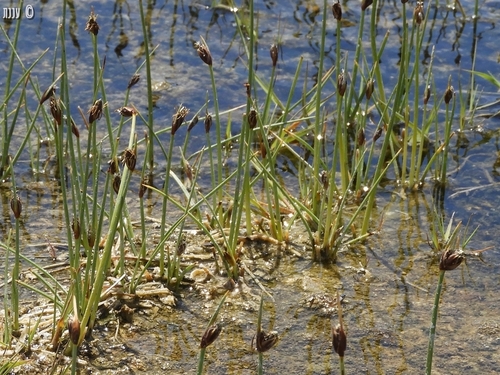
Cyperus diffusus
Vahl.
Ilat, Rice sedge
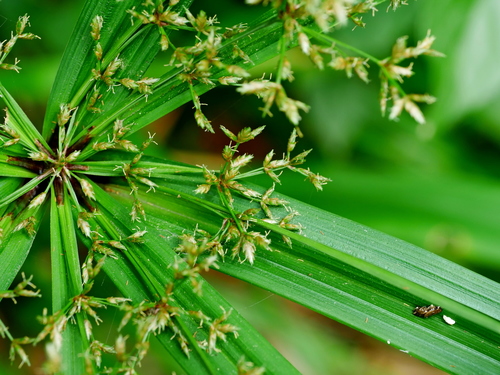
(c) Jacy Chen, some rights reserved (CC BY), uploaded by Jacy Chen
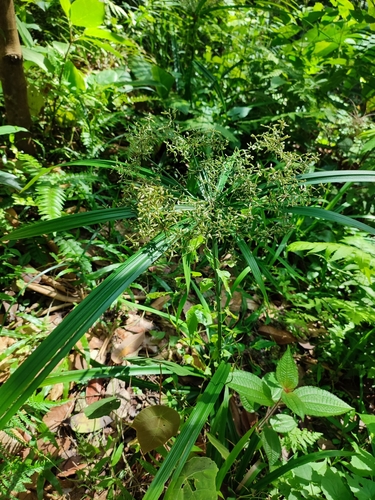
(c) Andrey Efremov, some rights reserved (CC BY-NC)

(c) Luis, some rights reserved (CC BY-NC), uploaded by Luis
What to Eat
Edible parts: Tubers, Root
We have no specific information for this species, but it is said that the inner base of the young stems of all species in this genus can be eaten raw, and make an excellent survival food in times of need.
Where to Find It
A tropical plant. In Java it grows up to 800 m above sea level. It is often in shade and near water.
Asia, Australia, Central America, Guatemala, Indonesia, Indochina, Laos, Myanmar, SE Asia, Slovenia,
How to Identify
A sedge. These grow in clumps and have grass like leaves and solid stalks. It keeps growing from year to year. It grows 25-75 cm tall. The roots are reddish brown. The leaves grow from near the base. The flowers are in an irregular group with a ring of large leaf like bracts. These are unequal and can be 5-35 cm across. The fruit are 3 sided.
How to Grow
The plant prefers a position in full sun, but can tolerate some shade. The plant is often found growing in deep shade in the wild. Grows best in a moist to boggy soil, often found in the wild with its roots submerged in water.
Medicinal Uses
The roots are used as an antipyretic, antitussive, analgesic, cardiotonic, diuretic. The roots are used to treat diseased lips. The leaves are said to have antiseptic properties.
Wikipedia
Source ↗Cyperus croceus is a species of sedge that is native to tropical and sub-tropical parts of Asia and Australia. The species was first formally described by the botanist Martin Vahl in 1805.
Notes
There are 550 Cyperus species. In Slovenia possibly in a hot house.
Names & Synonyms
Razprostrta ostrica, Wet-kyein, Wet-kyein-myet
References (6)
- Jones D, L, 1986, Ornamental Rainforest Plants in Australia, Reed Books, p 278
- Ochse, J.J. et al, 1931, Vegetables of the Dutch East Indies. Asher reprint. p 217
- Standley, P. & Steyermark, J., 1958, Flora of Guatemala. Fieldiana: Botany, Volume 24 part 1 p 120
- Stephens, K.M., & Dowling, R.M., 2002, Wetland Plants of Queensland. A field guide. CSIRO p 19
- Terra, G.J.A., 1973, Tropical Vegetables. Communication 54e Royal Tropical Institute, Amsterdam, p 44
- World Checklist of Useful Plant Species 2020. Royal Botanic Gardens, Kew
More from Cyperaceae