Cyperus esculentus
L.
Yellow Nutsedge, Tiger nut

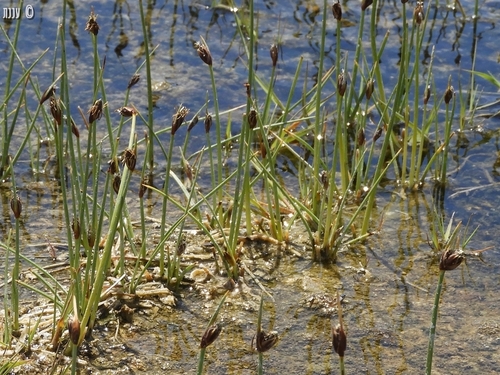
(c) Cin-Ty Lee, some rights reserved (CC BY-NC), uploaded by Cin-Ty Lee
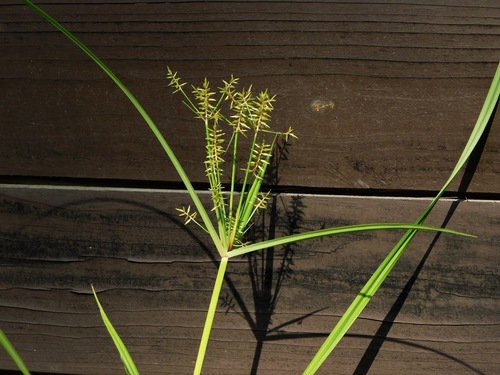
(c) Michael J. Papay, some rights reserved (CC BY), uploaded by Michael J. Papay

(c) Douglas Goldman, some rights reserved (CC BY-SA), uploaded by Douglas Goldman
What to Eat
Edible parts: Tubers, Oil, Bulb, Vegetable, Root, Coffee
Tubers are the primary food resource and can be eaten raw, cooked, or dried and ground into a powder. They have a delicious nut-like flavour but are rather chewy with a tough skin, tasting best when dried. They can be cooked in barley water to impart a sweet flavour and then used as a dessert nut. A refreshing beverage is made by mixing ground tubers with water, cinnamon, sugar, vanilla, and ice. Ground tubers can also be made into a plant milk with water, wheat, and sugar. An edible oil extracted from the tuber is considered superior and compares favourably with olive oil. The roasted tubers are also used as a coffee substitute. The base of the plant — likely the base of the leaf stems — can be used in salads. Tubers are calorie-dense and nutritious; soaking raw tubers softens them, roasting enhances flavour, and boiling produces a potato-like texture. Selected forms exist for agricultural production, particularly in Spain. Tubers are best harvested in autumn though they may persist underground into winter. Wash thoroughly and cook when possible due to potential wetland pathogens.
Known Hazards
Where to Find It
A tropical plant. It grows throughout the tropics and warm temperate zone. It is common in seasonally dry grasslands. It does not tolerate shade. High temperatures (27-30°C) and low nitrogen favours tuber production. It grows best in sandy soils with pH 5.5-6.5. It can tolerate salty soils. Day lengths of 8-12 hours favours tuber production. Day lengths of over 16 hours favour vegetative growth. It can grow in arid places. In Yunnan.
Africa, Albania, Argentina, Asia, Australia, Balkans, Benin, Bolivia, Botswana, Brazil, Bulgaria, Burkina Faso, Cambodia, Cameroon, Canada, Cape Verde, Central Africa, Central America, Chad, Chile, China, Congo, Côte d'Ivoire, Czech Republic, East Africa, Egypt, Eswatini, Ethiopia, Europe, France, Gambia, Germany, Ghana, Greece, Guatemala, Guinea, Guinée, Guinea-Bissau, Haiti, Hawaii, Hungary, India, Indochina, Indonesia, Italy, Ivory Coast, Laos, Libya, Madagascar, Malawi, Mali, Mauritania, Mediterranean, Mexico, Middle East, Mozambique, Myanmar, Namibia, Netherlands, Niger, Nigeria, North Africa, North America, Northeastern India, Oman, Pakistan, Panama, Paraguay, Portugal, Sahel, Sao Tome and Principe, Saudi Arabia, SE Asia, Sicily, Senegal, Sierra Leone, Somalia, Spain, South Africa, South America, Southern Africa, South Sudan, Spain, St Helena, Sudan, Swaziland, Taiwan, Tanzania, Togo, Turkey, Türkiye, Uruguay, USA, Venezuela, West Africa, West Indies, Yemen, Zambia, Zimbabwe,
How to Identify
An upright grass like sedge. It continues to grow from year to year. It is usually 30-90 cm high. The leaves are long and narrow. They are shiny. The leaves are arranged on 3 rows around an angular stem. The leaves often have a pointed tip. The leaves are light green. The flowers are yellow spikes. They are 1-1.5 cm long. There are many creeping underground stems (rhizomes). These spread out then end in a swelling. This tuber is round and 5-20 mm long. It has a thin brown skin. They are crisp and nutty.
Nutrition Score: 54/100
| Part | Moisture | kJ | kcal | Protein | Vit A | Vit C | Iron | Zinc |
|---|---|---|---|---|---|---|---|---|
| Rhizome | 36.5 | 1262 | 302 | 3.5 | — | — | 8 | — |
| Bulb - nuts | 77.4 | 342 | 82 | 0.9 | — | 21 | 4.2 | 0.6 |
How to Grow
A top-tier edible sedge that combines resilience with nutritional density. Growing Conditions: Thrives in moist soils but tolerates moderate drought once established. Habitat & Range: Native to parts of Eurasia and Africa; now widespread across temperate and subtropical regions. Size & Landscape Performance: Dense stands may outcompete neighboring plants. Cultivation (Horticulture): Easy to grow but difficult to contain. Pests & Problems: Few natural predators; persistence is the main challenge. Identification & Habit: Triangular stems, narrow leaves, and golden seed heads distinguish it. Pollinators: Primarily wind-pollinated; seeds feed birds. Prefers a moist sandy loam. Plants are hardy to about -15°c. The chufa, or tiger nut, is often cultivated for its edible tuber in warm temperate and tropical zones, there is a cultivated variety, var. sativus, that produces larger tubers. We have had lots of problems with growing this cultivated form. Once the tubers come into growth then they normally grow vigorously, but the difficulty is getting them to come into growth. We harvest the tubers in the autumn and store them in moist sand, replanting them in the spring. However, they rarely come into new growth until mid to late summer which gives them too short a growing season to produce much of a crop. We need to find a satisfactory way of storing the tubers and exciting them back into growth. In warmer climates this plant is a serious weed of cultivation. It is much hardier than was once imagined and is becoming a weed in N. America where it is found as far north as Alaska. The tubers are often formed a metre or more away from the plant, especially if it is growing in a heavy clay soil. The tubers are extremely attractive to mice and require protection from them in the winter. Plant Name: Chufa. Family: Cyperaceae. Genus: Cyperus. Common Names: Yellow nutsedge, chufa, earth almond. USDA Hardiness Zones: Approximately 5–10. Height/Spread: 30–90 cm tall; spreads via rhizomes forming loose colonies. Introduced into: Austria, Belgium, Cambodia, China North-Central, Germany, Hawaii, Hungary, Japan, Jawa, Mauritius, New Guinea, New South Wales, New Zealand North, Poland, Réunion, St.Helena, Taiwan, Tristan da Cunha, Ukraine, Vietnam.
Propagation: Surface sow seed in spring and keep the compost moist; germination usually takes 2–6 weeks at 18°C. Prick seedlings into individual pots as soon as large enough to handle, grow through their first winter in a greenhouse, and plant out in late spring after the last expected frosts. Division in spring or autumn essentially involves harvesting tubers and replanting them; tubers lifted in autumn are best stored in a cool, frost-free place over winter and planted out in spring.
Medicinal Uses
Tiger nuts are regarded as a digestive tonic with a heating and drying effect on the digestive system, alleviating flatulence and promoting urine production and menstruation. The tubers are aphrodisiac, carminative, diuretic, emmenagogue, stimulant, and tonic. In Ayurvedic medicine they are used to treat flatulence, indigestion, colic, diarrhoea, dysentery, debility, and excessive thirst.
Other Uses
The tubers contain up to 30% of a non-drying oil used in cooking and soap-making. This oil does not solidify at 0°C and stores well without going rancid. The leaves can be used for weaving hats and matting. Boiled tubers are used in the UK as bait for carp. Tubers are eaten by mammals and the foliage shelters insects.
Wikipedia
Source ↗Cyperus esculentus (also called chufa, tiger nut, atadwe, yellow nutsedge, earth almond, and in Chishona, pfende) is a species of plant in the sedge family widespread across much of the world. It is found in most of the Eastern Hemisphere, including Southern Europe, Africa and Madagascar, as well as the Middle East and the Indian subcontinent. C. esculentus is cultivated for its edible tubers, called earth almonds or tiger nuts (due to the stripes on their tubers and their hard shell), as a snack food and for the preparation of horchata de chufa, a sweet, milk-like beverage. Cyperus esculentus can be found wild, as a weed, or as a crop. It is an invasive species outside its native range, and is readily transported accidentally to become invasive. In many countries, C. esculentus is considered a weed. It is often found in wet soils such as rice paddies and peanut farms as well as well-irrigated lawns and golf courses during warm weather.
Production
Yields of 800-900 kg per hectare of tubers are achieved on sandy soils. Yields of 8000-14000 kg per hectare are possible. Tiger nuts take 90-120 days to reach maturity.
Other Information
It is a commercially cultivated vegetable. It is an important food of several tribes in Africa. They are sold in markets in India. They are cultivated in Spain.
Notes
There are 550 Cyperus species.
Names & Synonyms
Abdulaziz, Abide, Aya, Banhamo, Bibi, Ceko, Chichoda, Chimbwe-chimbwe, Chufa, Chufa salvaje, Dila, Dim, Djardole, Djunca, Earth almonds, Enensa, Fio, Gaasu, Geeluintjie, Gocoso, Goon, Haya, Imumu, Inqoba, Junca, Kaothum, Karepoka, Karekika, Kaseru, Kaseruka, Keseru, Kwentii, Motha, Ndao, Ndawi, Ngowe, Noem phlong, Nut Sedge, Nut-grass, Ofio, Amu, Omu, Pfende, Rush nuts, Sekwa, Tiger nut, Tiririca, Umhlata, Vista, Yanaacemmora, Zulu nut
References (94)
- Abbiw, D.K., 1990, Useful Plants of Ghana. West African uses of wild and cultivated plants. Intermediate Technology Publications and the Royal Botanic Gardens, Kew. p 30
- Abano, E. E. and Amoah, K. K. (2011), Effect of moisture content on the physical properties of tiger nut (Cyperus esculentus), Asian Journal of Agricultural Research 5, pp. 56–60
- Adejuyitan, J. A., Otunola, E. T., Akande, E. A., Bolarinwa, I. F. and Oladokun, F. M., 2009, Some physicochemical properties of flour obtained from fermentation of tiger nut (Cyperus esculentus) sourced from a market in Ogbomoso, Nigeria, African Journal of Food Science, Vol 3(2) pp. 51-53.
- Ambasta, S.P. (Ed.), 2000, The Useful Plants of India. CSIR India. p 157
- Asfaw, Z., Conservation and use of traditional vegetables in Ethiopia. FAO
- Asfaw, Z. and Tadesse, M., 2001, Prospects for Sustainable Use and Development of Wild Food Plants in Ethiopia. Economic Botany, Vol. 55, No. 1, pp. 47-62
- Beckstrom-Sternberg, Stephen M., and James A. Duke. "The Foodplant Database." http://probe.nalusda.gov:8300/cgi-bin/browse/foodplantdb.(ACEDB version 4.0 - data version July 1994)
- Belewu, M. A. and Abodunrin, O. A., 2008, Preparation of Kunnu from Unexploited Rich Food Source: Tiger Nut (Cyperus esculentus), Pakistan Journal of Nutrition 7: pp. 109–110.
- Blamey, M and Grey-Wilson, C., 2005, Wild flowers of the Mediterranean. A & C Black London. p 529
- Bodkin, F., 1991, Encyclopedia Botanica. Cornstalk publishing, p 316
- Burkill, H. M., 1985, The useful plants of west tropical Africa, Vol. 1. Kew.
- Cherikoff V. & Isaacs, J., The Bush Food Handbook. How to gather, grow, process and cook Australian Wild Foods. Ti Tree Press, Australia p 194
- Cribb, A.B. & J.W., 1976, Wild Food in Australia, Fontana. p 157
- Dansi, A., et al, 2012, Diversity of the Neglected and Underutilized Crop Species of Importance in Benin. The Scientific World Journal. Volume 2012, Article ID 932947, 19 pages
- Devi, O.S., P. Komor & D. Das, 2010, A checklist of traditional edible bio-resources from Ima markets of Imphal Valley, Manipur, India. Journal of Threatened Taxa 2(11): 1291-1296
- Dogan, Y., et al, 2004, The Use of Wild Edible Plants in Western and Central Anatolia (Turkey). Economic Botany 58(4) pp. 684-690
- Duarte, M. C., et al, 2022, Diversity of Useful Plants in Cabo Verde Islands: A Biogeographic and Conservation Perspective. Plants 2022, 11, 1313 p 5
- Duke, J.A., 1992, Handbook of Edible Weeds. CRC Press. p 82
- Ekman Herbarium records Haiti
- Elias, T.S. & Dykeman P.A., 1990, Edible Wild Plants. A North American Field guide. Sterling, New York p 130
- Ertug, F, Yenen Bitkiler. Resimli Türkiye Florası -I- Flora of Turkey - Ethnobotany supplement
- Esperanca, M. J., 1988. Surviving in the wild. A glance at the wild plants and their uses. Vol. 1. p 227
- Facciola, S., 1998, Cornucopia 2: a Source Book of Edible Plants. Kampong Publications, p 90
- FAO, 1988, Traditional Food Plants, FAO Food and Nutrition Paper 42. FAO Rome p 239
- Flora of Pakistan. www.eFloras.org
- Flowerdew, B., 2000, Complete Fruit Book. Kyle Cathie Ltd., London. p 209
- Fowler, D. G., 2007, Zambian Plants: Their Vernacular Names and Uses. Kew. p 66
- Fox, F. W. & Young, M. E. N., 1982, Food from the Veld. Delta Books. p 179
- Gallagher, D. E., 2010, Farming beyond the escarpment: Society, Environment, and Mobility in Precolonial Southeastern Burkina Faso. PhD University of Michigan.
- Geraci, A., et al, 2018, The wild taxa utilized as vegetables in Sicily (Italy): a traditional component of the Mediterranean diet. Journal of Ethnobiology and Ethnomedicine (2018) 14:14
- Gouldstone, S., 1983, Growing your own Food-bearing Plants in Australia. Macmillan p 182
- Grivetti, L. E., 1980, Agricultural development: present and potential role of edible wild plants. Part 2: Sub-Saharan Africa, Report to the Department of State Agency for International Development. p 24
- Grubben, G. J. H. and Denton, O. A. (eds), 2004, Plant Resources of Tropical Africa 2. Vegetables. PROTA, Wageningen, Netherlands. p 561
- Hanawa, Y., 2013, Wild edible plants used by Guiziga people of far north region of Cameroon. Int. J. Med. Arom. Plants. Vol 3 (2) : 136-143
- Hedrick, U.P., 1919, (Ed.), Sturtevant's edible plants of the world. p 262
- Heywood, V.H., Brummitt, R.K., Culham, A., and Seberg, O., 2007, Flowering Plant Families of the World. Royal Botanical Gardens, Kew. p 364
- Hibbert, M., 2002, The Aussie Plant Finder 2002, Florilegium. p 79
- Hu, Shiu-ying, 2005, Food Plants of China. The Chinese University Press. p 299
- Jardin, C., 1970, List of Foods Used In Africa, FAO Nutrition Information Document Series No 2.p 74
- Kay, D.E., 1973, Root Crops, Digest 2, Tropical Products Institute, London, p 50
- Kays, S. J., and Dias, J. C. S., 1995, Common Names of Commercially Cultivated Vegetables of the World in 15 languages. Economic Botany, Vol. 49, No. 2, pp. 115-152
- Kinupp, V. F., 2007, Plantas alimenticias nao-convencionais da regiao metropolitana de Porto Alegre, RS, Brazil p 75
- Kiple, K.F. & Ornelas, K.C., (eds), 2000, The Cambridge World History of Food. CUP p 1756
- Lazarides, M. & Hince, B., 1993, Handbook of Economic Plants of Australia, CSIRO. p 74
- Lim, T. K., 2015, Edible Medicinal and Non Medicinal Plants. Volume 9, Modified Stems, Roots, Bulbs. Springer p 32
- Long, C., 2005, Swaziland's Flora - siSwati names and Uses http://www.sntc.org.sz/flora/
- Lulekal, E., et al, 2011, Wild edible plants in Ethiopia: a review on their potential to combat food insecurity. Afrika Focus - Vol. 24, No 2. pp 71-121
- Lyle, S., 2006, Discovering fruit and nuts. Land Links. p 173
- MacKinnon, A., et al, 2009, Edible & Medicinal Plants of Canada. Lone Pine. p 373
- Macmillan, H.F. (Revised Barlow, H.S., et al) 1991, Tropical Planting and Gardening. Sixth edition. Malayan Nature Society. Kuala Lumpur. p 338
- Magwede, K., van Wyk, B.-E., & van Wyk, A. E., 2019, An inventory of Vhavenḓa useful plants. South African Journal of Botany 122 (2019) 57–89
- Mahklouf, M. H., 2019, Ethnobotanical Study of Edible Wild Plants in Libya. European Journal of Ecology. 5(2): 30-40
- Malaisse, F., 1997, Se nourrir en floret claire africaine. Approche ecologique et nutritionnelle. CTA., p 61
- Malezas Comestibles del Cono Sur, INTA, 2009, Buernos Aires
- Maroyi, A., 2011, The Gathering and Consumption of Wild Edible Plants in Nhema Communal Area, Midlands Province, Zimbabwe. Ecology of Food and Nutrition 50:6, 506-525
- Maroyi, A., 2013, Use of weeds as traditional vegetables in Shurugwi District, Zimbabwe. Journal of Ethnobiology and Ethnomedicine 9:60
- Meitei, L. R., et al, 2022, An ethnobotanical study on the wild edible plants used by forest dwellers in Yangoupokpi Lokchao Wildlife Sanctuary, Manipur, India. Ethnobotany Research and Application 23:15
- Okigbo, B.N., Vegetables in Tropical Africa, in Opena, R.T. & Kyomo, M.L., 1990, Vegetable Research and development in SADCC countries. Asian Vegetable Research and development Centre. Taiwan. p 38
- Parker, M. L., 2000, Esterified Phenolics of the Cell Walls of Chufa (Cyperus esculentus L.) Tubers and Their Role in Texture. Journal of Agricultural and Food Chemistry. 48:6284-6291
- Peters, C. R., O'Brien, E. M., and Drummond, R.B., 1992, Edible Wild plants of Sub-saharan Africa. Kew. p 15
- Phon, P., 2000, Plants used in Cambodia. © Pauline Dy Phon, Phnom Penh, Cambodia. 191
- Plants for a Future database, The Field, Penpol, Lostwithiel, Cornwall, PL22 0NG, UK. http://www.scs.leeds.ac.uk/pfaf/
- Plants of Haiti Smithsonian Institute http://botany.si.edu/antilles/West Indies
- Romanowski, N., 2007, Edible Water Gardens. Hyland House. p 86
- Ruiters-Welcome, A. K., 2019, Food plants of southern Africa. Ph.D. thesis. Univ. of Johannesburg p 51
- Royal Botanic Gardens, Kew (1999). Survey of Economic Plants for Arid and Semi-Arid Lands (SEPASAL) database. Published on the Internet; http://www.rbgkew.org.uk/ceb/sepasal/internet [Accessed 16th April 2011]
- Saunders, C.F., 1948, Edible and Useful Wild Plants. Dover. New York. p 25
- Segnon, A. C. & Achigan-Dako, E. G., 2014, Comparative analysis of diversity and utilization of edible plants in arid and semi-arid areas in Benin. Journal of Ethnobiology and Ethnomedicine 2014, 10:80
- Shava, S., 2000, The Use of Indigenous Plants as Food by a Rural Community in the Eastern Cape: an Educational Exploration. Masters Thesis Rhodes University. p 63
- Simkova, K. et al, 2014, Ethnobotanical review of wild edible plants used in the Czech Republic. Journal of Applied Botany and Food Quality 88, 49-67
- Simpson, D. A. & Inglis, C. A., 2001, Cyperaceae of Economic, Ethnobotanical and Horticultural Importance: A checklist. Kew Bulletin Vol. 56, No. 2 (2001), pp. 257-360
- Singh, H.B., Arora R.K.,1978, Wild edible Plants of India. Indian Council of Agricultural Research, New Delhi. p 12
- Singh, V. and Singh, P., 1981, Edible Wild Plants of Eastern Rajasthan. J. Econ. Tax. Bot. Vol 2 pp 197-207
- Singh, P.K., Singh, N.I., and Singh, L.J., 1988, Ethnobotanical Studies on Wild Edible Plants in the Markets of Manipur - 2. J. Econ. Tax. Bot. Vol. 12 No. 1 pp 113-119
- Sp. pl. 1:45. 1753
- Standley, P. & Steyermark, J., 1958, Flora of Guatemala. Fieldiana: Botany, Volume 24 part 1 p 122, 347
- Swaziland's Flora Database http://www.sntc.org.sz/flora
- Tozer, F., 2007, The Uses of Wild Plants. Green Man Publishing. p 75
- Terra, G.J.A., 1973, Tropical Vegetables. Communication 54e Royal Tropical Institute, Amsterdam, p 43
- Tredgold, M.H., 1986, Food Plants of Zimbabwe. Mambo Press. p 22
- Tronickova, E. & Krejcova, Z., 1987, Ortaggi, Instituto Geografico de Agostini, Cecoslovacchia. p 60
- Ubom, R. M., 2010, Ethnobotany and Diversity Conservatioon in the Niger Delta, Nigeria. International Journal of Botany. 6(3): 310-322
- USDA, ARS, National Genetic Resources Program. Germplasm Resources Information Network - (GRIN). [Online Database] National Germplasm Resources Laboratory, Beltsville, Maryland. Available: www.ars-grin.gov/cgi-bin/npgs/html/econ.pl (10 April 2000)
- Vanderjagt, F. J., et al, 2000, The trypsin inhibitor content of 61 wild edible plant foods of Niger. Plant Foods for Human Nutrition 55: 335–346, 2000.
- van Wyk, B., 2005, Food Plants of the World. An illustrated guide. Timber press. p 171
- van Wyk, Be., & Gericke, N., 2007, People's plants. A Guide to Useful Plants of Southern Africa. Briza. p 86
- Vernon, R., 1983, Field Guide to Important Arable Weeds of Zambia. Dept of Agriculture, Chilanga, Zambia. p 104
- Welcome, A. K. & Van Wyk, B.-E., 2019, An inventory and analysis of the food plants of southern Africa. South African Journal of Botany 122 (2019) 136–179
- Wickens, G.E., 1995, Edible Nuts. FAO Non-wood forest products. FAO, Rome. p160
- Wiersema, J. H. & Leon, B., 2013, World Economic Plants. A Standard Reference CRC Press. 2nd Ed. p 225
- Wild edible plants of Himachal Pradesh
- World Checklist of Useful Plant Species 2020. Royal Botanic Gardens, Kew
- Zeven, A. C. & de West, J. M. J., 1982, Dictionary of cultivated plants and their regions of diversity. Wageningen. p 108
- ZINYAMA,
More from Cyperaceae