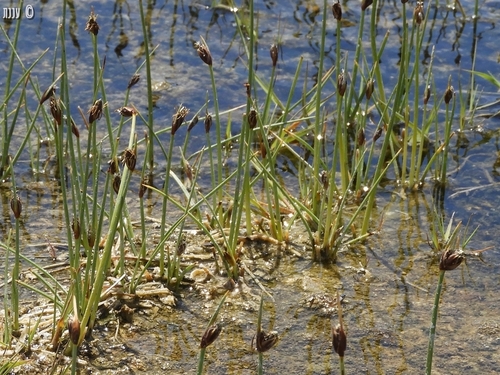
Cyperus haspan
L.
Dwarf papyrus
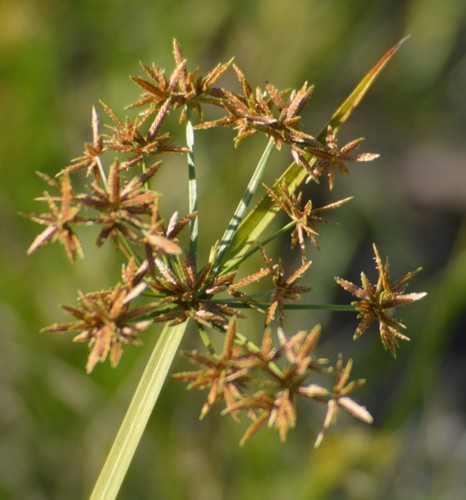
(c) Tom Palmer, some rights reserved (CC BY-NC), uploaded by Tom Palmer
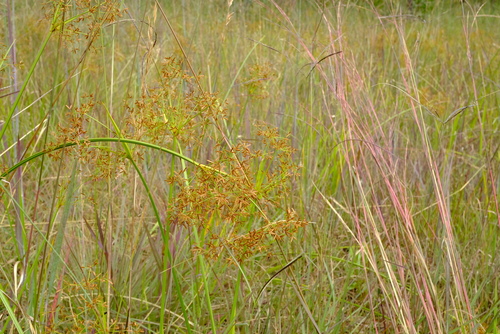
(c) Nick Helme, some rights reserved (CC BY-NC)

(c) Craig Peter, some rights reserved (CC BY-NC), uploaded by Craig Peter
What to Eat
Edible parts: Tubers, Ash - salt, Root
Salt is prepared from the ashes of the plant. Water is percolated through the ashes in order to dissolve out the potassium salts, the water is then evaporated off to leave the salts behind. It is made on a small scale by some tribes in eastern Africa. We have no specific information for this species, but it is said that the inner base of the young stems of all species in this genus can be eaten raw, and make an excellent survival food in times of need.
Where to Find It
A tropical plant. It grows in tropical places and into warm temperate regions. It grows in damp spots. In Yunnan.
Africa, Argentina, Asia, Australia, Belize, Bhutan, Botswana, Brazil, Burkina Faso, Cambodia, Central America, China, East Africa, Eswatini, Fiji, French Guiana, Ghana, Guatemala, Guianas, Guyana, Himalayas, India, Indochina, Indonesia, Japan, Korea, Laos, Madagascar, Malaysia, Mozambique, Myanmar, Nepal, North America, Pacific, Pakistan, Panama, Papua New Guinea, PNG, Paraguay, Philippines, Sao Tome and Principe, SE Asia, South Africa, South America, Southern Africa, Sri Lanka, Suriname, Swaziland, Taiwan, Thailand, Tibet, Togo, Uruguay, USA, Venezuela, Vietnam, West Africa, West Indies,
How to Identify
A herb. It is a soft sedge. It grows 15-60 cm high. The stems forms tufts or can creep short distances. The leaves are reduced to scales which sheath the stem. The culms are 15-60 cm high. They can be flat or 3 angled. The bracts are 5-7.5 vm long. The spikelets are small and shiny brown.
How to Grow
The plant grows in the wild in seasonally and permanently wet grassland, as well as on thin wet soil over rock and in ditches. A common weed in much of the tropics and subtropics. Plants often flower in their first year from seed.
Medicinal Uses
Smoke from the pith of the plant is used as a febrifuge. A decoction of the plant is used internally against shingles. The whole plant, particularly the rhizome, is used with other plants to treat fevers. The rhizomes are diuretic and a paste made from it is taken as a remedy for kidney problems. It is also used for healing, lactation and as a stimulant
Other Uses
The pith of the stems has been used as lamp wicks. The plant is a source of materials for weaving into mats and baskets.
Wikipedia
Source ↗Cyperus haspan is a dwarf papyrus sedge in the Cyperaceae. It is widely distributed in tropical and subtropical regions in Africa, Madagascar, southern Asia (Iran, India, China, Philippines, Indonesia, etc.), New Guinea, Australia, South America, West Indies, Central America, southern Mexico and the southeastern United States (from Texas to Virginia). C. haspan is found most commonly in areas with full sunlight, as it has low tolerance for shaded areas. Common habitat types for this species includes low fields, tidal marshes, broadleaf marshes, and wet prairies. It has been found to have a tolerance for low-intensity fires.
Notes
There are 550 Cyperus species.
Names & Synonyms
Capim-danda, Rumput sumbu, Sedge
References (15)
- Ambasta, S.P. (Ed.), 2000, The Useful Plants of India. CSIR India. p 158
- Bodkin, F., 1991, Encyclopedia Botanica. Cornstalk publishing, p 316
- Elliot, W.R., & Jones, D.L., 1984, Encyclopedia of Australian Plants suitable for cultivation. Vol 3. Lothian. p 157
- Facciola, S., 1998, Cornucopia 2: a Source Book of Edible Plants. Kampong Publications, p 90
- Flora of Pakistan. www.eFloras.org
- Kenneally, K.E., Edinger, D. C., and Willing T., 1996, Broome and Beyond, Plants and People of the Dampier Peninsula, Kimberley, Western Australia. Department of Conservation and Land Management. p 206
- Kinupp, V. F., 2007, Plantas alimenticias nao-convencionais da regiao metropolitana de Porto Alegre, RS, Brazil p 75
- Paczkowska, G. & Chapman, A.R., 2000, The Western Australian Flora. A Descriptive Calatogue. Western Australian Herbarium. p 42
- Simpson, D. A. & Inglis, C. A., 2001, Cyperaceae of Economic, Ethnobotanical and Horticultural Importance: A checklist. Kew Bulletin Vol. 56, No. 2 (2001), pp. 257-360
- Slocum, P.D. & Robinson, P., 1999, Water Gardening. Water Lilies and Lotuses. Timber Press. p 93
- Smith, A.C., 1979, Flora Vitiensis Nova, Lawaii, Kuai, Hawaii, Volume 1 p 252
- Sp. pl. 1:45. 1753
- Standley, P. & Steyermark, J., 1958, Flora of Guatemala. Fieldiana: Botany, Volume 24 part 1 p 125
- Swaziland's Flora Database http://www.sntc.org.sz/flora
- Wightman, Glenn et al. 1994, Gurindji Ethnobotany: Aboriginal Plant Use from Daguragu Northern Australia. Northern Territory Botanical Bulletin No 18. Parks and Wildlife Commission of the Northern Territory. p 20
More from Cyperaceae