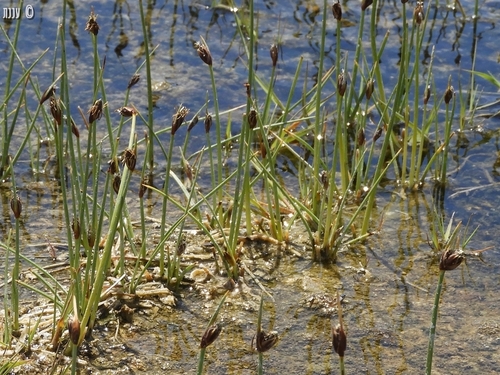
Cyperus longus
L.
Galingale, Sweet galingale

(c) Valter Jacinto, some rights reserved (CC BY-NC-SA)

(c) zebedeugalinha, some rights reserved (CC BY)

(c) Douglas Goldman, some rights reserved (CC BY-SA), uploaded by Douglas Goldman
What to Eat
Edible parts: Roots, Tubers, Spice, Fruit
Tuber - used as a spice in soups, pies and sweets. We have no specific information for this species, but it is said that the inner base of the young stems of all species in this genus can be eaten raw, and make an excellent survival food in times of need.
Known Hazards
Where to Find It
It grows on muddy banks. It grows best in water 5-10 cm deep. It suits hardiness zones 6-9.
Africa, Australia, Botswana, Britain, Burkina Faso, Central Asia, East Africa, Egypt, Eswatini, Europe, France, Greece, India, Iran, Italy, Kazakhstan, Libya, Mediterranean, Middle East, Morocco, North Africa, Pakistan, Portugal, Slovenia, South Africa, Southern Africa, Spain, Swaziland, Tajikistan, Turkey, Türkiye, Zimbabwe,
How to Identify
A sedge. It has single stems. These are almost triangle shaped in cross section. They grow 0.6-1.2 m high. It has thick rhizomes. The leaves are bright green and have stiff ribs. These spread out at the top like an umbrella. The leaves are 3-10 mm wide. They have brown flower spikelets in between. There are 3-6 bracts and the inflorescence has 8-12 rays.
How to Grow
Prefers a moist sandy loam. Succeeds in any good garden soil so long as it does not dry out, it also grows well in up to 30cm of water. Plants are hardy to about -15°c. A very ornamental plant, though it can spread freely at the roots when well-suited. Galingale was one of the favourite spices of the medieval kitchen and was an ingredient of 'pokerounce', a kind of medieval cinnamon toast. It is rarely used at present. Both the root and the stem have a sweet moss-like perfume, resembling that of the violet but not so pure. The aroma becomes more fragrant with age.
Propagation: Surface sow seed in spring, keeping the compost moist; germination typically occurs in 2–6 weeks at 18°C. Prick seedlings into individual pots once large enough to handle, overwinter them in a greenhouse, and plant out in late spring after the last expected frosts. Division can be carried out in spring or autumn and is straightforward at almost any time of year as long as the roots are not allowed to dry out. Divisions can be planted directly into their permanent positions.
Medicinal Uses
The root is an aromatic tonic. It was once considered a useful stomachic and beneficial in the early stages of dropsy, but has since fallen out of medicinal use.
Other Uses
The leaves are used in basketry and for weaving hats and matting. The root and stem carry a violet-like scent used in perfumery; this aroma becomes more pronounced after the root has been dried and aged. Fibre from the plant is also used in paper making.
Wikipedia
Source ↗Cyperus longus is a species of sedge known by the common names of sweet cyperus and water rush in Africa, or in Britain galingale (a variant name of galangal, an unrelated plant).
Notes
There are 550 Cyperus species. It is used in medicine.
Names & Synonyms
Dolgolistna ostrica, Saad
References (22)
- Ambasta, S.P. (Ed.), 2000, The Useful Plants of India. CSIR India. p 158
- Blamey, M and Grey-Wilson, C., 2005, Wild flowers of the Mediterranean. A & C Black London. p 529
- Bremness, L., 1994, Herbs. Collins Eyewitness Handbooks. Harper Collins. p 165
- Brickell, C. (Ed.), 1999, The Royal Horticultural Society A-Z Encyclopedia of Garden Plants. Convent Garden Books. p 332
- Brown, D., 2002, The Royal Horticultural Society encyclopedia of Herbs and their uses. DK Books. p 189
- Cundall, P., (ed.), 2004, Gardening Australia: flora: the gardener's bible. ABC Books. p 458
- Facciola, S., 1998, Cornucopia 2: a Source Book of Edible Plants. Kampong Publications, p 90
- Flora of Pakistan. www.eFloras.org
- Irving, M., 2009, The Forager Handbook, A Guide to the Edible Plants of Britain. Ebury Press p 341
- Jardin, C., 1970, List of Foods Used In Africa, FAO Nutrition Information Document Series No 2.p 74
- Mabey, R., 1973, Food for Free. A Guide to the edible wild plants of Britain, Collins. p 71
- Mahklouf, M. H., 2019, Ethnobotanical Study of Edible Wild Plants in Libya. European Journal of Ecology. 5(2): 30-40
- Nassif, F., & Tanji, A., 2013, Gathered food plants in Morocco: The long forgotten species in Ethnobotanical Research. Life Science Leaflets 3:17-54
- Plants for a Future database, The Field, Penpol, Lostwithiel, Cornwall, PL22 0NG, UK. http://www.scs.leeds.ac.uk/pfaf/
- Romanowski, N., 2007, Edible Water Gardens. Hyland House. p 56
- Ruiters-Welcome, A. K., 2019, Food plants of southern Africa. Ph.D. thesis. Univ. of Johannesburg p 51
- Welcome, A. K. & Van Wyk, B.-E., 2019, An inventory and analysis of the food plants of southern Africa. South African Journal of Botany 122 (2019) 136–179
- Simpson, D. A. & Inglis, C. A., 2001, Cyperaceae of Economic, Ethnobotanical and Horticultural Importance: A checklist. Kew Bulletin Vol. 56, No. 2 (2001), pp. 257-360
- Slocum, P.D. & Robinson, P., 1999, Water Gardening. Water Lilies and Lotuses. Timber Press. p 93
- Sp. pl. 1:45. 1753
- Swaziland's Flora Database http://www.sntc.org.sz/flora
- World Checklist of Useful Plant Species 2020. Royal Botanic Gardens, Kew
More from Cyperaceae