Cyperus victoriensis
C. B. Clarke
Bush onion, Yelka
CyperaceaeRoots

iNaturalist · cc-by-nc
(c) Russell Cumming, some rights reserved (CC BY-NC), uploaded by Russell Cumming
(c) Russell Cumming, some rights reserved (CC BY-NC), uploaded by Russell Cumming

iNaturalist · cc-by-nc
(c) Russell Cumming, some rights reserved (CC BY-NC), uploaded by Russell Cumming
(c) Russell Cumming, some rights reserved (CC BY-NC), uploaded by Russell Cumming
What to Eat
Edible parts: Tuber, Rhizome, Root
The tubers formed on the rhizome are cooked as a vegetable.
Where to Find It
A tropical plant. It grows on flood plains and near rivers. It is on open grasslands on clay.
Australia*,
Countries: Australia
How to Identify
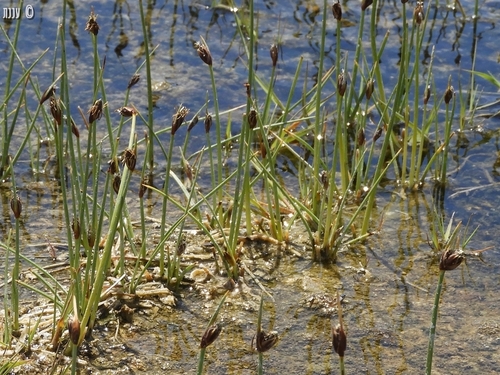
A sedge. These grow in clumps and have grass like leaves and solid stalks. It keeps growing from year to year. It grows 60 cm high.
How to Grow
It can be grown using seed.
Medicinal Uses
It is used as a famine food.
Wikipedia
Source ↗Cyperus victoriensis, also known as channel nut grass is a sedge of the family Cyperaceae that is native to all the states and territories of mainland Australia.
Other Information
It is a famine food.
Notes
There are 550 Cyperus species.
References (6)
- Cherikoff V. & Isaacs, J., The Bush Food Handbook. How to gather, grow, process and cook Australian Wild Foods. Ti Tree Press, Australia p 189
- Hunter, J. T. & Sheringham, P., 2006, Vegetation and Floristics of Melville Range Nature Reserve. A Report to the New South Wales Parks and Wildlife Service. p 165
- Lazarides, M. & Hince, B., 1993, Handbook of Economic Plants of Australia, CSIRO. p 75
- Paczkowska, G. & Chapman, A.R., 2000, The Western Australian Flora. A Descriptive Calatogue. Western Australian Herbarium. p 46
- Romanowski, N., 2007, Edible Water Gardens. Hyland House. p 56
- Simpson, D. A. & Inglis, C. A., 2001, Cyperaceae of Economic, Ethnobotanical and Horticultural Importance: A checklist. Kew Bulletin Vol. 56, No. 2 (2001), pp. 257-360
More from Cyperaceae

Actinoscirpus grossus
Giant bulrush, Greater club-rush

Actinoscirpus grossus var. kysoor
Amphiscirpus nevadensis
Nevada bulrush, Great basin bulrush

Bolboschoenus caldwellii
Sea club rush, Marsh club rush, Seaside bulrush

Bolboschoenus fluviatilis
Marsh club rush, River bulrush, Kukuraho, Purua grass

Bolboschoenus glaucus