Dactyloctenium aegyptium
(L.) Willd.
Comb fringe grass, Coast Button Grass
no rights reserved, uploaded by 葉子

no rights reserved, uploaded by S.MORE
no rights reserved, uploaded by 葉子
What to Eat
Edible parts: Seeds, Cereal, Rhizome, Root
The seeds are husked then boiled into porridge, or roasted in a hot pot to soften them, pounded into flour, and cooked into porridge. The rhizome or runners are eaten raw. It is used in kreb, a grain mixture eaten in Chad and Sudan, and serves as a famine food.
Known Hazards
Where to Find It
A tropical plant. It grows in disturbed weedy places especially on sandy soils in S China. It grows in tropical to warm temperate regions. It grows on clayey, sandy or black soil along the borders of ponds, swamps and bogs. In West Africa it grows from sea level up to 2,000 m altitude. It grows in alkaline and salty soils. It grows in areas with an annual rainfall between 100-1,580 mm. It can grow in arid places. In Sichuan and Yunnan.
Afghanistan, Africa, American Samoa, Angola, Anguilla, Argentina, Asia, Australia, Bahamas, Bahrain, Bangladesh, Benin, Bhutan, Bolivia, Botswana, Brazil, Burkina Faso, Burundi, Cambodia, Cameroon, Cape Verde, Central Africa, Central African Republic, CAR, Central America, Chad, China, Chuuk, Colombia, Congo, Costa Rica, Côte d'Ivoire, Cuba, Cyprus, Djibouti, East Africa, East Timor, Ecuador, Egypt, Equatorial-Guinea, Eswatini, Ethiopia, Europe, Fiji, FSM, Gabon, Gambia, Ghana, Greece, Guatemala, Guianas, Guinea, Guinée, Guinea-Bissau, Guyana, Haiti, Hawaii, Himalayas, Honduras, India, Indochina, Iran, Iraq, Israel, Italy, Ivory Coast, Jamaica, Kenya, Kiribati, Korea, Kuwait, Laos, Lebanon, Liberia, Madagascar, Malawi, Malaysia, Maldives, Mali, Marquesas, Mauritania, Mauritius, Mediterranean, Mexico, Middle East, Mozambique, Myanmar, Namibia, Nauru, Nepal, New Caledonia, Nicaragua, Niger, Nigeria, North Africa, North America, Pacific, Pakistan, Papua New Guinea, PNG, Paraguay, Peru, Philippines, Puerto Rico, Reunion, Rwanda, Sahel, Samoa, Sao Tome and Principe, SE Asia, Senegal, Seychelles, Sierra Leone, Socotra, Somalia, South Africa, Southern Africa, South America, South Sudan, Sri Lanka, St Helena, St. Kitts and Nevis, Sudan, Suriname, Swaziland, Syria, Taiwan, Tanzania, Thailand, Tibet, Timor-Leste, Togo, Tonga, Trinidad & Tobago, Tuvalu, Uganda, United Arab Emirates, UAE, Uruguay, USA, Venezuela, Vietnam, West Africa, West Indies, Yemen, Zambia, Zimbabwe,
How to Identify
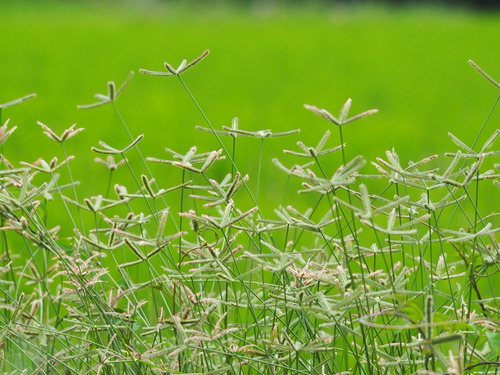
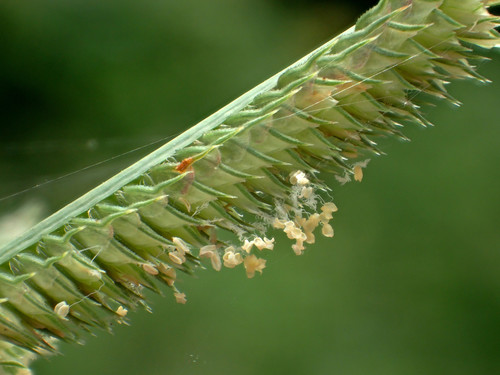
An annual grass. The stems are slender. They can lie along the ground. These can form roots at the nodes. They can have runners and form mats. It is 15-60 cm high. The edges of the leaf sheaths have small hairs. The leaf blades are flat and 5-20 cm long by 0.2-0.6 cm wide. The surfaces are lumpy/hairy. It tapers to the tip. The flowers spread like fingers on a hand. There are 2-9 flower stalks. They are long and narrow. They often spread out horizontally. The spikes are on one side of the stalk. The tip is bare. The seed grains are about 1 mm across.
Nutrition Score: 64/100
| Part | Moisture | kJ | kcal | Protein | Vit A | Vit C | Iron | Zinc |
|---|---|---|---|---|---|---|---|---|
| Seeds | 11.4 | 1438 | 344 | 15.7 | — | — | — | — |
| Seeds | 7.5 | 1234 | 295 | 9.8 | — | — | 6.9 | 4.7 |
How to Grow
Plants can be grown from seeds.
Propagation: Seed - surface sow in situ and protect the seed from predation by covering with branches or some other method.
Medicinal Uses
The whole plant is used in a decoction to remedy lumbago. An infusion of the leaves, mixed with the seeds of Cajanus cajan, is used to accelerate childbirth. A decoction of the leaves, combined with Scoparia dulcis, is used as a remedy for dysentery.
Wikipedia
Source ↗Dactyloctenium aegyptium, or Egyptian crowfoot grass is a member of the family Poaceae native to Africa and Asia. The plant mostly grows in heavy soils at damp sites.
Production
The seeds are collected during the dry season. The seeds can be stored for several months.
Other Information
It is a famine food.
Notes
There are 13 Dactyloctenium species. Chemical composition (Sudan sample): Protein (crude) = 13.1% (dry). Oil = 1.9% (dry). Fibre (crude) = 4.4% (dry). Ash (insoluble) = 8.3% (dry). Sulphur = .18% (dry). Potassium = 0.39% (dry). Manganese = 0.22% (dry). Calcium = 1.07% (dry). Na = 0.02% (dry). K = 0.30% (dry). Zinc = 69 mg/kg-1 Iron = 121 mg/kg-1 (dry). Mn = 425 kg/kg-1 (dry). Copper = 7 mg/kg-1 (dry). Aluminium = 172 mg/kg-1 (dry). Carbohydrate (soluble): Starch = 46.9% (dry). Sucrose = 1.2% (dry). D-glucose = 0.2%(dry). D-fructose = 1.4% (dry). Amino acids (g [16g N ]-1): Aspartic acid = 6.1g. Threonine = 3.7%. Serine = 4.8g. Glutamic acid = 27.6g. Proline = 7.1g. Glycine = 3.5g. Alanine = 7.5g. Valine = 5.8g. Cysteine = 1.5g. Methionine = 3.2g. Isoleucine = 4.8g. Leucine = 9.9g. Tyrosine = 3.5g. Phenylalanine = 6.8g. Histidine = 2.4g. Lysine = 2.0g. Arginine = 4.2g. Fatty acids (saturated): 14:0 = <0.1g/100g-1. 16:0 = 21.5. 18:0 = 5.2. 22:0 = 0.6. 24:0 = <0.1g/100g-1; (monounsaturated): 16:1 = 0.1. 18:1 = 42.0. 20:1 = 0.4; (polyunsaturated): 18:2 = 28.5. 18:3 = 1.5. (Chemical composition (after Paton & Dunlop (grams per 100g) (Anchu Manchu): Protein = 12.87g. Fat = 2.08g. Carbohydrate (soluble) = 64.03g. Fibre = 4.86g. Ash = 4.58g. Water = 11.58g. Calories = 335. (Mali ): Protein = 8.41g. Fat = 1.45g. Carbohydrate (soluble) = 38.97g. Fibre = 36.95g. Water = 8.48g. Calories = 201.
Names & Synonyms
Abou Asabé, Absabe, Abuasabee, Achele, Ahitrombilahy, Anchu Manchu, Bahma, Betombo, Bou, Chikara, Chimbari, Crow’s Foot Grass, Crowfoot, Cuaci, Cunher, Didok-chi, Djinguilano, Duck grass, Eleusine, Ewuduwudu, Father of fingers, Kakuriya, Koreeb, Kreb, Maahui, Madhana, Makara, Makra, Makri, Manchi anchi, Manchi, Mathna, Muttengapilloo, Myet-lay-gwa, Najm, Naparapare, Nasei, Nsonko, Saddexo, Sodee, Tamida, Te utuete, Ukuku
References (58)
- Abbiw, D.K., 1990, Useful Plants of Ghana. West African uses of wild and cultivated plants. Intermediate Technology Publications and the Royal Botanic Gardens, Kew. p 25
- ABDELMUTI,
- Ambasta, S.P. (Ed.), 2000, The Useful Plants of India. CSIR India. p 160
- BHANDARI,
- Burkill, H. M., 1985, The useful plants of west tropical Africa, Vol. 2. Kew.
- Burkill, I.H., 1966, A Dictionary of the Economic Products of the Malay Peninsula. Ministry of Agriculture and Cooperatives, Kuala Lumpur, Malaysia. Vol 1 (A-H) p 758
- Busson, 1965,
- Chen Shouliang, Lu Shenglian, Wu Zhenlan, et al Poaceae Tribe 19 Eragrostidae Flora of China
- Cowie, I, 2006, A Survey of Flora and vegetation of the proposed Jaco-Tutuala-Lore National Park. Timor-Lests (East Timor) www.territorystories.nt/gov.au p 52
- CRÉAC'H,
- Cribb, A.B. & J.W., 1976, Wild Food in Australia, Fontana. p 103
- Duarte, M. C., et al, 2022, Diversity of Useful Plants in Cabo Verde Islands: A Biogeographic and Conservation Perspective. Plants 2022, 11, 1313 p 6
- Enum. pl. 2:1029. 1809 "aegyptiacum" (As (L.) Willd.)
- Flora of Pakistan. www.eFloras.org
- Fowler, D. G., 2007, Zambian Plants: Their Vernacular Names and Uses. Kew. p 69
- Franklin, J., Keppel, G., & Whistler, W., 2008, The vegetation and flora of Lakeba, Nayau and Aiwa Islands, Central Lau Group, Fiji. Micronesica 40(1/2): 169–225, 2008
- Gallagher, D. E., 2010, Farming beyond the escarpment: Society, Environment, and Mobility in Precolonial Southeastern Burkina Faso. PhD University of Michigan.
- Goode, P., 1989, Edible Plants of Uganda. FAO p 30
- Grivetti, L. E., 1980, Agricultural development: present and potential role of edible wild plants. Part 2: Sub-Saharan Africa, Report to the Department of State Agency for International Development. p 41
- GUPTA & KANODIA,
- http://www.sabonet.org.za/downloads/20_namibian_grasses/d_namgrass_list1.pdf
- Hussey, B.M.J., Keighery, G.J., Cousens, R.D., Dodd, J., Lloyd, S.G., 1997, Western Weeds. A guide to the weeds of Western Australia. Plant Protection Society of Western Australia. p 50
- Jackes, B. R., 2010, Plants of Magnetic Island. 3rd Edition. James Cook University, Australia. p 33
- Jardin, C., 1970, List of Foods Used In Africa, FAO Nutrition Information Document Series No 2.p 2
- Kenneally, K.E., Edinger, D. C., and Willing T., 1996, Broome and Beyond, Plants and People of the Dampier Peninsula, Kimberley, Western Australia. Department of Conservation and Land Management. p 217
- Lazarides, M. & Hince, B., 1993, Handbook of Economic Plants of Australia, CSIRO. p 76
- Long, C., 2005, Swaziland's Flora - siSwati names and Uses http://www.sntc.org.sz/flora/
- Masters, T., 2021, Traditional food plants of the upper Aswa River catchment of northern Uganda—a cultural crossroads. Journal of Ethnobiology and Ethnomedicine (2021) 17:24
- Maundu, P. et al, 1999, Traditional Food Plants of Kenya. National Museum of Kenya. 288p
- Menninger, E.A., 1977, Edible Nuts of the World. Horticultural Books. Florida p 147 (As Eleusine ægyptiaca)
- Mutie, F. G., 2020, Conservation of Wild Food Plants and Their Potential for Combatting Food Insecurity in Kenya as Exemplified by the Drylands of Kitui County. Plants 2020, 9, 1017
- Mutie, F. M., et al, 2023, Important Medicinal and Food Taxa (Orders and Families) in Kenya, Based on Three Quantitative Approaches. Plants 2023, 12, 1145
- National Research Council, 1996, Lost crops of Africa. Volume 1 grains, p 258
- Paczkowska, G. & Chapman, A.R., 2000, The Western Australian Flora. A Descriptive Catalogue. Western Australian Herbarium. p 100
- PATON & DUNLOP,
- Peters, C. R., O'Brien, E. M., and Drummond, R.B., 1992, Edible Wild plants of Sub-saharan Africa. Kew. p 20
- Phillips, D.C., 1988, Wild Flowers of Bahrain. A Field Guide to Herbs, Shrubs, and Trees. Privately published. p 113
- Plants of Haiti Smithsonian Institute http://botany.si.edu/antilles/West Indies
- Rivera, D. et al, 2006, Gathered Mediterranean Food Plants - Ethnobotanical Investigations and Historical Development, in Heinrich M, Müller WE, Galli C (eds): Local Mediterranean Food Plants and Nutraceuticals. Forum Nutr. Basel, Karger, 2006, vol 59, pp 18–74
- Roger, D. D., et al, 2012, Nutritional properties of “Bush Meals” from North Cameroon’s Biodiversity. Advances in Applied Science Research, 2012, 3 (3):1482-1493
- Royal Botanic Gardens, Kew (1999). Survey of Economic Plants for Arid and Semi-Arid Lands (SEPASAL) database. Published on the Internet; http://www.rbgkew.org.uk/ceb/sepasal/internet [Accessed 8th May 2011]
- Ruffo, C. K., Birnie, A. & Tengnas, B., 2002, Edible Wild Plants of Tanzania. RELMA p 252
- Ruiters-Welcome, A. K., 2019, Food plants of southern Africa. Ph.D. thesis. Univ. of Johannesburg p 87
- SAXENA,
- SHANKARNARAYAN & SAXENA,
- SHORTT, (As Eleusine aegyptiaca)
- Singh, H.B., Arora R.K.,1978, Wild edible Plants of India. Indian Council of Agricultural Research, New Delhi. p 84
- Smith, A.C., 1979, Flora Vitiensis Nova, Lawaii, Kuai, Hawaii, Volume 1 p 306
- Sujanapal, P., & Sankaran, K. V., 2016, Common Plants of Maldives. FAO & Kerala FRI, p 107
- Swaziland's Flora Database http://www.sntc.org.sz/flora
- Thaman, R. R., 1987, Plants of Kiribati: A listing and analysis of vernacular names. Atoll Research Bulletin No. 296
- Thaman, R. R, 2016, The flora of Tuvalu. Atoll Research Bulletin No. 611. Smithsonian Institute p 53
- Vernon, R., 1983, Field Guide to Important Arable Weeds of Zambia. Dept of Agriculture, Chilanga, Zambia. p 110
- Wehmeyer, A. S, 1986, Edible Wild Plants of Southern Africa. Data on the Nutrient Contents of over 300 species
- Welcome, A. K. & Van Wyk, B.-E., 2019, An inventory and analysis of the food plants of southern Africa. South African Journal of Botany 122 (2019) 136–179
- Wheeler, J.R.(ed.), 1992, Flora of the Kimberley Region. CALM, Western Australian Herbarium, p 1144
- World Checklist of Useful Plant Species 2020. Royal Botanic Gardens, Kew
- Yuncker, T.G., 1959, Plants of Tonga, Bernice P. Bishop Museum, Hawaii, Bulletin 220. p 55


