Caution — Parts of this plant may be toxic or require specific preparation. Verify with multiple sources before consuming.
iNaturalist · cc0 no rights reserved, uploaded by S.MORE
What to Eat
Edible parts: Seeds, Grains, Cereal
The seeds are mixed with millet and eaten as a grain; used as a famine food.
Known Hazards
The seeds are reported to cause stomach upsets.
Where to Find It
It is a tropical plant. It often grows over limestone material. It grows in dry soil. It grows between 60-830 m above sea level. It can grow in arid places.
Afghanistan, Africa, Asia, Australia, East Africa, Egypt, Ethiopia, India, Kenya, Middle East, North Africa, Oman, Pakistan, Saudi Arabia, Somalia, Sudan, Yemen,
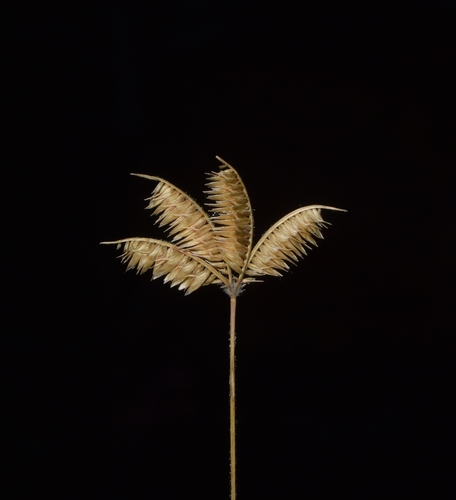
A cereal grass. It forms stolons or runners and keeps growing from year to year. It forms mats. It grows 7-45 cm high. The stalks are slender with swollen bases. The leaf blades are tough and loosely folded. They are 1-11 cm long by 2-3 mm wide. The seed is about 1 mm long.
Dactyloctenium glaucophyllum CourbaiDactyloctenium glaucophyllum var. elongation CourbaiDactyloctenium glaucophyllum var. robustior CourbaiEleusine glaucophylla (Courbai) Benth.Eleusine scindica (Boiss.) DuthieEleusine aristata Ehrenb. ex Boiss.
References (5)
Ambasta, S.P. (Ed.), 2000, The Useful Plants of India. CSIR India. p 160
BHANDARI,
Royal Botanic Gardens, Kew (1999). Survey of Economic Plants for Arid and Semi-Arid Lands (SEPASAL) database. Published on the Internet; http://www.rbgkew.org.uk/ceb/sepasal/internet [Accessed 8th May 2011]
SHANKARNARAYAN & SAXENA.,
World Checklist of Useful Plant Species 2020. Royal Botanic Gardens, Kew