Aesculus chinensis
Bunge
Chinese horse chestnut
(c) 江国彬, some rights reserved (CC BY-NC), uploaded by 江国彬

(c) sunwenhao90, some rights reserved (CC BY-NC), uploaded by sunwenhao90
What to Eat
Edible parts: Seeds
The seed must be cooked before eating. It can be dried and ground into a powder for use as a gruel. Seeds are quite large — up to 3cm in diameter — and easy to harvest in quantity. However, they contain high levels of saponins that must be eliminated before the seed is safe to eat. Removing these saponins also strips out much of the mineral and vitamin content, leaving mostly starch. Based on practice recorded for A. californica, an effective method is to slow-roast the nuts (which neutralises the saponins), slice them thinly, place them in a cloth bag, and rinse in a running stream for 2–5 days.
Known Hazards
Where to Find It
It is a temperate plant. It occurs naturally in the mountains of Szechuan Province in North China. It prefers a deep loamy well drained soil but will grow on most soils. Trees are very hardy when dormant. They probably do best in a continental climate. This is hot summers and cold dry winters. It suits hardiness zones 6-9. In Sichuan and Yunnan.
Asia, Australia, China, Indochina, Laos, North America, SE Asia, USA, Vietnam,
How to Identify
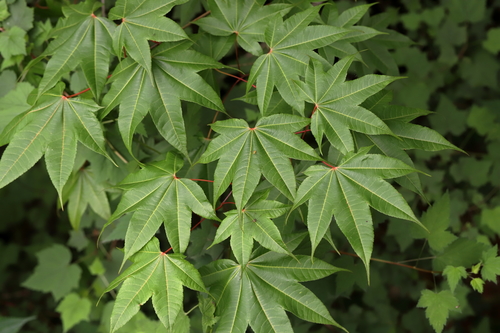
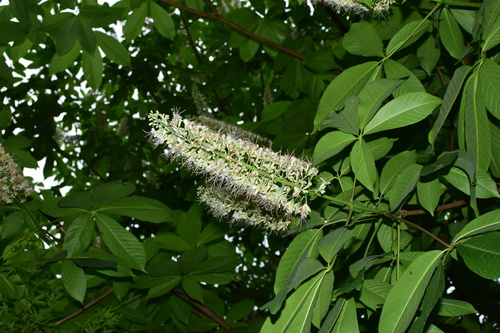
A tree which grows to 25 m tall. It spreads to 10 m wide. Seeds can be 3 cm across. The flowers are in a cylinder shaped panicle. They are white. These can be 45 cm long. The fruit are oval capsules 3-5 cm across. There are 1 or 2 brown seeds. They are 2-4 cm across.
How to Grow
Plants are grown from seed. Seed should be sown when fresh. They germinate almost immediately. Trees can be transplanted easily.
Propagation: Seed is best sown outdoors or in a cold frame as soon as it is ripe, as it germinates almost immediately and has very limited viability — it must not be allowed to dry out. Young seedlings need protection from severe weather. Stored seed should be soaked for 24 hours before sowing, though even then germination is not guaranteed. Sow with the scar facing downwards. When sowing in a cold frame, pot seedlings up in early spring and transplant to their permanent positions during summer.
Medicinal Uses
The seed is antirheumatic and emetic. The sweet-tasting seed is used in treating contracted limbs caused by palsy or rheumatism, and is also applied to the treatment of stomach aches.
Other Uses
The saponins found in the seed make a useful soap substitute. Chop the seed into small pieces and infuse in hot water to extract the saponins; the resulting liquid can be used to wash the body or clothes. The main downside is a persistent smell of horse chestnuts.
Wikipedia
Source ↗Aesculus chinensis, the Chinese horse chestnut or Chinese buckeye (Chinese: 七叶树; pinyin: qi ye shu), is a deciduous temperate tree species in the genus Aesculus found across China. It was first successfully introduced to Britain in 1912 by plant collector William Purdom, who collected six young plants from the grounds of a temple in the western hills of Beijing, and brought them back to Veitch's Nursery in Coombe Hill near London. Purdom's correspondence regarding this event are held in the archives of the Arnold Arboretum. One plant was sent to the Royal Botanic Gardens Kew and two to the Arnold Arboretum in Boston. The original tree at Kew no longer exists but a young tree grafted from the original now grows in the Rhododendron Dell. As a mature tree Aesculus chinensis can grow up to 80–90 ft or 25m tall. Its palmate mid green leaves have 5-7 leaflets, usually glabrous beneath. It produces large white upright panicles of flowers from May to June. These are followed by round smooth fruit capsules, which contain 1 to 2 dark brown seeds. The seed contains triterpenoid saponins and flavonoids, such as aescuflavoside and aescuflavoside A, which are glycosides of quercetin. Research has been conducted into the anti-inflammatory potential of the four main saponins contained within the seeds.
Production
It is slow growing. In China plants flower in April to June and fruit September to October.
Other Information
It is an appreciated nut.
Notes
There are 15 Aesculus species. Also put in the family Hippocastanaceae.
Names & Synonyms
Quiyeshu, Seven-leaved tree, T'Ien Shih Li
References (5)
- Cundall, P., (ed.), 2004, Gardening Australia: flora: the gardener's bible. ABC Books. p 107
- Enum. pl. China bor. 10. 1833 (Mem. Acad. Imp. Sci. Saint-Petersbourg Divers Savans 2:84. 1835)
- FAO Forestry Department. Non-wood forest products in Indochina - Focus Vietnam 5.4 Edible Plant Products
- Plants for a Future database, The Field, Penpol, Lostwithiel, Cornwall, PL22 0NG, UK. http://www.scs.leeds.ac.uk/pfaf/
- Valder, P., 1999, The Garden Plants of China. Florilegium. p 261