Dicellandra barteri
Hook.f.
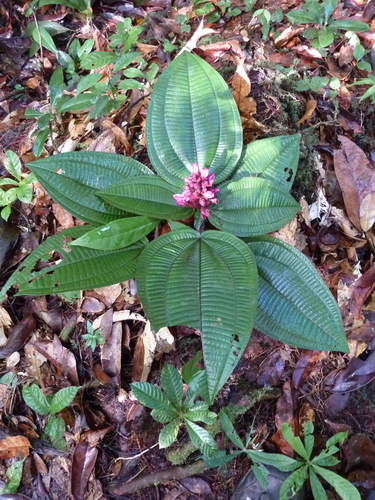
iNaturalist · cc-by-nc
(c) Carel Jongkind, some rights reserved (CC BY-NC), uploaded by Carel Jongkind
(c) Carel Jongkind, some rights reserved (CC BY-NC), uploaded by Carel Jongkind
What to Eat
Edible parts: Leaves, Vegetable, Fruit ?
The fruit are eaten raw, and the leaves may also be consumed as a vegetable.
Where to Find It
A tropical plant. It grows in damp places in the forest. It grows between 500-1,500 m above sea level.
Africa, Cameroon, Central Africa, Congo DR, Côte d'Ivoire, Ivory Coast, Liberia, Sierra Leone, West Africa,
Countries: Angola, Burkina Faso, Burundi, Benin, Botswana, Congo (DRC), Central African Republic, Congo (Republic), Cote d'Ivoire, Cameroon, Cape Verde, Djibouti, Algeria, Egypt, Eritrea, Ethiopia, Gabon, Ghana, Gambia, Guinea, Equatorial Guinea, Guinea-Bissau, Kenya, Comoros, Liberia, Lesotho, Libya, Morocco, Madagascar, Mali, Mauritania, Mauritius, Malawi, Mozambique, Namibia, Niger, Nigeria, Rwanda, Seychelles, Sudan, Sierra Leone, Senegal, Somalia, South Sudan, Sao Tome & Principe, Eswatini, Chad, Togo, Tunisia, Tanzania, Uganda, South Africa, Zambia, Zimbabwe
How to Identify
A slightly woody climber. It can be a herb. It attaches to other plants. It can be 6 m high. The leaves are dark green and the veins and underneath side are purplish. There are 4 varieties.
Names & Synonyms
Itanganika-ya-mbala, Ndougo
Amphiblemma grandifolium A. Chev. ex Hutch. & DalzielMelastoma capitata VahlDissotis capitata (Vahl) Hook.f.Melastomastrum capitatum (Vahl) A. Fern. & R. Fern. var. capitatumMelastomastrum capitatum (Vahl) A. Fern. & R. Fern.Tristemma erectum Guill. & Perr.Dissotis erecta (Guill. & Perr.) DandyHeterotis vogelii Benth.Melastomastrum capitatum var. vogelii (Benth.) A. Fern. & R. Fern.Dicellandra scandens Gilg ex Engl.Dissotis hirsuta Hook.f.Dissotis radicans Hook.f.Dissotis petiolata Hook.f.
References (6)
- Diop, A. l., et al, 2021, Cultural importance of wild edible plants in three sympatric communities: Agni, Akyé and Gwa in the Department of Alépé (Southeast of Côte d’Ivoire). Ethnobotany Research and Applications 22:35. p 7
- Grubben, G. J. H. and Denton, O. A. (eds), 2004, Plant Resources of Tropical Africa 2. Vegetables. PROTA, Wageningen, Netherlands. p 561
- Jardin, C., 1970, List of Foods Used In Africa, FAO Nutrition Information Document Series No 2.p 74
- Martin, F.W. & Ruberte, R.M., 1979, Edible Leaves of the Tropics. Antillian College Press, Mayaguez, Puerto Rico. p 204
- Terashima, H., et al, 1992, Ethnobotany of the Lega in the Tropical Rainforest of Eastern Zaire (Congo): Part Two, Zone de Walikale, African Study Monographs, Suppl. 19:1-60
- World Checklist of Useful Plant Species 2020. Royal Botanic Gardens, Kew


