Dichanthium annulatum
(Forsskal) Stapf
Bluegrass, Sheda grass
no rights reserved, uploaded by 葉子
no rights reserved, uploaded by 葉子
no rights reserved, uploaded by 葉子
What to Eat
Edible parts: Manna
Manna produced by this grass can be eaten.
Where to Find It
A tropical plant. It grows in tropical and subtropical places. It grows in areas with an annual rainfall between 150-1,600 mm. It grows between sea level and 1,800 m above sea level. It can grow in alkaline and salty soils. It grows in deep sandy soils. It can grow in arid places.
Afghanistan, Africa, Algeria, Argentina, Asia, Australia, Bahrain, Botswana, Cape Verde, Central America, China, Costa Rica, Cuba, Djibouti, East Africa, Egypt, Ethiopia, Fiji, Guyana, Hawaii, Himalayas, Kenya, India, Indochina, Indonesia, Iran, Iraq, Israel, Jordan, Laos, Lebanon, Madagascar, Malawi, Malaysia, Mali, Mauritania, Mauritius, Mediterranean, Middle East, Morocco, Mozambique, Myanmar, Nepal, Niger, North Africa, Oman, Pacific, Pakistan, Papua New Guinea, PNG, Philippines, Puerto Rico, Qatar, Reunion, Sahel, Saudi Arabia, SE Asia, Senegal, Socotra, Somalia, Southern Africa, South America, Sri Lanka, Sudan, Syria, Taiwan, Tanzania, Trinidad & Tobago, Tunisia, USA, West Africa, West Indies, Yemen, Zambia, Zimbabwe,
How to Identify
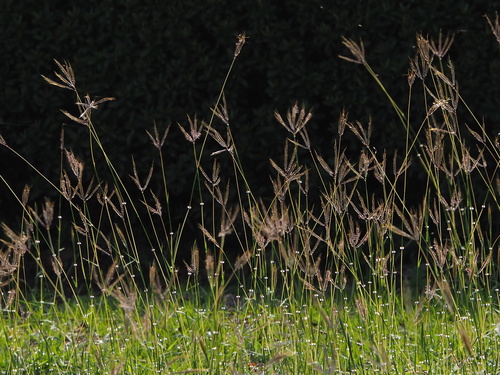
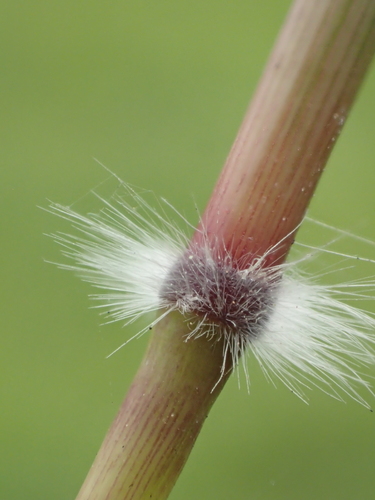
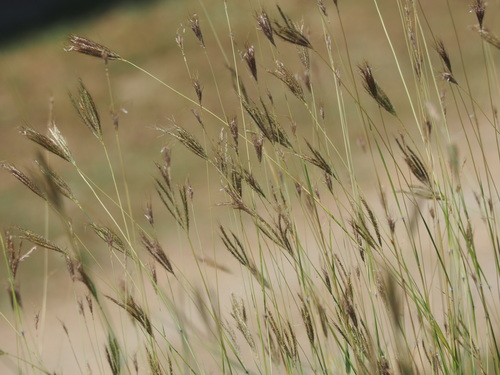
A grass which keeps growing from year to year. It forms erect tussocks. It grows 0.5-1 m high. The leaves are 10-30 cm long and 0.3-0.5 cm wide. The culms are erect and branched. They are slender and covered with white powder. The seed heads can be single or in groups or 2-4. They are 4-6 cm long. They are pale green or purple.
How to Grow
Plants can be grown by seed or division.
Wikipedia
Source ↗Dichanthium annulatum is a species of grass in the family Poaceae. It is commonly used as a forage for livestock. Common names include marvel grass, Diaz bluestem, Kleberg bluestem, Hindi grass, ringed dichanthium, sheda grass, medio bluestem (var. papillosum), jargu grass, Delhi grass, vuda bluegrass, two-flowered golden-beard, Santa Barbara grass. It is native to tropical Asia, the Middle East, and parts of Africa. In India, it is very important in agriculture. It has been introduced to many other parts of the world for cultivation, and it has become naturalized in some places, such as Australia.
Notes
There are 15 Dichanthium species. They grow in the tropics.
Names & Synonyms
Ahipasira, Apang, Barlu, Hindi grass, Karad, Myet-hmwe, Myet-khya, Padaw-ni, Zarga, Zinzvo
References (8)
- Ambasta, S.P. (Ed.), 2000, The Useful Plants of India. CSIR India. p 170
- Cribb, A.B. & J.W., 1976, Wild Food in Australia, Fontana. p 186
- Flora of Pakistan. www.eFloras.org
- Lazarides, M. & Hince, B., 1993, Handbook of Economic Plants of Australia, CSIRO. p 79
- Paczkowska, G. & Chapman, A.R., 2000, The Western Australian Flora. A Descriptive Catalogue. Western Australian Herbarium. p 100
- D. Prain, Fl. trop. Afr. 9:178. 1917
- Royal Botanic Gardens, Kew (1999). Survey of Economic Plants for Arid and Semi-Arid Lands (SEPASAL) database. Published on the Internet; http://www.rbgkew.org.uk/ceb/sepasal/internet [Accessed 8th May 2011]
- World Checklist of Useful Plant Species 2020. Royal Botanic Gardens, Kew


