Aesculus octandra
Marshall
Yellow buckeye, Sweet buckeye, Big buckeye
(c) mbraca, some rights reserved (CC BY-NC)

(c) mbraca, some rights reserved (CC BY-NC)

(c) Sandy Wolkenberg, some rights reserved (CC BY)
What to Eat
Edible parts: Seeds, Nut, Caution
The seeds are eaten as nuts; however, the toxic element must be removed by roasting and soaking before consumption.
Known Hazards
Where to Find It
It is a temperate plant. It grows between 150-1900 m altitude in SE of the USA. It grows on streambanks,
Canada, North America, USA,
How to Identify
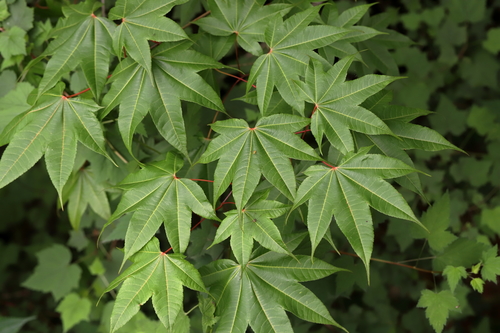
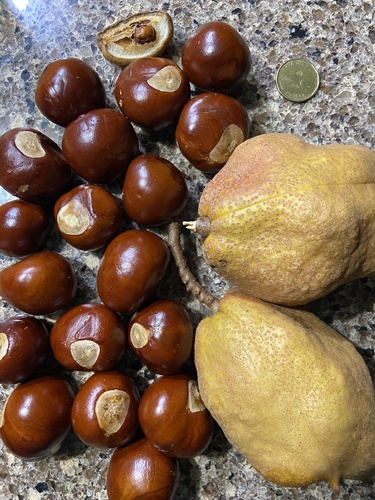
A tree. The crown is rounded. It grows 21-27 m high. The trunk is 60-90 cm across. The leaves are opposite and divided into leaflets like fingers on a hand. The leaf stalks are slender and 9-18 cm long. The leaflets are 10-20 cm long by 4-7.5 cm wide. They have teeth along the edge. The flowers are 3 cm long and with 4 very unequal petals. They are in upright clusters 10-15 cm long at the ends of branches. The fruit are 5-7.5 cm across. They are pale brown and smooth. There are 1-3 large brown seeds.
Notes
There are 15 Aesculus species. Also put in the family Hippocastanaceae.
References (5)
- Arbust. amer. 4. 1785
- Brouk, B., 1975, Plants Consumed by Man. Academic Press, London. p 214
- Krochmal, A. & Krochmal, C., 1982, Uncultivated Nuts of The United States. United States Department of Agriculture Forest Service. p 32
- Little, E.L., 1980, National Audubon Society Field Guide to North American Trees. Alfred A. Knopf. p 586
- Wickens, G.E., 1995, Edible Nuts. FAO Non-wood forest products. FAO, Rome. p 132