Digitaria horizontalis
Willd.
Finger grass
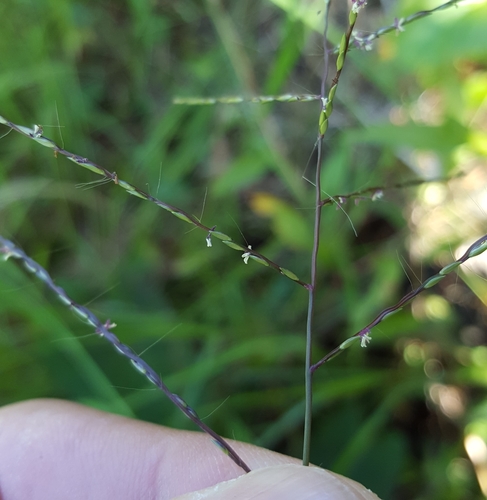
(c) François Rousseu, some rights reserved (CC BY-NC), uploaded by François Rousseu
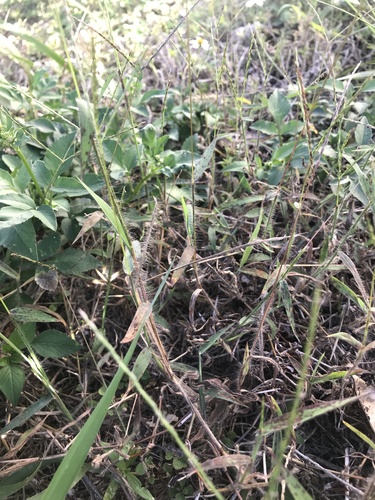
(c) Alan R. Franck, some rights reserved (CC BY-NC)
What to Eat
Edible parts: Seeds, Cereal
The seeds are eaten as a cereal grain. It is used as a famine food.
Where to Find It
A tropical plant. It grows between 150-1,200 m above sea level. It can grow in arid places.
Africa, American Samoa, Argentina, Bahamas, Belize, Benin, Bermuda, Brazil, British Indian Ocean Terr., BIOT, Burkina Faso, Cameroon, Cape Verde, Caribbean, Central Africa, Central African Republic, CAR, Central America, Congo, Costa Rica, Côte d'Ivoire, Cuba, Dominica, Dominican Republic, East Africa, Equatorial-Guinea, French Guiana, Gabon, Gambia, Ghana, Guatemala, Guianas, Guinea, Guinée, Guinea-Bissau, Guyana, Honduras, Indochina, Ivory Coast, Jamaica, Liberia, Madagascar, Mali, Marquesas, Martinique, Mauritania, Mauritius, Mexico, Myanmar, Nigeria, North America, Pacific, Paraguay, Peru, Puerto Rico, Samoa, Sao Tome and Principe, SE Asia, Senegal, Seychelles, Sierra Leone, South America, St. Kitts and Nevis, Sudan, Suriname, Thailand, Togo, Tonga, Trinidad & Tobago, USA, Venezuela, West Africa, West Indies,
How to Identify
A grass. It is as erect annual herb. It grows 20-50 cm tall. The seeds are about 0.8 mm long
Other Information
It is a famine food.
Notes
There are about 250 Digitaria species.
Names & Synonyms
Byaing-chi-myet, Cebadilla, Iete, Djadje, Djadje-lade, Djadjua, Guarcam, Jamaican crabgrass, Kononi ka fini, Myet-sok, Nwa-che-myet, Pebife
References (7)
- Abbiw, D.K., 1990, Useful Plants of Ghana. West African uses of wild and cultivated plants. Intermediate Technology Publications and the Royal Botanic Gardens, Kew. p 25
- Diarra, N. et al, 2016, Etude ethnobotanique des plantes alimentaires utilisées en période de soudure dans les régions Sud du Mali. Int. J. Biol. Chem. Sci. 10(1): 184-197
- Enum. pl. 1:92. 1809
- Jardin, C., 1970, List of Foods Used In Africa, FAO Nutrition Information Document Series No 2.p 2
- Royal Botanic Gardens, Kew (1999). Survey of Economic Plants for Arid and Semi-Arid Lands (SEPASAL) database. Published on the Internet; http://www.rbgkew.org.uk/ceb/sepasal/internet [Accessed 8th May 2011]
- Topp, J. M. W., 1988, An Annotated Check List of the Flora of Diego Garcia, British Ocean Territory. Atoll Research Bulletin No. 313
- Yuncker, T.G., 1959, Plants of Tonga, Bernice P. Bishop Museum, Hawaii, Bulletin 220. p 56


