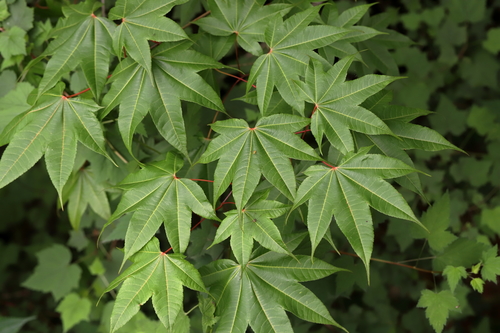
Dimocarpus australianus
Leenh.
Native lychee

(c) Russell Cumming, some rights reserved (CC BY-NC), uploaded by Russell Cumming

(c) Russell Cumming, some rights reserved (CC BY-NC)
What to Eat
Edible parts: Aril, Fruit
The aril and fruit are edible; the fruit is similar to lychee and described as tasty.
Where to Find It
A tropical plant. It suits tropical and subtropical regions. It grows in rainforests in Queensland in Australia. In tropical Queensland it grows from sea level to 660 m altitude.
Australia*,
How to Identify
A medium size tree. It grows 8-15 m tall and spreads 3-8 m wide. The leaves are divided into leaflets along the stalk. The leaves are 10-18 cm long by 2-6 cm wide. There are 2-6 leaflets. They are oval with a blunt tip. They are grey green above and yellowish green underneath. Leaflets are 6.5-9.5 cm long by 2-4 cm wide. The flowers are greenish yellow. They are about 0.5 cm across. They occur in panicles on the ends of branches. The fruit is a reddish brown capsule. It has 2 lobes and is about 2 cm across. The aril is edible.
How to Grow
It can be grown from seed which must be sown fresh.
Wikipedia
Source ↗Dimocarpus australianus also known as Australian native lychee, is a species of trees, closely related to the longan, constituting part of the plant family Sapindaceae. They are endemic to Cape York Peninsula, Australia. The edible fruit tastes like lychee, sweeter than longan, and occasionally gets described as 'too sweet' in comparison by longan fanciers.
Notes
There are about 5-6 Dimocarpus species.
Names & Synonyms
References (6)
- Cherikoff V. & Isaacs, J., The Bush Food Handbook. How to gather, grow, process and cook Australian Wild Foods. Ti Tree Press, Australia p 147
- Cooper, W. and Cooper, W., 2004, Fruits of the Australian Tropical Rainforest. Nokomis Editions, Victoria, Australia. p 484
- Elliot, W.R., & Jones, D.L., 1984, Encyclopedia of Australian Plants suitable for cultivation. Vol 3. Lothian. p 281
- Hibbert, M., 2002, The Aussie Plant Finder 2002, Florilegium. p 87
- Jones D, L, 1986, Ornamental Rainforest Plants in Australia, Reed Books, p 124, 340
- Townsend, K., 1994, Across the Top. Gardening with Australian Plants in the tropics. Society for Growing Australian Plants, Townsville Branch Inc. p 160