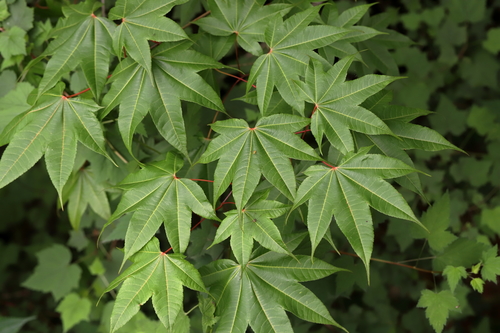
Aesculus turbinata
Blume
Japanese horse chestnut, Toti-No-Ki
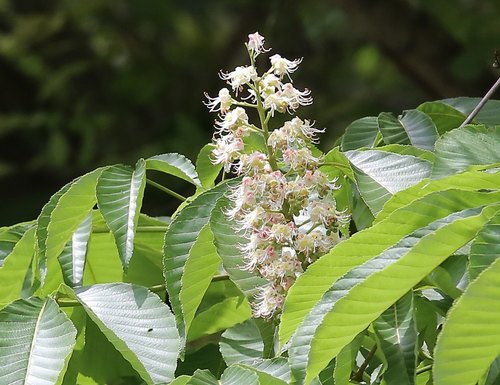
(c) 空猫 T. N, some rights reserved (CC BY-NC), uploaded by 空猫 T. N
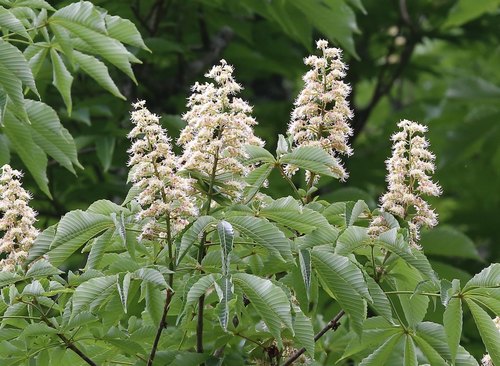
(c) 空猫 T. N, some rights reserved (CC BY-NC), uploaded by 空猫 T. N
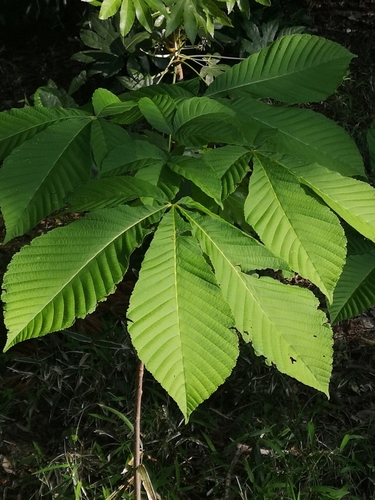
(c) keikei28, some rights reserved (CC BY-NC), uploaded by keikei28
What to Eat
Edible parts: Seeds
Young leaves can be eaten cooked, though caution is advised as they are likely to contain toxic saponins. The seed can also be cooked; it can be dried, ground into a flour, and used as a gruel, or the starch can be extracted and eaten on its own. The seed is large — about 25–30 mm in diameter — and easy to harvest, but its saponin content must be removed before it is safe to eat. Based on practice documented for A. californica, one method involves slow-roasting the nuts (which renders the saponins harmless), slicing them thinly, placing them in a cloth bag, and rinsing in a stream for 2–5 days. Most minerals and other nutrients will also be lost during this process.
Known Hazards
Where to Find It
It is a temperate plant. It grows naturally in mountains and valleys all over Japan. It does best on a deep loamy well drained soil. When dormant the plant is very hardy to cold. It suits hardiness zones 6-9. Arboretum Tasmania.
Asia, Australia, China, Japan*, Korea, Tasmania,
How to Identify
A tree. It grows to 20 m tall and spreads to 12 m wide. The leaves are larger than common horse chestnut. The leaves turn orange in autumn. The fruit lack spines or prickles. The seed are 2.5-3 cm across.
Nutrition Score: 40/100
| Part | Moisture | kJ | kcal | Protein | Vit A | Vit C | Iron | Zinc |
|---|---|---|---|---|---|---|---|---|
| Seeds | 14.3 | 1542 | 369 | 2.6 | — | — | — | — |
| Seeds steamed | 58 | 674 | 161 | 1.7 | — | — | 0.4 | 0.5 |
| Leaves | — | — | — | — | — | — | — | — |
How to Grow
Plants can be grown from seed. Fresh seed which has not been allowed to dry out should be used. Seed germinates quickly. Trees transplant fairly easily.
Propagation: Sow seed outdoors or in a cold frame as soon as it is ripe, as it germinates almost immediately and has very limited viability — it must not be allowed to dry out. Stored seed should be soaked for 24 hours before sowing, though even then germination cannot be guaranteed. Sow with the scar facing downward. Seedlings started in a cold frame should be potted up in early spring and planted out in summer.
Medicinal Uses
None known.
Other Uses
Saponins in the seed serve as a soap substitute. To extract them, chop the seed into small pieces and infuse in hot water; the liquid can be used to wash the body or clothes, though it leaves a lingering odour of horse chestnuts. The wood is weak but attractively grained, and has been used for house fittings and domestic items.
Wikipedia
Source ↗Aesculus turbinata, common name Japanese horse-chestnut (tochinoki (トチノキ, 栃の木) or tochi (トチ, 栃, 橡)), is native to Japan but cultivated elsewhere. It is a tree up to 30 metres (98 feet) tall. Flowers are white to pale yellowish with red spots. Capsules are dark brown, obovoid to pyriform. The seeds were traditionally eaten, after leaching, by the Jōmon people of Japan over about four millennia, until 300 AD. Today the seeds are used in Japanese cuisine to prepare tochimochi.
Notes
There are 15 Aesculus species. Also put in the family Hippocastanaceae.
Names & Synonyms
References (10)
- Bodkin, F., 1991, Encyclopedia Botanica. Cornstalk publishing, p 55
- Brickell, C. (Ed.), 1999, The Royal Horticultural Society A-Z Encyclopedia of Garden Plants. Convent Garden Books. p 85
- Brouk, B., 1975, Plants Consumed by Man. Academic Press, London. p 214
- Etherington, K., & Imwold, D., (Eds), 2001, Botanica's Trees & Shrubs. The illustrated A-Z of over 8500 trees and shrubs. Random House, Australia. p 80
- Menninger, E.A., 1977, Edible Nuts of the World. Horticultural Books. Florida p 113
- Plants for a Future database, The Field, Penpol, Lostwithiel, Cornwall, PL22 0NG, UK. http://www.scs.leeds.ac.uk/pfaf/
- Rumphia 3:195. 1847
- S.C.A.P
- Williams, D., 2017, Ainu Ethnobiology. Contributions in Ethnobiology. Society of Ethnobiology. p 123
- Young, J., (Ed.), 2001, Botanica's Pocket Trees and Shrubs. Random House. p 74