Aframomum longiscapum
(Hook. f.) K. Schum.
Grains of Paradise, Guinea grains
ZingiberaceaeSeeds/Nuts

gbif · cc0
President and Fellows of Harvard College
President and Fellows of Harvard College

gbif · cc0
President and Fellows of Harvard College
President and Fellows of Harvard College
What to Eat
Edible parts: Seeds
The seeds are eaten.
Where to Find It
It is a tropical plant. It grows in secondary forest.
Africa, Côte d'Ivoire, Guinea, Guinée, Ivory Coast, Liberia, Sierra Leone, West Africa,
Countries: Angola, Burkina Faso, Burundi, Benin, Botswana, Congo (DRC), Central African Republic, Congo (Republic), Cote d'Ivoire, Cameroon, Cape Verde, Djibouti, Algeria, Egypt, Eritrea, Ethiopia, Gabon, Ghana, Gambia, Guinea, Equatorial Guinea, Guinea-Bissau, Kenya, Comoros, Liberia, Lesotho, Libya, Morocco, Madagascar, Mali, Mauritania, Mauritius, Malawi, Mozambique, Namibia, Niger, Nigeria, Rwanda, Seychelles, Sudan, Sierra Leone, Senegal, Somalia, South Sudan, Sao Tome & Principe, Eswatini, Chad, Togo, Tunisia, Tanzania, Uganda, South Africa, Zambia, Zimbabwe
How to Identify
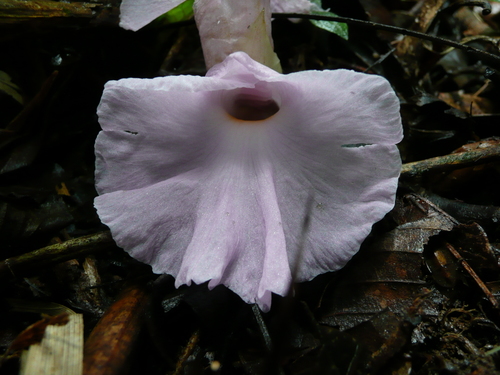
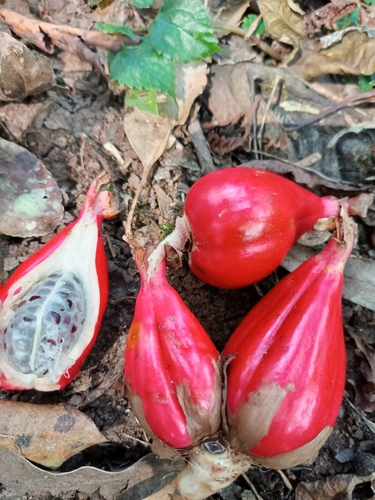
A ginger family herb. An erect herb with leafy stems. It can grow 2-3 m high. The flowers are mauve and the fruit are dark red.
Wikipedia
Source ↗Aframomum longiscapum is a species of plant in the ginger family, Zingiberaceae. It was first described by Joseph Dalton Hooker and got its current name from Karl Moritz Schumann.
Notes
There are about 50 Aframomum species.
Names & Synonyms
Meliguette
Amomum longiscapum Hook. f.Cardamomum longiscapum (Hook. f.) Kuntze
References (2)
- e-monocot.org/taxon/urn:kew.org:wcs:taxon:218391
- Menninger, E.A., 1977, Edible Nuts of the World. Horticultural Books. Florida p 80