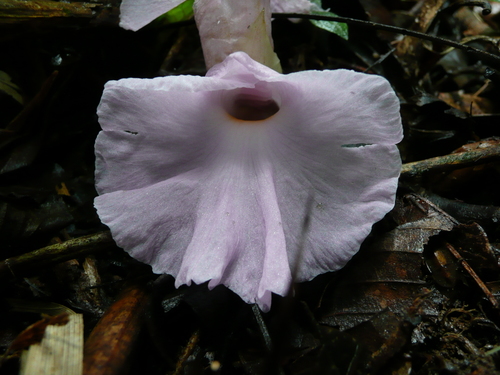
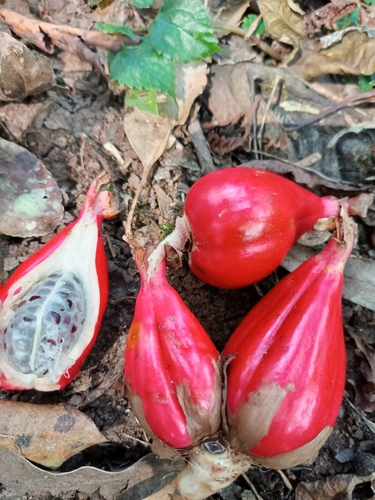
Aframomum sulcatum
(Oliv. et Hanb. ex Baker) K. Schum.

Royal Botanic Gardens, Kew

Royal Botanic Gardens, Kew

MBG
What to Eat
Edible parts: Fruit, Leaves - flavouring
The fruit pulp is eaten raw. The dried leaves are used for flavouring.
Where to Find It
It is a tropical plant. It grows in forest and forest clearings.
Africa, Cameroon, Central Africa, Gabon, Ghana, Guinea, Guinée, Liberia, Sierra Leone, West Africa,
How to Identify
A ginger family plant. It has a slender rhizome and a very short flower stalk. The leafy stems grow 4 m tall. They have a reddish tinge. The flowers are pale red to orange-yellow. The fruit have narrow grooves and are edible. The seeds are shiny.
Wikipedia
Source ↗Aframomum sulcatum is a species of plant in the ginger family, Zingiberaceae. It was first described by Daniel Oliver, Daniel Hanbury, and John Gilbert Baker and got its current name from Karl Moritz Schumann.
Notes
There are about 50 Aframomum species.
Names & Synonyms
References (9)
- Abbiw, D.K., 1990, Useful Plants of Ghana. West African uses of wild and cultivated plants. Intermediate Technology Publications and the Royal Botanic Gardens, Kew. p 49
- Billong Fils, P. E., et al, 2020, Ethnobotanical survey of wild edible plants used by Baka people in southeastern Cameroon. Journal or Ethnobiology and Ethnomedicine. 16:64 p 7
- Bircher, A. G. & Bircher, W. H., 2000, Encyclopedia of Fruit Trees and Edible Flowering Plants in Egypt and the Subtropics. AUC Press. p 11
- Dalziel, J. M., 1937, The Useful plants of west tropical Africa. Crown Agents for the Colonies London.
- e-monocot.org/taxon/urn:kew.org:wcs:taxon:218421
- Ingram, V. & Schure, J. 2010, Review of Non Timber Forest Products (NTFPs) in Central Africa, Cameroon. Center for International Forestry Research (CIFR). p 34
- Jardin, C., 1970, List of Foods Used In Africa, FAO Nutrition Information Document Series No 2.p 118
- Peters, C. R., O'Brien, E. M., and Drummond, R.B., 1992, Edible Wild plants of Sub-saharan Africa. Kew. p 42
- Vivien, J., & Faure, J.J., 1996, Fruitiers Sauvages d'Afrique. Especes du Cameroun. CTA p 370