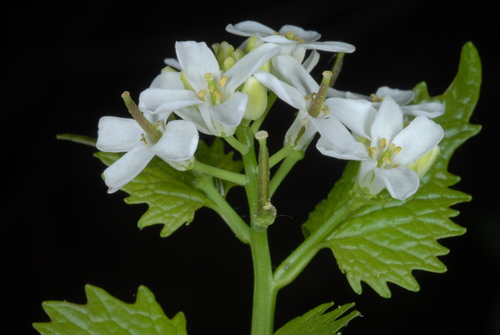
Diplotaxis erucoides
(L.) DC.
White wall rocket
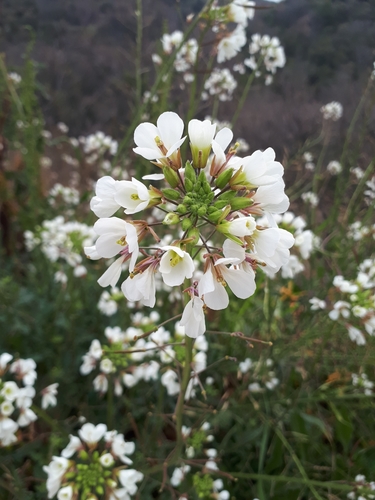
(c) manonj, some rights reserved (CC BY-NC)
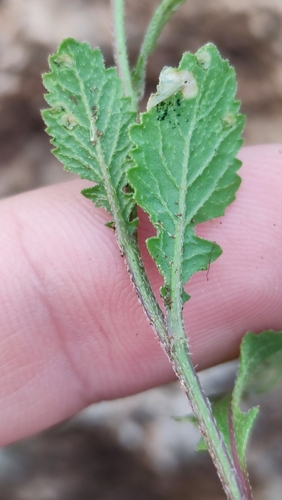
(c) Theodore, some rights reserved (CC BY-NC), uploaded by Theodore
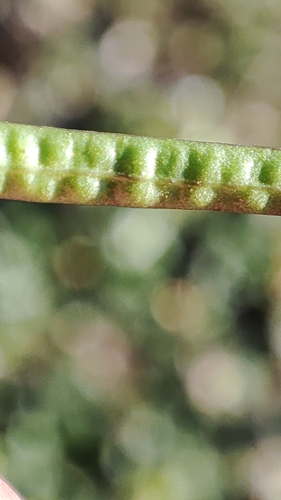
no rights reserved, uploaded by Quentin Groom
What to Eat
Edible parts: Leaves, Stems
The leaves can be eaten raw or cooked. They have a mustard-like flavour and can be added to salads.
Where to Find It
It is a Mediterranean climate plant. It can grow in the desert. It is damaged by frost. It needs a well-drained soil and full sun.
Africa, Argentina, Britain, Europe, Israel, Italy, Jordan, Mediterranean, Middle East, North Africa, Palestine, Saudi Arabia, Sicily, South America, Spain, Tunisia,
How to Identify
A cabbage family herb. It is an annual plant grown from seeds. It forms clumps. It grows 10-40 cm tall. The leaves are deep green and have teeth along the edge. The flowers are white and in flat topped groups.
How to Grow
Plants can be grown from seed.
Propagation: Seed is best sown in situ as soon as it is ripe, though it can also be sown in situ in spring. Germination usually occurs in autumn.
Medicinal Uses
None known
Other Uses
None known Special Uses
Wikipedia
Source ↗Diplotaxis erucoides, the white rocket or white wallrocket, is a species of annual herb of the family Brassicaceae native to West Mediterranean.
Names & Synonyms
Cime de ciucce, Harra, Hewaireh, Huwairreh, Jerjir, Ravanell, Ruca sarvaggia, Sylvetta
References (14)
- Ali-Shtayeh, M. S., et al, 2008, Traditional knowledge of wild edible plants used in Palestine (Northern West Bank): A comparative study. J Ethnobiol Ethnomed. 4: 13
- Al-Qura'n, S. A., 2010, Ethnobotanical and Ecological Studies of Wild Edible Plants in Jordan. Libyan Agriculture Research Center Journal International 1(4):231-243
- Ben Ismail, H., 2013, Edible Wild Vegetables Used in North West of Tunisia. PARIPEX - Indian Journal of Reearch 2(9) :219-221
- Biscotti, N. et al, 2018, The traditional food use of wild vegetables in Apulia (Italy) in the light of Italian ethnobotanical literature. Italian Botanist 5:1-24
- Dop, M. C., et al, 2019, Identification and frequency of consumption of wild edible plants over a year in central Tunisia: a mixed-methods approach. Public Health Nutrition: 23(5), 782–794
- Facciola, S., 1998, Cornucopia 2: a Source Book of Edible Plants. Kampong Publications, p 58
- Geraci, A., et al, 2018, The wild taxa utilized as vegetables in Sicily (Italy): a traditional component of the Mediterranean diet. Journal of Ethnobiology and Ethnomedicine (2018) 14:14
- Lentini, F. and Venza, F., 2007, Wild food plants of popular use in Sicily. J Ethnobiol Ethnomedicine. 3: 15
- Licata, M., et al, 2016, A survey of wild plant species for food use in Sicily (Italy) – results of a 3-year study in four Regional Parks. Journal of Ethnobiology and Ethnomedicine 12:12
- Pasta, S., et al, 2020, An Updated Checklist of the Sicilian Native Edible Plants: Preserving the Traditional Ecological Knowledge of Century-Old Agro-Pastoral Landscapes. Frontiers in Plant Science. Volume 11|Article 388
- Plants for a Future database, The Field, Penpol, Lostwithiel, Cornwall, PL22 0NG, UK. http://www.scs.leeds.ac.uk/pfaf/
- Salvatore, S., et al, 2005, Antioxidant Characterization of Some Sicilian Edible Wild Greens. Journal of Agricultural and Food Chemistry. 53: 9465-9471
- Syst. nat. 2:631. 1821
- Tardio, J., et al, Ethnobotanical review of wild edible plants in Spain. Botanical J. Linnean Soc. 152 (2006), 27-71