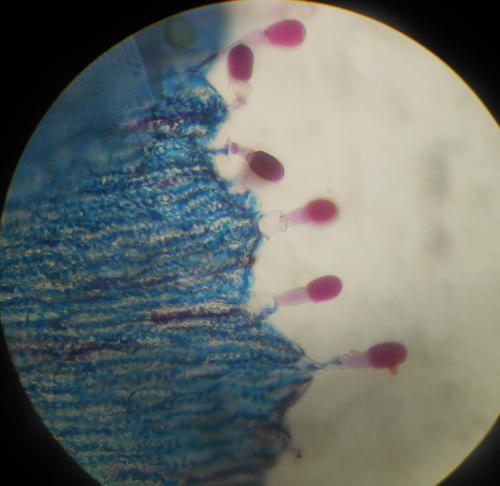
Dodecatheon hendersonii
A. Gray
Mosquito Bills, Sailors Caps, Shooting star

(c) KK, some rights reserved (CC BY-NC)

(c) KK, some rights reserved (CC BY-NC)

(c) KK, some rights reserved (CC BY-NC)
What to Eat
Edible parts: Leaves, Root
Both the root and leaves can be eaten after cooking. The root is a bulbil and is roasted in ashes, as are the leaves.
Where to Find It
It is a temperate plant. It is best in light to medium, well-drained soils. It needs a protected, sunny position. It is resistant to frost but damaged by drought. It suits hardiness zones 6-9.
Australia, North America*, USA,
How to Identify
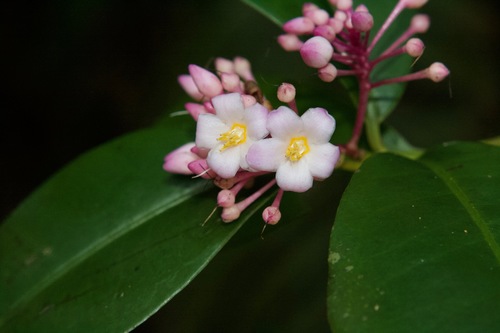
A perennial plant. It grows 30 cm high. It spreads 15-30 cm wide. The leaves are small and kidney shaped. The flowers have reddish-pink petals. They occur in heads of 2 or 3. The anthers have yellow edges.
How to Grow
Plants can be grown from seed. They can also be grown by division.
Propagation: Sow seed as soon as it is ripe in a cold frame. A brief cold stratification period may improve germination of stored seed, which should be sown in spring in a cold frame. Seed typically germinates in 1–12 months at 15°C. Prick seedlings into individual pots once large enough to handle and grow on under glass for their first winter. Plant out in late spring or early summer after the last expected frosts. Divide in March or September, with autumn being preferred. Larger clumps can go directly into permanent positions; smaller clumps are better potted up and grown on in a cold frame until well rooted, then planted out in spring.
Medicinal Uses
No medicinal uses are known for this plant.
Other Uses
No other uses are known for this plant.
Wikipedia
Source ↗Perennial growing to 30cm tall with 10cm spread, leafy March to July and flowering April to June with seed ripening June to July. Hardy to UK zone 6. Grows in light, medium, or heavy soils with good drainage; tolerates mildly acid to basic pH. Thrives in full shade to semi-shade and prefers moist soil. Hermaphrodite flowers.
Notes
There are about (14) 50 Dodecantheon species.
Names & Synonyms
References (7)
- Beckstrom-Sternberg, Stephen M., and James A. Duke. "The Foodplant Database." http://probe.nalusda.gov:8300/cgi-bin/browse/foodplantdb.(ACEDB version 4.0 - data version July 1994)
- Bodkin, F., 1991, Encyclopedia Botanica. Cornstalk publishing, p 345
- Brickell, C. (Ed.), 1999, The Royal Horticultural Society A-Z Encyclopedia of Garden Plants. Convent Garden Books. p 375
- Cundall, P., (ed.), 2004, Gardening Australia: flora: the gardener's bible. ABC Books. p 508
- Joyce, D., 1998, The Garden Plant Selector. Ryland, Peters and Small. p 223
- Plants for a Future database, The Field, Penpol, Lostwithiel, Cornwall, PL22 0NG, UK. http://www.scs.leeds.ac.uk/pfaf/
- Slocum, P.D. & Robinson, P., 1999, Water Gardening. Water Lilies and Lotuses. Timber Press. p 116