Dovyalis revoluta
Thom.
SalicaceaeFruit

iNaturalist · cc-by-nc
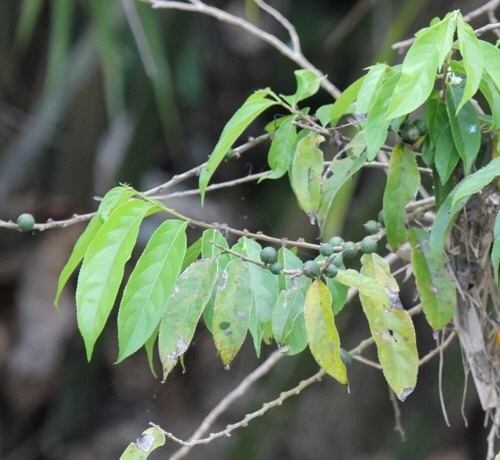
(c) Francois du Randt, some rights reserved (CC BY-NC), uploaded by Francois du Randt
(c) Francois du Randt, some rights reserved (CC BY-NC), uploaded by Francois du Randt

iNaturalist · cc-by-nc
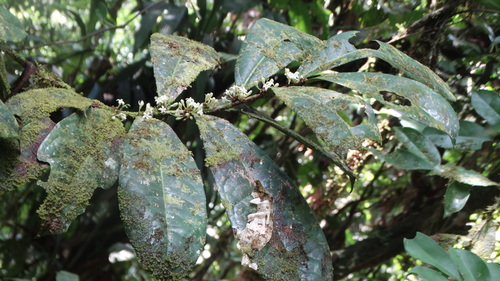
(c) Francois du Randt, some rights reserved (CC BY-NC)
(c) Francois du Randt, some rights reserved (CC BY-NC)
What to Eat
Edible parts: Fruit
The fruit is eaten.
Where to Find It
It grows in sand forests.
Africa, South Africa, Southern Africa,
Countries: Angola, Burkina Faso, Burundi, Benin, Botswana, Congo (DRC), Central African Republic, Congo (Republic), Cote d'Ivoire, Cameroon, Cape Verde, Djibouti, Algeria, Egypt, Eritrea, Ethiopia, Gabon, Ghana, Gambia, Guinea, Equatorial Guinea, Guinea-Bissau, Kenya, Comoros, Liberia, Lesotho, Libya, Morocco, Madagascar, Mali, Mauritania, Mauritius, Malawi, Mozambique, Namibia, Niger, Nigeria, Rwanda, Seychelles, Sudan, Sierra Leone, Senegal, Somalia, South Sudan, Sao Tome & Principe, Eswatini, Chad, Togo, Tunisia, Tanzania, Uganda, South Africa, Zambia, Zimbabwe
How to Identify
A shrub or small tree which loses its leaves during the year. It grows to 5 m tall. It has spines 6 cm long. The leaves are simple and alternate. They are 1.5-5 cm long. The flowers are separately male and female. The male flowers are light green and in groups of 2-6. The female flowers are yellow and occur singly. The calyx of the female flower is divided into 5-7 lobes which are curled back. The fruit is round and 2 cm across. There are 2 seeds. The seeds are densely woolly. The fruit is orange-red when ripe.
Notes
There are about 22 Dovyalis species. Also put in the Flacourtiaceae family.
References (1)
- Palmer, E and Pitman, N., 1972, Trees of Southern Africa. Vol. 3. A.A. Balkema, Cape Town p 1566