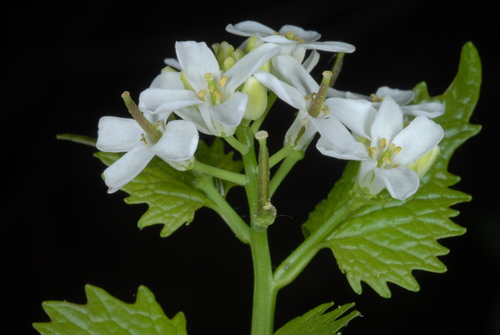
Draba muralis
L.
Wall whitlow grass
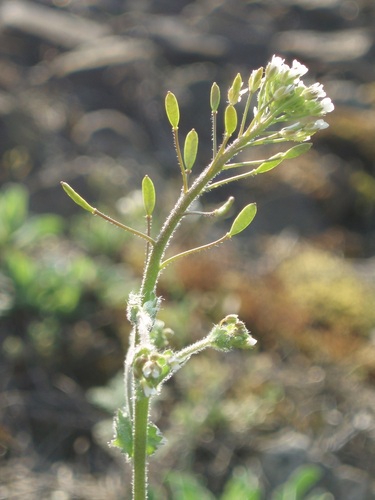
(c) Radim Paulič, some rights reserved (CC BY-NC), uploaded by Radim Paulič
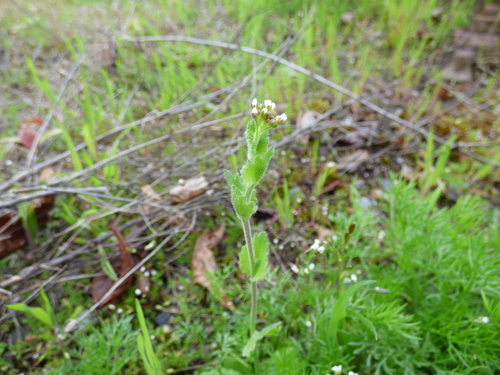
(c) Jan Doležal, some rights reserved (CC BY-NC)
What to Eat
Edible parts: Leaves
The plant is rich in vitamin C, though whether it is actually used as food is uncertain.
Where to Find It
It is a temperate plant.
Asia, Australia, Britain, Europe, India, Luxembourg, Spain, Tasmania,
How to Identify
A cabbage family herb. It grows each year from seed. It has a slender taproot. The leaves at the base are in a ring and 4 cm long. The leaves on the stem are broadly oval and have sharp teeth. The rounded base clasps the stem. The flowering stems are erect. They have many flowers. The flowers are 2-3 mm across.
How to Grow
See the plants native habitat for ideas on its cultivation needs.
Propagation: Sow seed in spring directly in situ.
Medicinal Uses
The plant is antiscorbutic.
Other Uses
No other uses are known for this plant.
Wikipedia
Source ↗A small annual or biennial herb reaching 0.3 meters in height. Flowers from April to May. Hermaphroditic and frost-hardy. Adapts to light, medium, and heavy soils with a preference for well-drained conditions. Tolerates mildly acid, neutral, and basic soils. Grows in semi-shade or full sun with either dry or moist soil preferences.
Notes
There are 350 Draba species. They mostly grow in cold places.
Names & Synonyms
References (3)
- Ambasta, S.P. (Ed.), 2000, The Useful Plants of India. CSIR India. p 182
- Baker, M. L. & de Salas, M. F., 2012, A Census of the Vascular Plants of Tasmania. (On line)
- Plants for a Future database, The Field, Penpol, Lostwithiel, Cornwall, PL22 0NG, UK. http://www.scs.leeds.ac.uk/pfaf/