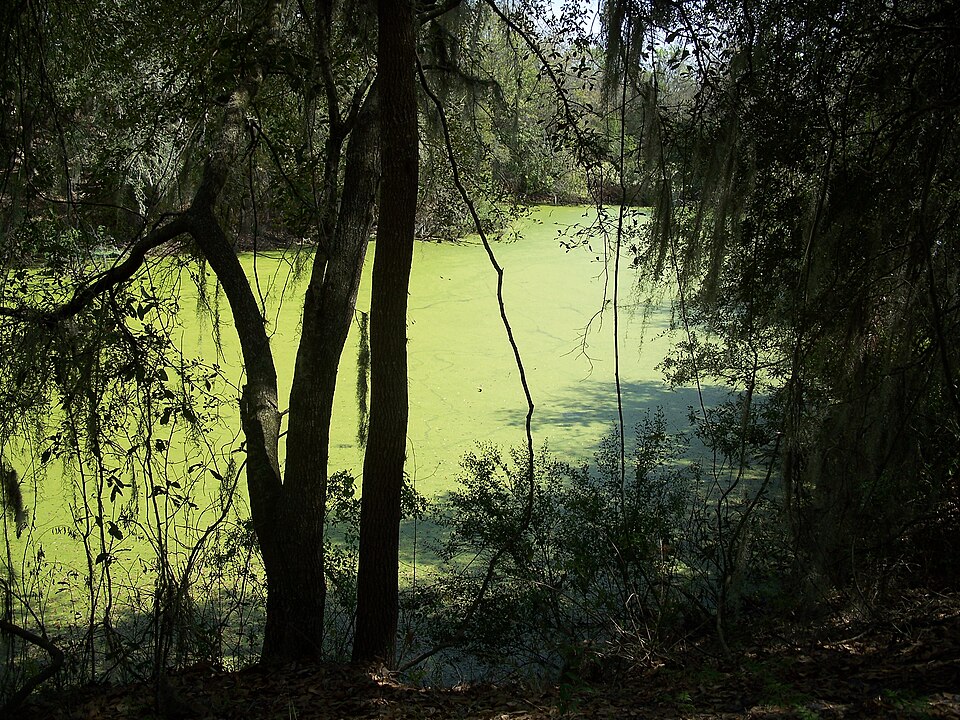
Aganonerion polymorphum
Pierre ex Spire
River-leaf

(c) Len Worthington, some rights reserved (CC BY-SA)

(c) johnlerond, some rights reserved (CC BY-NC)
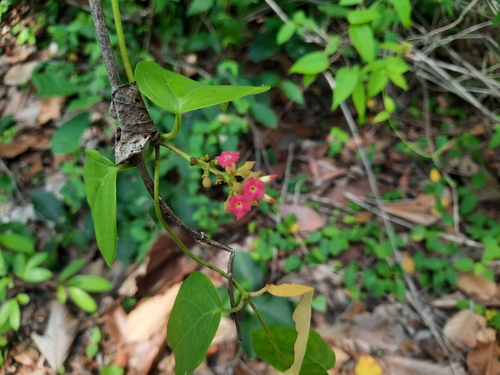
(c) ab_satta, some rights reserved (CC BY-NC)
What to Eat
Edible parts: Leaves, Fruit - flavouring, Vegetable
The acidic leaves and fruit are used as a lemon substitute in cooking and to add sour flavor to fish or chicken soups. The leaves are sold in local markets.
Where to Find It
It is a tropical plant. It grows in limestone regions. It grows from sea level to 1,500 m above sea level in south Vietnam. It grows near the edge of forests.
Asia, Cambodia, Indochina, Laos, SE Asia, Thailand, Vietnam,
How to Identify
A liana or creeper or vine. It keeps growing from year to year. It has white latex or sap. It gros up to 4 m long. The leaves are oval and entire. The leaf stalks are short. They are arranged opposite. The leaves can be 3-10 cm long by 2-5 cm wide. The base of the leaf is heart shaped and the tip is pointed. The flowers are pink or white in groups. They are near the top of the stems. The fruit is a follicle 8-15 cm long by 5-8 mm wide.
Nutrition Score: 33/100
| Part | Moisture | kJ | kcal | Protein | Vit A | Vit C | Iron | Zinc |
|---|---|---|---|---|---|---|---|---|
| Leaves | 85.3 | 122 | 29 | 3.5 | — | 26 | — | — |
| Fruit - flavour | — | — | — | — | — | — | — | — |
Other Information
Leaves are sold in local markets.
Notes
There is only on Aganonerion species.
Names & Synonyms
Dang, Kaot prum, La dang, La giang, Som lom, Thnong, Vor tneng
References (12)
- Eiadthong, W., et al, 2010, Management of the Emerald Triangle Protected Forests Complex. Botanical Colsultant Technical Report. p 22
- Kachenchart, B., et al, 2008, Phenology of Edible Plants at Sakaerat Forest. In Proceedings of the FORTROP II: Tropical Forestry Change in a Changing World. Bangkok, Thailand.
- Khumgratok, S., Edible Plants in Cultural Forests of Northeastern Thailand. Mahasarakham University Thailand.
- Martin, M.A., 1971, Introduction L'Ethnobotanique du Cambodge. Centre National de la Recherche Scientifique. Paris.
- Mot So Rau Dai an Duoc O Vietnam. Wild edible Vegetables. Ha Noi 1994, p 190
- Phon, P., 2000, Plants used in Cambodia. © Pauline Dy Phon, Phnom Penh, Cambodia. p 12
- Sang, D. T., & Mizoue, K. O. N., 2012, Use of Edible Forest Plants among Indigenous Ethnic Minorities in Cat Tien Biosphere Reserve, Vietnam. Asian Journal of Biodiversity Vol. 3 (1), p 23-49
- Srichaiwong, P., et al, 2014, A Study of the Biodiversity of Natural Food Production to Support Community Upstream of Chi Basin, Thailand. Asian Social Science 10 (2):
- Tanaka, Y. & Van Ke, N., 2007, Edible Wild Plants of Vietnam: The bountiful garden. Orchid books. p 26
- Thitiprasert, W., et al, 2007, Country report on the State of Plant Genetic Resources for Food and Agriculture in Thailand (1997-2004). FAO p 106
- Turreira Garcia, N., et al, 2017, Ethnobotanical knowledgeof the Kuy and Khmer people in Prey Lang, Cambodia. Cambodian Journal of Natural History 2017 (1): 76-101
- Wikipedia