Dysoxylum altissimum
Merr.
Kuling-babui
MeliaceaeSeeds/Nuts

gbif · cc0
President and Fellows of Harvard College
President and Fellows of Harvard College

gbif · cc0
President and Fellows of Harvard College
President and Fellows of Harvard College

gbif · cc0
President and Fellows of Harvard College
President and Fellows of Harvard College
What to Eat
Edible parts: Seeds
The seeds are peeled and roasted before eating.
Where to Find It
A tropical plant. They are found in forests in the Philippines in Luzon, Palawan, Samar and Panay.
Asia, Pacific, Philippines, SE Asia,
Countries: United Arab Emirates, Afghanistan, Armenia, Australia, Azerbaijan, Bangladesh, Bahrain, Brunei, Bhutan, China, Fiji, Micronesia, Georgia, Indonesia, Israel, India, Iraq, Iran, Jordan, Japan, Kyrgyzstan, Cambodia, Kiribati, North Korea, South Korea, Kuwait, Kazakhstan, Laos, Lebanon, Sri Lanka, Marshall Islands, Myanmar, Mongolia, Maldives, Malaysia, Nepal, Nauru, New Zealand, Oman, Papua New Guinea, Philippines, Pakistan, Palau, Qatar, Saudi Arabia, Solomon Islands, Singapore, Syria, Thailand, Tajikistan, Timor-Leste, Turkmenistan, Tonga, Turkey, Tuvalu, Taiwan, Uzbekistan, Vietnam, Vanuatu, Samoa, Yemen
How to Identify
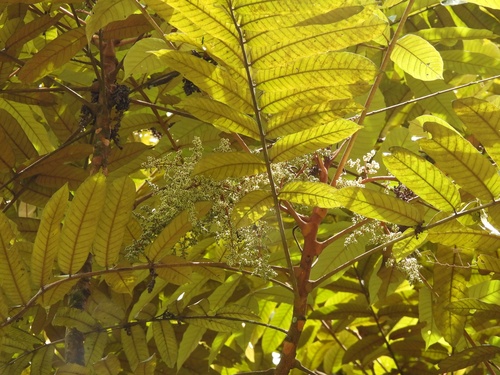
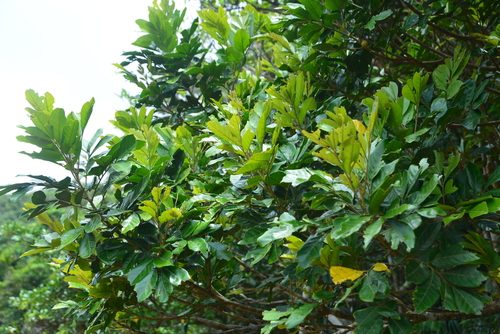
A large tree with relatively thick and rigid branchlets. The leaves are smooth and the leaf stalks grooved along their length. The leaves are alternate with about 7 leaflets. They have a smooth shiny surface with a blunt form. The flowers are borne in a flower arrangement in the axils of leaves. The fruit are flattened and rounded on woody stalks. They are smooth and purple with scarlet seeds.
Notes
There are about 80-200 Dysoxylum species. They occur in Asia and the Pacific in the tropics.
References (1)
- Monsalud, M.R., Tongacan, A.L., Lopez, F.R., & Lagrimas, M.Q., 1966, Edible Wild Plants in Philippine Forests. Philippine Journal of Science. p 493