Eleocharis dulcis
(Burm. f.) Trinius ex Henschel
Edible spike rush, Chinese water-chestnut

(c) Russell Cumming, some rights reserved (CC BY-NC), uploaded by Russell Cumming
(c) Vatcharavee Sriprasertsil, some rights reserved (CC BY-NC)
What to Eat
Edible parts: Tubers, Corms, Vegetable, Roots
The corm is delicious eaten raw or cooked — sweet and crisp when fully ripe, and starchy before that. It is widely used in Chinese cooking, especially in chop suey. The dried, ground corm yields a flour or starch used to thicken sauces and give a crisp coating to deep-fried foods. Each corm is about 4cm in diameter and contains around 36% starch. The plant is also used for making salt in Zimbabwe. Nutritional content per 100g dry weight (360 calories, 0% water): Protein 8g, Fat 1.2g, Carbohydrate 86g, Fibre 3.5g, Ash 5.5g; Calcium 22mg, Phosphorus 350mg, Iron 3.5mg, Sodium 70mg, Potassium 2450mg; Thiamine (B1) 0.4mg, Riboflavin (B2) 0.5mg, Niacin 5mg, Vitamin C 25mg.
Where to Find It
A tropical plant. It suits tropical and subtropical locations. It suits humid monsoonal conditions. It is found in the Philippines in open wet places and shallow water throughout the islands. It grows in fresh water swampy grounds or in shallow water. It grows in wetlands. It is also found in rice fields. It needs at least 220 frost free days. It needs a soil temperature above 14-15.5°C for germination of the corms. It needs a pH of 6.9-7.3. It can be grown up to 1,200 m altitude. It suits plant hardiness zones 9-12.
Africa, American Samoa, Asia, Australia, Botswana, Burkina Faso, Cambodia, China, East Africa, East Timor, Fiji, FSM, Gambia, Ghana, Guam, Guinea, Guinée, Guinea-Bissau, Hawaii, India, Indochina, Indonesia, Japan, Japan-Ryukyu Islands, Korea, Laos, Liberia, Madagascar, Malaysia, Mali, Micronesia, Mozambique, Myanmar, New Caledonia, Nigeria, North America, Northeastern India, Pacific, Pakistan, Papua New Guinea, PNG, Philippines, Pohnpei, Samoa, SE Asia, Senegal, Sierra Leone, Singapore, South Africa - Natal, Southern Africa, Sri Lanka, Taiwan, Tasmania, Thailand, Timor-Leste, Tonga, Torres Strait, USA, Vietnam, West Africa,
How to Identify
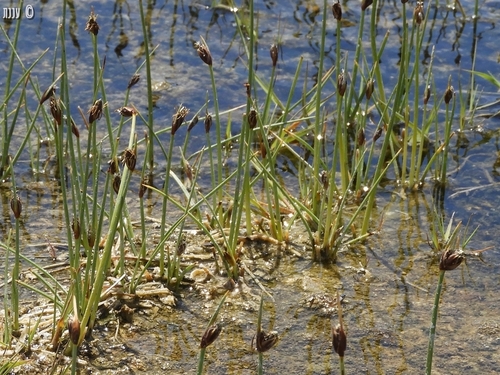
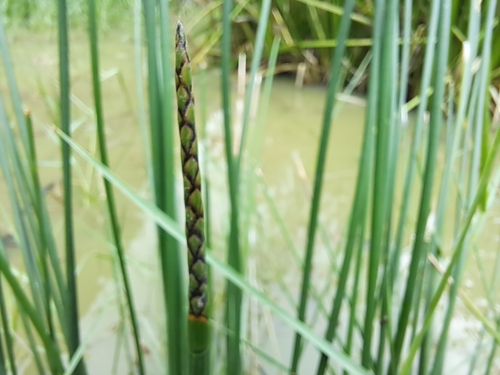
A herb which grows in water. It is a tufted sedge with round green stems. The bases are covered with brown sheaths. The stem is about a metre high and 1 cm across. It grows 30-200 cm high. From the top of each planted corm, several slender horizontal rhizomes radiate out into the mud, each terminating in a corm. The edible part consists of a flattened corm. The rhizome is short. Under the ground there are stolons bearing tubers. The tubers are almost round and have 4-6 distinct rings. They are about 1 cm across but can be 4 cm across. They are dark brown. The stems are tufted and slender. There are fine lines along the stems. The leaves are reduced to thin tube like sheaths. These are purplish. Each plant produces these long tubular leaves that project above the water surface. The flower spike is on the end of the plant. There are many flowers. The flowers are 1.5-6 cm long by 3-6 mm wide. The fruit is a nut 1.5-2 mm long.
Nutrition Score: 57/100
| Part | Moisture | kJ | kcal | Protein | Vit A | Vit C | Iron | Zinc |
|---|---|---|---|---|---|---|---|---|
| Corm drier | 50.8 | 635 | 152 | 3.7 | — | 52 | 95 | 1.9 |
| Corm | 79.6 | 268 | 64 | 1.4 | 0 | 5 | 0.7 | 0.5 |
How to Grow
Plants can be grown by division or tubers. They are put in holes 20-30 cm deep. Fields are flooded after planting then allowed to drain. When top growth is 20-30 cm high fields are flooded to at least 10-12.5 cm. A spacing of 75 cm x 75 cm is suitable. 500 kg of corms per hectare are required for planting.
Propagation: No specific details are available for this species, but sowing seed as soon as it is ripe in a greenhouse is suggested. Only just cover the seed and stand the pot in 3cm of water to keep the soil consistently wet. Once seedlings are large enough to handle, prick them out into individual pots and grow on in the greenhouse for at least their first winter. Plant out in late spring or early summer, after the last expected frosts. Alternatively, harvest tubers at the end of the growing season, store in a cool but frost-free place over winter, and plant out in early spring.
Medicinal Uses
The plant is used to treat abdominal pain, amenorrhoea, hernia, and liver problems. Juice expressed from the corms is bactericidal and contains the antibiotic puchiin, which is effective against Staphylococcus aureus, Escherichia coli, and Aerobacter aerogenes.
Other Uses
The leaf stems are used for weaving bags and similar items. In Sumatra and Sulawesi, stems are made into sleeping mats, and in Papua New Guinea they are used to make skirts. The plant is suitable for aquaculture systems and as a wetland plant to help improve water quality and habitat. Stems can also be used as cattle feed or as mulch.
Wikipedia
Source ↗Eleocharis dulcis, the Chinese water chestnut or water chestnut, is a grass-like sedge native to Asia, tropical Africa, and Oceania. It is grown in many countries for its edible corms, but if eaten uncooked, the surface of the plants may transmit fasciolopsiasis. The water caltrop, which also is referred to by the same name, is unrelated and often confused with the water chestnut.
Production
Corms mature after 7-8 months. Yields of 20-40 t per ha are possible.
Other Information
It is a commercially cultivated vegetable. The corms are canned and exported. They are sold in local markets.
Notes
There are about 160-200 Eleocharis species. There are 60 species in tropical America.
Names & Synonyms
Ankurladj, Apulid, Biqi, Buslig, Chee-Chang, Chikai, Chinese Water Chestnut, Go nung, Ground-chestnut, Haeo cheen, Haeo-song krathiem, Inu kuro guwai, Kakthum, Kirlinja, Kokthum, Kurogu-wai, Kuwai, Li zi, M'pofa, Ma Ti, Ma-Tai, Macre, Mampufa, Mardhar, Mem plong khtim, Okuroguwai, Pani phul, Po-chi, Singhara, Tall spike-rush, Tike, Uchaga-lane, 'Utu'utu, Waterchestnut, Waternut, Wetmye-u, Ye thit eir thee
References (85)
- Ambasta, S.P. (Ed.), 2000, The Useful Plants of India. CSIR India. p 192
- Anderson, E. F., 1993, Plants and people of the Golden Triangle. Dioscorides Press. p 210
- Barrau, J., 1976, Subsistence Agriculture in Polynesia and Micronesia. Bernice P. Bishop Museu, Bulletin 223 Honolulu Hawaii. Kraus reprint. p 59
- Bindon, P., 1996, Useful Bush Plants. Western Australian Museum. p 110
- Bodkin, F., 1991, Encyclopedia Botanica. Cornstalk publishing, p 378
- Brouk, B., 1975, Plants Consumed by Man. Academic Press, London. p 142
- Brown, W. H., 1920, Wild Food Plants of the Philippines. Bureau of Forestry Bulletin No. 21 Manila. p 28
- Burkill, H. M., 1985, The useful plants of west tropical Africa, Vol. 1. Kew.
- Burkill, I.H., 1966, A Dictionary of the Economic Products of the Malay Peninsula. Ministry of Agriculture and Cooperatives, Kuala Lumpur, Malaysia. Vol 1 (A-H) p 921
- Cancilla, D., 2018, Ethnobotanical and Ethnozoological Values Desktop Assessment - Eliwana Project. p 39
- Cheifetz, A., (ed), 1999, 500 popular vegetables, herbs, fruits and nuts for Australian Gardeners. Random House p 66
- Cherikoff, V. & Isaacs, J., The Bush Food Handbook. How to gather, grow, process and cook Australian Wild Foods. Ti Tree Press, Australia p 126, 199
- Chew, M. & Morgan, W., 1999, Access to Asian Foods Newsletter, Vic Govt., Australia Issue 5
- Cowie, I, 2006, A Survey of Flora and vegetation of the proposed Jaco-Tutuala-Lore National Park. Timor-Lests (East Timor) www.territorystories.nt/gov.au p 46
- Cribb, A.B. & J.W., 1976, Wild Food in Australia, Fontana. p 157
- Cundall, P., (ed.), 2004, Gardening Australia: flora: the gardener's bible. ABC Books. p 533
- Elliot, W.R., & Jones, D.L., 1984, Encyclopedia of Australian Plants suitable for cultivation. Vol 3. Lothian. p 394
- Facciola, S., 1998, Cornucopia 2: a Source Book of Edible Plants. Kampong Publications, p 90
- Flora of Pakistan. www.eFloras.org
- Foo, J. T. S.(ed), 1996, A Guide to Common Vegetables. Singapore Science Foundation. p 68
- Food Composition Tables for use in East Asia FAO http://www.fao.org/infoods/directory No. 598
- Franklin, J., Keppel, G., & Whistler, W., 2008, The vegetation and flora of Lakeba, Nayau and Aiwa Islands, Central Lau Group, Fiji. Micronesica 40(1/2): 169–225, 2008
- Garde, M., et al, 2003, A Preliminary List of Kundedjnjenghmi Plant Names. Northern Land Council. (Arnhem Land, Australia)
- Habitat Management Profile – Saibai Island. Appendix C. p 115 Preliminary List of Useful Plants for Saibai Island
- Hardwick, G., 2001, Economically Useful Plants for Northern Australia: Master Species List. Crusader eBooks.
- Hedrick, U.P., 1919, (Ed.), Sturtevant's edible plants of the world. p 287 (As Eleocharis tuberosa)
- Heywood, V.H., Brummitt, R.K., Culham, A., and Seberg, O., 2007, Flowering Plant Families of the World. Royal Botanical Gardens, Kew. p 364
- Hibbert, M., 2002, The Aussie Plant Finder 2002, Florilegium. p 92
- Hiddins, L., 1999, Explore Wild Australia with the Bush Tucker Man. Penguin Books/ABC Books. p 163
- Hu, Shiu-ying, 2005, Food Plants of China. The Chinese University Press. p 299
- Isaacs, J., 1987, Bush Food, Aboriginal Food and Herbal Medicine. Weldons. p 91, 96
- Jackes, B. R., 2010, Plants of Magnetic Island. 3rd Edition. James Cook University, Australia. p 32
- Jacquat, C., 1990, Plants from the Markets of Thailand. D.K. Book House p 120 (As Eleocharis tuberosa)
- Jain et al, 2011, Dietary Use and Conservation Concern of Edible Wetland Plants at Indo-Burma Hotspot: A Case Study from Northeast India. Journal of Ethnobiology and Ethnomedicine 7:29 p 6
- Jardin, C., 1970, List of Foods Used In Africa, FAO Nutrition Information Document Series No 2.p 15
- Kay, D. E., 1973, Root Crops, Digest 2, Tropical Products Institute, London, p 43
- Kays, S. J., and Dias, J. C. S., 1995, Common Names of Commercially Cultivated Vegetables of the World in 15 languages. Economic Botany, Vol. 49, No. 2, pp. 115-152
- Kenneally, K.E., Edinger, D. C., and Willing T., 1996, Broome and Beyond, Plants and People of the Dampier Peninsula, Kimberley, Western Australia. Department of Conservation and Land Management. p 206
- Kiple, K.F. & Ornelas, K.C., (eds), 2000, The Cambridge World History of Food. CUP p 1876
- Konsam, S., et al, 2016, Assessment of wild leafy vegetables traditionally consumed by the ethnic communities of Manipur, northeast India. Journal of Ethnobiology and Ethnomedicine, 12:9
- Larkcom, J., 1991, Oriental Vegetables, John Murray, London, p125
- Lazarides, M. & Hince, B., 1993, Handbook of Economic Plants of Australia, CSIRO. p 88
- Leach, G.J., & Osborne, P.L., 1985, Freshwater Plants of Papua New Guinea. UPNG Press, p 112
- Lembaga Biologi Nasional, 1977, Ubi-Ubian, Balai Pustaka, Jakarta. p 74
- Lim, T. K., 2015, Edible Medicinal and Non Medicinal Plants. Volume 9, Modified Stems, Roots, Bulbs. Springer p 40, 76
- Low, T., 1991, Wild Food Plants of Australia. Australian Nature FieldGuide, Angus & Robertson. p 53
- Low, T., 1992, Bush Tucker. Australia’s Wild Food Harvest. Angus & Robertson. p 109
- Monsalud, M.R., Tongacan, A.L., Lopez, F.R., & Lagrimas, M.Q., 1966, Edible Wild Plants in Philippine Forests. Philippine Journal of Science. p 457
- Norrington, L., & Campbell, C., 2001, Tropical Food Gardens. Bloomings Books. p 40
- Norrington, L., & Campbell, C., 2001, Tropical Food Gardens. Bloomings Books. p 40 (As Eleocharis tuberosa)
- Ochse, J.J. et al, 1931, Vegetables of the Dutch East Indies. Asher reprint. p 217
- Ogle, B. M., et al, 2003, Food, Feed or Medicine: The Multiple Functions of Edible Wild Plants in Vietnam. Economic Botany 57(1): 103-117
- Paczkowska, G. & Chapman, A.R., 2000, The Western Australian Flora. A Descriptive Calatogue. Western Australian Herbarium. p 46
- Parham, B. E. V., 1972, Plants of Samoa. New Zealand Department of Scientific and Industrial Research. Information Series. No. 85 p 140
- Phon, P., 2000, Plants used in Cambodia. © Pauline Dy Phon, Phnom Penh, Cambodia. p 271
- Plants for a Future database, The Field, Penpol, Lostwithiel, Cornwall, PL22 0NG, UK. http://www.scs.leeds.ac.uk/pfaf/
- Romanowski, N., 2007, Edible Water Gardens. Hyland House. p 95
- Schneider, E., 2001, Vegetables from Amaranth to Zucchini: The essential reference. HarperCollins. p 694
- Simpson, D. A. & Inglis, C. A., 2001, Cyperaceae of Economic, Ethnobotanical and Horticultural Importance: A checklist. Kew Bulletin Vol. 56, No. 2 (2001), pp. 257-360
- Singh, H.B., Arora R.K.,1978, Wild edible Plants of India. Indian Council of Agricultural Research, New Delhi. p 13
- Slocum, P.D. & Robinson, P., 1999, Water Gardening. Water Lilies and Lotuses. Timber Press. p 78
- Smith, A.C., 1979, Flora Vitiensis Nova, Lawaii, Kuai, Hawaii, Volume 1 p 238
- Solomon, C., 2001, Encyclopedia of Asian Food. New Holland. p 404
- Staples, G.W. and Herbst, D.R., 2005, A tropical Garden Flora. Bishop Museum Press, Honolulu, Hawaii. p 657
- Stone, B. C., 1970, The Flora of Guam. A Manual for the Identification of the Vascular Plants of the Island. Micronesica. Journal of the University of Guam. p 146
- Swapna, M. M. et al, 2011, A review on the medicinal and edible aspects of aquatic and wetland plants of India. J. Med. Plants Res. 5 (33) pp. 7163-7176
- Thomson, G. & Morgan, W., (Ed.) 2000, Access to Asian Foods Newsletter, Vic Govt., Australia Issue 7, Issue 33 - Booklet.
- Tindall, H. D., 1983, Vegetables in the Tropics, Macmillan p 198
- Tiwi Plants and Animals. 2001, Aboriginal flora and fauna knowledge from Bathurst and Melville Islands, northern Australia. Northern Territory Botanical Bulletin; No. 24 p 45
- USDA, ARS, National Genetic Resources Program. Germplasm Resources Information Network - (GRIN). [Online Database] National Germplasm Resources Laboratory, Beltsville, Maryland. Available: www.ars-grin.gov/cgi-bin/npgs/html/econ.pl (10 April 2000)
- Valder, P., 1999, The Garden Plants of China. Florilegium. p 228
- van Wyk, B., 2005, Food Plants of the World. An illustrated guide. Timber press. p 185
- Vigilante, T., et al, 2013, Island country: Aboriginal connections, values and knowledge of the Western Kimberley islands in the context of an island biological survey. Records of the Western Australian Museum Supplement 81: 145-182
- Vita Rumphii 186. 1833
- Wheeler, J.R.(ed.), 1992, Flora of the Kimberley Region. CALM, Western Australian Herbarium, p 1063
- Wickens, G.E., 1995, Edible Nuts. FAO Non-wood forest products. FAO, Rome. p160
- Wiersema, J. H. & Leon, B., 2013, World Economic Plants. A Standard Reference CRC Press. 2nd Ed. p 267
- Wightman, Glenn et al. 1992, Mangarrayi Ethnobotany: Aboriginal Plant Use from the Elsey Area Northern Australia. Northern Territory Botanical Bulletin No 15. Parks and Wildlife Commission of the Northern Territory. p 20
- Wightman, Glenn et al. 1994, Gurindji Ethnobotany: Aboriginal Plant Use from Daguragu Northern Australia. Northern Territory Botanical Bulletin No 18. Parks and Wildlife Commission of the Northern Territory. p 21
- Woodward, P., 2000, Asian Herbs and Vegetables. Hyland House. p 67
- World Checklist of Useful Plant Species 2020. Royal Botanic Gardens, Kew
- Yuncker, T.G., 1959, Plants of Tonga, Bernice P. Bishop Museum, Hawaii, Bulletin 220. p 71
- Yunupinu Banjgul, Laklak Yunupinu-Marika, et al. 1995, Rirratjinu Ethnobotany: Aboriginal Plant Use from Yirrkala, Arnhem Land, Australia. Northern Territory Botanical Bulletin No 21. Parks and Wildlife Commission of the Northern Territory. p 36
- Zeven, A. C. & de West, J. M. J., 1982, Dictionary of cultivated plants and their regions of diversity. Wageningen. p 35
- Zhang, Y., et al, 2014, Diversity of wetland plants used traditionally in China: a literature review. Journal of Ethnobiology and Ethnomedicine. 10:72
More from Cyperaceae