Elymus glaucus
Buckley
Blue wild rye

(c) Theo Witsell, some rights reserved (CC BY-NC)
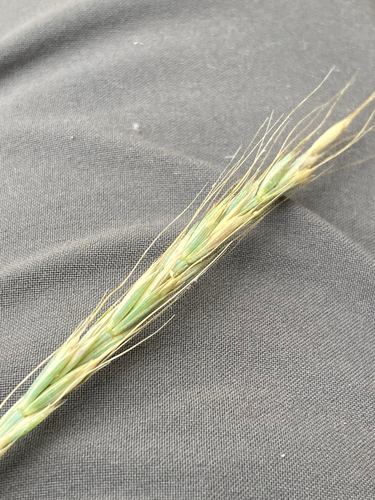
(c) Brian Starzomski, some rights reserved (CC BY-NC)
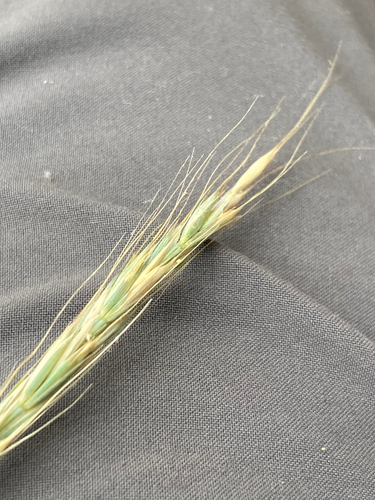
(c) Brian Starzomski, some rights reserved (CC BY-NC)
What to Eat
Edible parts: Seeds, Cereal
The seeds are parched and pounded into flour to make pinole.
Where to Find It
It is a temperate plant. It grows in moist alpine meadows in the Rocky Mountains.
Australia, Canada, North America, USA,
How to Identify
A tufted grass. It does not have a creeping rootstock. It grows 1 m high and spreads 50 cm wide. The stems are erect and hairy. The leaves are long, blue and narrow. The glumes and lemmas are smooth. The flowers are in densely packed heads.
How to Grow
Plants can be grown by division.
Wikipedia
Source ↗Elymus glaucus is a species of grass known as blue wild rye or blue wildrye. This grass is native to North America from Alaska to New York to northern Mexico. It is a common and widespread species of wild rye.
Notes
There are 150 Elymus species. They are temperate.
References (7)
- Beckstrom-Sternberg, Stephen M., and James A. Duke. "The Foodplant Database." http://probe.nalusda.gov:8300/cgi-bin/browse/foodplantdb.(ACEDB version 4.0 - data version July 1994)
- Bocek, B. R., 1984, Ethnobotany of Costanoan Indians, California, Based on Collections by John P. Harrington. Economic Botany 38(2): 240-255
- Bodkin, F., 1991, Encyclopedia Botanica. Cornstalk publishing, p 379
- Moerman, D. F., 2010, Native American Ethnobotany. Timber Press. p 209
- Plants for a Future database, The Field, Penpol, Lostwithiel, Cornwall, PL22 0NG, UK. http://www.scs.leeds.ac.uk/pfaf/
- Porsild, A.E., 1974, Rocky Mountain Wild Flowers. Natural History Series No. 2 National Museums of Canada. p 50
- Proc. Acad. Nat. Sci. Philadelphia 14:99. 1862


