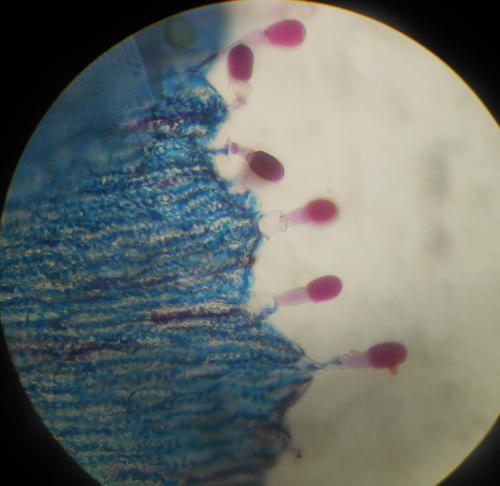
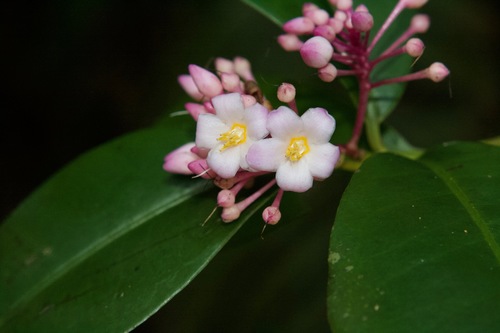
Embelia ribes
Burm. f.
White-flowered Embelia

(c) Johannes Lundberg, some rights reserved (CC BY-NC-SA)

(c) Gavin, some rights reserved (CC BY-NC), uploaded by Gavin
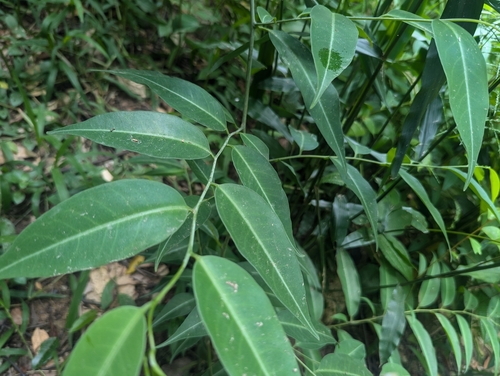
(c) HP Lim, some rights reserved (CC BY-NC), uploaded by HP Lim
What to Eat
Edible parts: Leaves, Fruit, Spice
Young leaves and shoots can be eaten raw, often served as a side dish with rice mixed with other greens. The leaves have an acid flavour and can substitute for tamarind in soups and vegetable dishes. The fruit is eaten raw, offering a sour-sweet flavour enjoyed mostly by children as a delicacy; dried fruit is also used as an adulterant of black pepper. A sweet, refreshing drink can be made from the leaves and fruits combined. The young stems are chewed as a delicacy.
Known Hazards
Where to Find It
A tropical plant. It grows in the tropics in SE Asia. It occurs in clear forest. In Cambodia it is in pine forests near 700 m altitude. In China they grow between 100-2000 m altitude in S China. In Indonesia it grows up to 1,500 m above sea level. In Yunnan. It occurs in the Western Ghats in India.
Asia, Australia, Bangladesh, Cambodia, China, India, Indochina, Indonesia, Laos, Malaysia, Myanmar, Northeastern India, Pacific, Papua New Guinea, PNG, Philippines, SE Asia, Sri Lanka, Thailand, Tibet, Vietnam,
How to Identify
A shrub 1-2 m tall. It has purple or red stalks. It can be bushy or climbing. It can grow 35 m long. The branches are angled and have ridges along them. They have a rusty coating. The leaf stalk is 5-10 mm long. The leaf blade is narrowly oval. It is 5-8 cm long by 3-3.5 cm wide but can be smaller or larger. They are leathery. The base is wedge shaped and the edges curl. They taper to the tip. The flowering stalk is at the end of the plant. It forms a pyramid shape. It is 10-15 cm long. The flowers are greenish white and papery. The fruit is bright red and round. It is 3-4 mm across. Two subspecies have been described.
How to Grow
Prefers partial shade. Saplings can be planted next to tree species. As a woody climber needs support. Harvesting after two years. Cultivated in all soil types. Well-drained, light soils or sandy loam are best.
Propagation: Plants can be grown from seed or stem cuttings. The ideal time for seed collection is during the summer monsoon or rainy season. Mature seeds are purple to black, distinguishing them from the red seeds of E. basaal. For stem cuttings, use pencil-sized pieces 1.0–1.5cm in thickness with 3 nodes, planted 3cm deep in polybags and kept in shade.
Medicinal Uses
The dried berries (seeds) are alterative, anthelmintic, carminative, and stimulant. An aqueous extract of the berries has shown antifertility activity. The powdered berries are widely used to expel tapeworms, with castor oil taken afterward to purge the dead worm. A paste of the berries treats skin problems such as ringworm, and mixed with oil, the paste has been applied as a poultice for headaches. The pulp is purgative. The fresh juice is cooling, diuretic, and laxative. Leaves combined with ginger have been used as a mouthwash to treat ulcers and sore throats. A paste of the bark is applied to the chest to treat lung diseases such as pneumonia. An infusion of the roots is given for coughs and diarrhoea. The plant is a major component of the ayurvedic medicine Amrit kalash.
Other Uses
The crushed fresh bark is used to repel leeches.
Wikipedia
Source ↗Embelia ribes, commonly known as false black pepper, white-flowered embelia, viḍaṅga (Sanskrit: विडङ्ग), vaividang, vai vidang, or vavding is a species of flowering plant in the family Primulaceae. It was originally described by Nicolaas Laurens Burman in his 1768 publication Flora Indica. It is widely distributed throughout India. In Cambodia, it is called Chu Preuk or Sangkong [ជូរព្រឹក/សង្កុង). In Ayurveda and Siddha, it is considered widely beneficial in a variety of diseases In particular embelin isolated from dried berries of Embelia ribes has a wide spectrum of biological activities.
Notes
There are about 140 Embelia species. It is also used in medicine. Also put in the family Myrsinaceae.
Names & Synonyms
Akar asam kubang, Akar kecham, Akar kelimpar, Akar sulur kerang, An li ge si, Areuj kathembang, Aroi kachembang, Baberang, Babrung, Bai huan suan teng guo, Baibirang, Biranga, Birangi Kabuli, Butterfly pea, Chua-ngut, Chu'prek sangkong, Gang dui biu, Hidum pongkung, Kakannie, Kan-pa-lar, Laoqiu, Madie, Mchou preuk, Memory improver, Myingaung-nayaung, Re-ngut, Sawbwa-sa, Songgui, Thun-mun, Vaivarang, Vavading, Vayuvilanga, Vidanga, Vizhal, Vrishanasana, Wawrung, Yup-nga-ru