Embelia robusta
Gaertn. ? Roxb.

iNaturalist · cc-by-sa
(c) Dinesh Valke, some rights reserved (CC BY-SA)
(c) Dinesh Valke, some rights reserved (CC BY-SA)

iNaturalist · cc-by-sa
(c) Dinesh Valke, some rights reserved (CC BY-SA)
(c) Dinesh Valke, some rights reserved (CC BY-SA)

iNaturalist · cc-by-sa
(c) Dinesh Valke, some rights reserved (CC BY-SA)
(c) Dinesh Valke, some rights reserved (CC BY-SA)
What to Eat
Edible parts: Leaves, Fruit
Leaves and fruit are eaten.
Where to Find It
A tropical plant. It grows in hilly places which receive plenty of rain.
Asia, Himalayas, India, Indochina, Myanmar, Nepal, Pakistan, SE Asia, Vietnam,
Countries: United Arab Emirates, Afghanistan, Armenia, Azerbaijan, Bangladesh, Bahrain, Brunei, Bhutan, China, Georgia, Indonesia, Israel, India, Iraq, Iran, Jordan, Japan, Kyrgyzstan, Cambodia, North Korea, South Korea, Kuwait, Kazakhstan, Laos, Lebanon, Sri Lanka, Myanmar, Mongolia, Maldives, Malaysia, Nepal, Oman, Philippines, Pakistan, Qatar, Saudi Arabia, Singapore, Syria, Thailand, Tajikistan, Timor-Leste, Turkmenistan, Turkey, Taiwan, Uzbekistan, Vietnam, Yemen
How to Identify
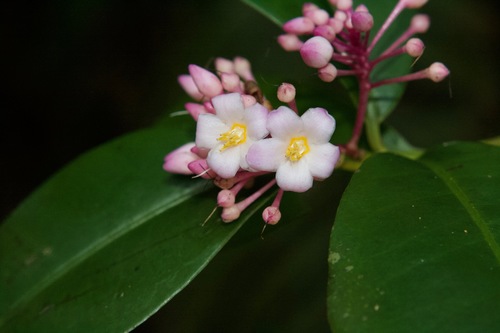
A shrub. It grows 6-15 m tall. The leaves are smooth. They are oval and 5-10 cm long by 2-7 cm wide. The edges are often wavy. The leaves are often purplish underneath. The flowers are small. They are greenish-yellow and 3 mm wide. The fruit are 4-5 mm across.
Notes
There are about 140 Embelia species. Also put in the family Myrsinaceae.
Names & Synonyms
Ambat ingali, Eik-hmwe-nwe, Ingali, Re manh
References (5)
- Flora of Pakistan. www.eFloras.org
- GAMMIE,
- Pham-Hoang Ho, 1999, An Illustrated Flora of Vietnam. Nha Xuat Ban Tre. p 684
- Singh, H.B., Arora R.K.,1978, Wild edible Plants of India. Indian Council of Agricultural Research, New Delhi. p 39
- WATT,